
Cebu is the oldest city in the Philippines and the first European settlement established by the Spanish Cortes in the 15th century. In history, Cebu is considered the starting point of Catholicism and Spanish colonization in the country.
I have been to Cebu several times. In 2007, I visited Cebu for the first time for work. Five years after, I went back for a leisure trip together with my mom. In 2014, my husband and I visited it again before we headed further to Bohol and Dumaguete. Ten years after further, we briefly visited Cebu again, now with our kids in tow.
Visiting Cebu is like meeting an old friend.
I would recall the consistently friendlier, more courteous, and honest Cebuanos. Taxi drivers would return fare change in almost the exact amount. Staff in restaurants, shopping stores, or hotels would give you a smile, greet you politely, and cordially help you. Or just any Cebuano passing by, you ask a question or help, they go the extra mile.
Even if they hardly speak Tagalog, English can be surprisingly your go-to language to communicate in Cebu. Tagalog is my mother tongue, by the way. English is most likely the go-to language elsewhere in the Philippines as well.
Filipinos in general love to eat. When it comes to food, particularly in Cebu, they’ve got so much to offer. Cebuanos take pride in their multitudes of cuisines and delicacies.
Enjoy the popular ones like dried seafood and danggit (rabbit fish), lechon (suckling pig), dried mangoes, rosquillos and otap.
Common dishes, but cooked in a way only the Cebuanos know, can also be worth exploring. There’s…
kinilaw (raw fish cooked in vinegar and spices),
escabeche (sweet and sour fish),
kambing caldereta (goat’s stew),
tinola (another unique chicken or fish stew),
sinigang (a pork, fish, or chicken sour soup),
pochero (a pork stew),
ginisal (vegetable dish that includes bean sprouts, bamboo shoots, beans cabbage cooked in soy sauce and vinegar),
inu-unan (sour fish stew),
pinakbet (fried vegetables dish), and
Sutukil (Sugba-Tula-Kilaw, in English, Grill-Stew-Eat, a known Mactan cooking style).
The Cebuanos got it all.
Restaurants are everywhere. There seems to be a never-ending flow of locals. They go into and out of this food haven. From hole-in-the-wall to fine dining, you will find every experience. For food trippers like me, Cebu is another place to be.
About Cebu
Cebu is the oldest city in the Philippines. It was the first European settlement established by the Spanish Cortés in the 15th century.
In history, Cebu is considered the starting point of Catholicism and of Spanish colonization in the country.

It started in 1521 when Ferdinand Magellan, on his quest to find the Spice Islands, accidentally set foot in Cebu. He made friends with the king, Rajah Humabon. He baptized the locals. He erected a large wooden cross on the shore. This signified the bond between the Spaniards and the Cebuanos.
Lapu-Lapu, the other king in nearby Mactan Island, did not follow suit. He engaged in a battle instead and eventually killed Magellan.
From then on, several Spanish expeditions were sent to the island, but all ended in failure until 1564. Miguel Lopez de Legazpi, who by then traveled from Mexico, landed on the shores of Cebu. He later established a colony, naming the settlements “Villa del Santisimo Nombre de Jésus” and “Villa de San Miguel.”
Nowadays, Cebu is the main center of commerce, trade, education, and industry in the Visayas. It is one of the most developed regions in the Philippines. Cebu has a flourishing furniture-making industry, a very capable IT hub, and an enduring shipbuilding industry.
Cebu has the Mactan International Airport and Cebu International Port, which is the largest shipping hub in the Visayas. It also has the notable Cebu Business Park, Asiatown IT Park, and Mactan Economic Processing Zones.
Cebu has a rich, colorful history and steady progress. There’s no denial that it is indeed the queen city of the country’s south.
Cebu Churches: Santo Nino Basilica Church & Cebu Metropolitan Cathedral

The Ciudad del Santisimo Nombre de Jesus is more commonly known as Cebu Metropolitan Cathedral. It is in the midst of the city’s old central business district. Its construction started in 1689 but took many years to finish due to frequent interruptions and unexpected events.
Its architecture is typical of Spanish colonial churches in the country. It is defined by its thick walls, which are intended to withstand typhoons and other natural calamities. The Spanish royal coat of arms is displayed at the top of its main entrance door. This display reflects the contribution of the Spanish monarch to its construction.
A walk towards the other side of Zamora street from the cathedral takes you to another well-visited place. It is the oldest church in Cebu – the Santo Nino Basilica Church.
The Basilica Minore del Santo Nino, originating from the 16th century, was constructed on the exact location. Here, the image of the Santo Nino was found. This sculpture depicts the Holy Child Jesus. It was discovered by Spanish explorers in 1565. The sculpture was well-preserved in a burned wooden box. People believed it was left behind during Magellan’s expedition in 1521. It is also believed that this is the same statue that Magellan gave to Rajah Humabon’s wife, Queen Juana.
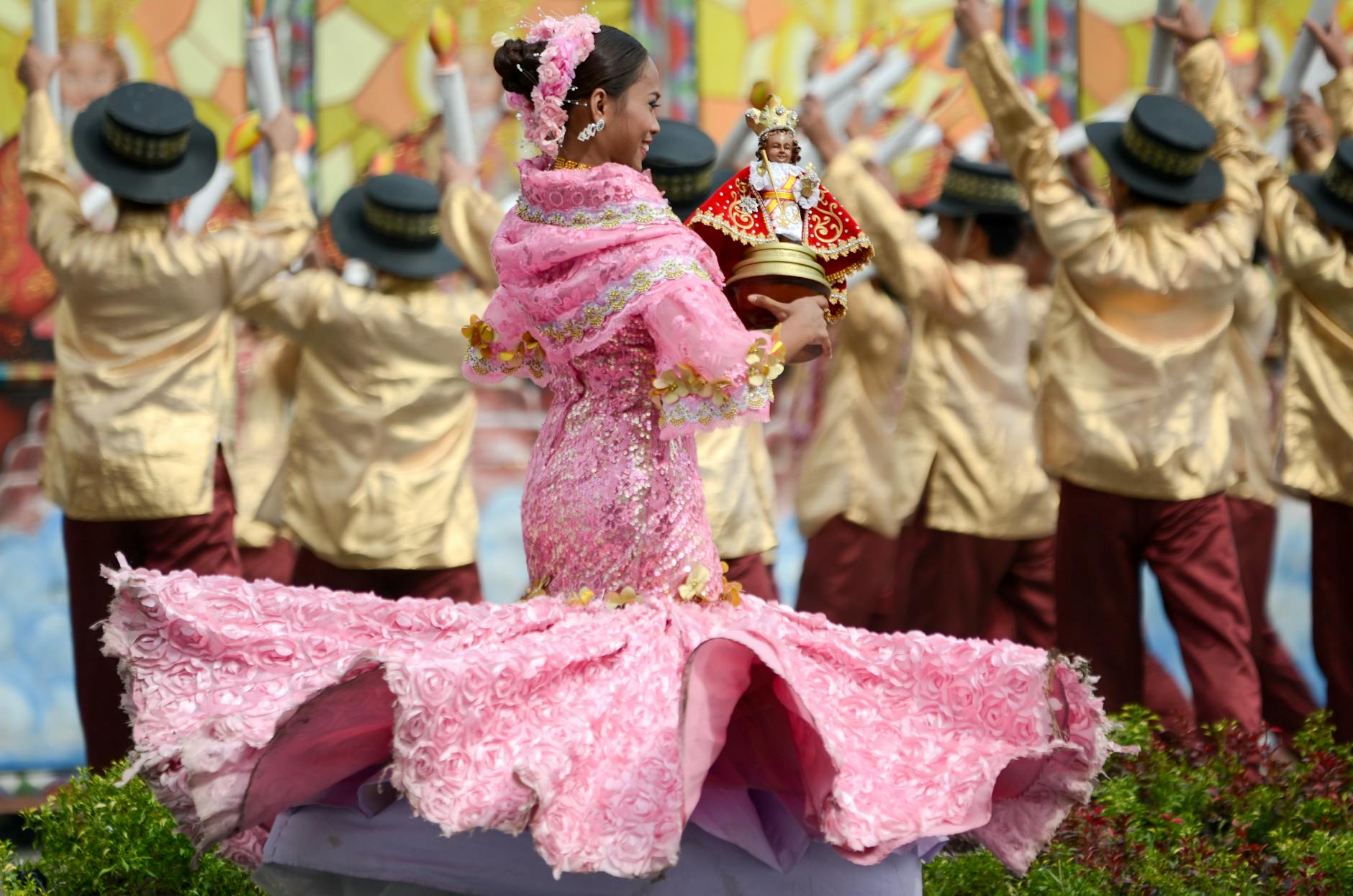
Catholics in Cebu are known as fervent devotees to the statue of the Child Jesus. It is known as Balaang Bata sa Sugbo or Santo Nino de Cebu. This statue is considered the oldest of all Christian relics in the Philippines.
Every year in January, Fiesta Senor is celebrated in honor of the Santo Nino. It is also celebrated along with Cebu’s patroness, Our Lady of Guadalupe. The Ecce Homo, the depiction of Christ before Pontius Pilate, is another statue. Magellan presented this statue to Humabon as a symbol of their alliance.
The highlight of the festival is the Sinulog, which is held on the third Sunday. It is also known as a dance ritual. The ritual commemorates the pagan origin of the Cebuanos. It also celebrates their acceptance of Roman Catholicism.
The Santo Nino Basilica Church is built in baroque architecture. People believed it was initially constructed out of earth, hardwood, and nipa. In 1735, the church was reconstructed with hard stones, mainly out of coral.
The stones were quarried from Capiz and Panay by an army of bancas (local boats). The molave wood came from the mountains of Talisay and Pitalo and was transported in boats hired in Argao and Carcar. Fr. Juan de Albarran Prior of the Sto. Nino, confessed that there was much difficulty in quarrying the stones. Despite the seemingly impossible task, Fr. Albarran was not discouraged. He used white stones to make the lime, with one banca transporting some 400 pieces of stones. There was also another obstacle: the lack of chief craftsmen and officers which forced Fr. Albarran to acquire some knowledge of architecture.
The church was finished not later than 1739. According to an author named Vela, “the church has all the characteristics of a solid construction to withstand all the earthquakes…” And true enough, the church withstood all earthquakes.
The facade is a blending of Muslim, Romanesque and neo-classical features – all set in what has otherwise been described as a high degree of integration. The façade is preserved in its original stone texture and natural color, conveying an air of simplicity of line and elegance. The bell tower serves as a counterbalance to the convent located on the opposite far end. It has two blind and open windows alternating in shape, ending up in triangular pinnacles with a circular disc crowned by balusters and a bulbous dome of Muslim influence. The arched main entrance is balanced by the side rectangular corners. A double-edged triangular pediment crowns the facade.
– from Basilica San Antonio website, on the style of the Santo Nino Basilica Church
In October 2013, a 7.2 magnitude earthquake struck Bohol and Cebu. My husband and I came to see the damages inflicted by this disaster. We also observed the reconstruction taking place to preserve Cebu’s landmarks.


Magellan’s Cross
Next to Santo Nino Basilica Church is an important place. It houses another symbol of Christianity in Cebu – the Magellan Cross.
It is said that Magellan planted this cross upon his arrival in 1521. The cross is encased with a local wood. This is meant to protect the original cross from people. Some chip away parts of the cross for a souvenir or because they believe the cross is miraculous. Others believe that the original cross does not exist anymore, and what is displayed is only a replica.


Standing before the very cross that marked the beginning of Christianity in the Philippines. Planted by Ferdinand Magellan in 1521, this historic symbol in Cebu represents a pivotal moment when two worlds collided. Housed in this beautiful octagonal chapel, the original cross is now encased in tindalo wood, preserving centuries of history and faith. A small monument that changed the course of an entire archipelago.
#MagellansCross #Cebu #Philippines #History #Christianity #1521 #Heritage #Faith #Historic #Travel #Culture @PerpieTravelsLately #PerpieInPinas #TravelwithPerpieLately
CLICK ON THE IMAGE TO SEE MORE VIA INSTAGRAM
The cross is a famous emblem of Cebu City, seen during cultural tours and festivals like Sinulog. Visiting it gives a peek into how history and faith shape Filipino culture.
Fort San Pedro
Not so far from the well-known churches of Cebu and the Magellan Cross is the Fort San Pedro.

Fort San Pedro was built in the 17th century. It served as a military defense structure for the Spanish. The primary purpose was to defend against Muslim raiders who would plunder coastal villages. Local tourists would often refer to it as a “mini Intramuros” (the walled city located in Manila).
Yet it is the oldest stronghold fort that served as the starting point of Spain’s settlement in the Philippines. It was originally built in 1565 under the supervision of the first Spanish conquistador and governor, Miguel Lopez de Legazpi. The construction took over 200 years to finally finish.
Later on, Fort San Pedro served the Filipino revolutionaries, the Americans, and the Japanese. The major restoration of the centuries-old fort began in 1968 when its two towers were the only pieces left standing.
Nowadays, Fort San Pedro serves as the regional office for the local tourism department. Some rooms are dedicated to the fort’s museum. They showcase not only the fort’s own history but also that of Cebu as a historic city.
Cebu Taoist Temple

The Taoist Temple was built by Cebu’s influential Chinese community in 1972. It is located in the wealthy residential suburb of Beverly Hills. This area is about 6 kilometers north of the city’s downtown. The Filipino-Chinese make up around 15% of Cebu’s population.
On Wednesdays and Sundays, Taoist devotees carry out their rituals. They climb the 99 steps of the temple. They light joss sticks. They have their fortunes read by the monks.
As you get into the temple, caretakers would ask visitors not to take any photos of the sacred place. They also ask visitors to stay as quiet as possible. A huge Buddha statue sits comfortably in the middle of the temple. This temple sits on the high point of the city, from which you can get a good view of Cebu city. You can also see the islands of Mactan and Bohol from afar.
Ayala Center and Pinoy Malling
A stopover at the uptown Cebu’s cosmopolitan mall, the Ayala Center, is a mere confession. It reveals that I come from a generation who grew up in a prevalent “mall culture” in the Philippines.
Malling is a deeply ingrained, favorite pastime of Filipinos.

The beating heart of modern Cebu. Ayala Center brings together shopping, dining, and city life in one sprawling complex that never sleeps. From international brands to local favorites, rooftop restaurants to cozy cafes, this is where the energy of the Queen City of the South comes alive. Whether you’re hunting for the perfect meal or just people-watching with a coffee, there’s always something happening here.
#AyalaCenter #Cebu #Philippines #Shopping #CityLife #QueenCityOfTheSouth #Modern #Urban #Dining #Travel @PerpieTravelsLately #PerpieInPinas #TravelwithPerpieLately
CLICK ON THE IMAGE TO SEE MORE VIA INSTAGRAM
The love for shopping malls runs deep in the Philippines. This love is so profound that “malling” is a coined term to describe an act of spending time in the shopping mall. Evidently, the Philippines has three of the world’s 10 largest shopping centers. These giant malls, along with other dozens of equally popular ones, never run out of foot traffic. To date, there are over 80 major malls all throughout the country, and still counting.
I’m not quite sure whether I should feel proud of it. I’m used to being one of those who find these shopping malls as ballparks. They are convenient for finding everything I need and want. In the 80s and early 90s, malling used to define the status quo, because only the well-to-do’s can. Before the Mall of Asia, there was SM Makati. There was also North Edsa. To me, as a kid, they were big amusement parks!

Eventually, more and more shopping malls are built everywhere. The more it is getting easier and more convenient for everyone to visit. Over time, the malls have evolved into places for various activities. You can shop and dine there. You can also watch movies, play games, and workout in the gym. They offer relaxation in a spa, medical services, banking, and bill payments, among many other activities.
The country’s biggest shopping mall chain, Shoemart (SM), must have started it all. Obviously, they live up to their slogan – “We’ve got it all for you.” The Filipino masses got caught up and since then, malling has become a Filipino way of life.
Cebu Lechon
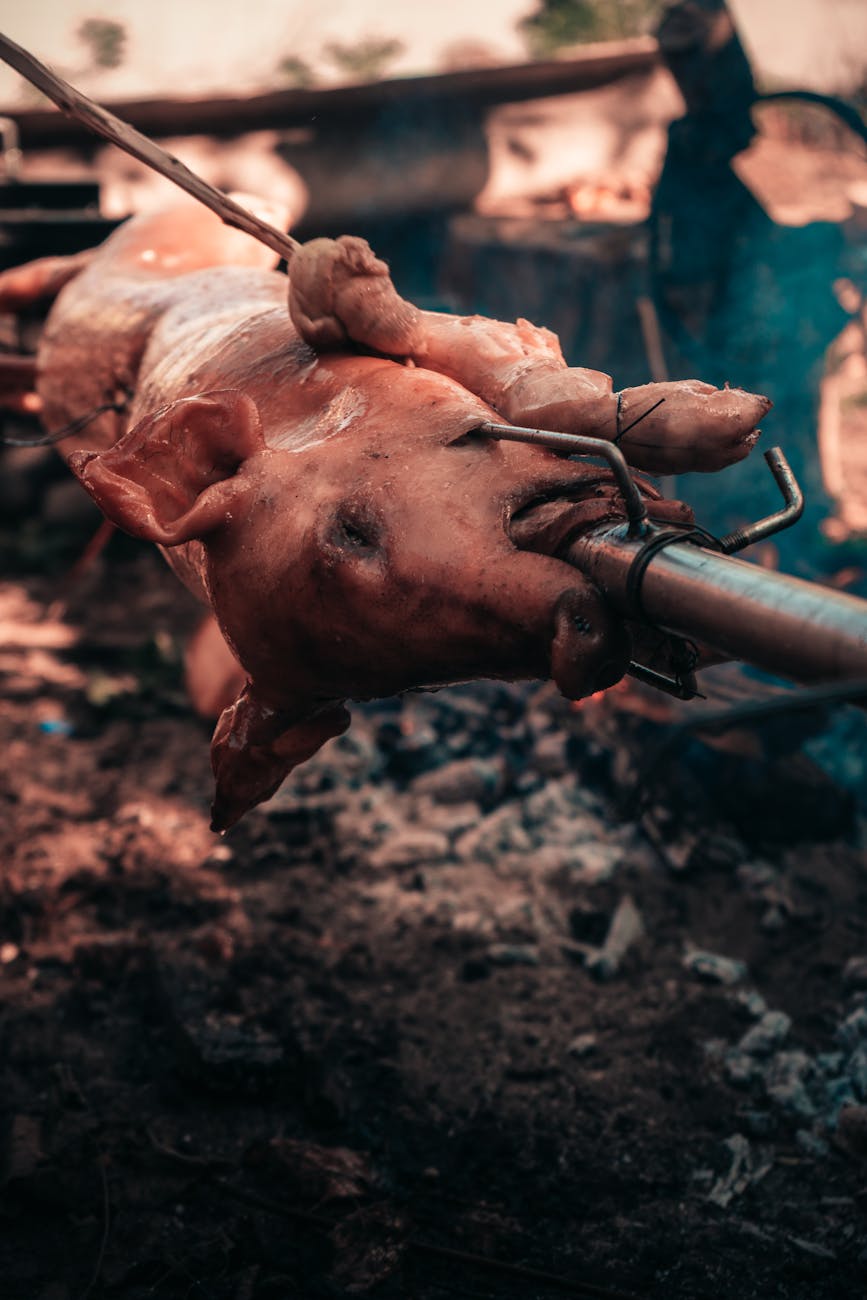
Lechon is not entirely, uniquely Filipino. It is originally a Spanish word lechón, that refers to a roasted suckling pig. In the Philippines, Filipinos serve lechon on special occasions like birthdays, graduations, Christmas, and fiestas (town festivals).
The pig is skewered on a large bamboo stick, roasted over a pit filled with charcoal for hours, and drenched in oil. Such a cooking process makes the pork skin crunchy, which is what Filipinos enjoy the most. And in the Philippines, the best lechon you can ever find is in Cebu city.
What differs this lechon from other lechons in the country is its full taste. Some Filipinos claim that Cebu lechon uses special herbs and spices, as well as lemongrass, green onions, chili, and peppers, that make its flavor unique. The crispiness is tough to beat, too.

The crown jewel of Filipino cuisine, straight from Cebu. Hours of slow roasting over charcoal creates that legendary crispy skin that crackles with every bite, while the meat inside stays incredibly juicy and aromatic. This isn’t just food – it’s an art form that Cebuanos have perfected over generations. One taste and you’ll know why people make pilgrimages here just for this dish.
#CebuLechon #Philippines #Cebu #FilipinoCuisine #Foodie #Authentic #LocalFood #RoastedPork #FoodLover #CulinaryTravel @PerpieTravelsLately #PerpieInPinas #TravelwithPerpieLately
CLICK ON THE IMAGE TO SEE MORE VIA INSTAGRAM
The real highlight of a Cebu trip is a stopover to the best place. There, you can eat the succulent, sinfully roasted pig in Cebu.
And it is typically a showdown between the old-time favorite CnT Lechon and the modern Zubuchon. Here’s my recent take between the two.
CnT is one of the earliest litsunan (lechon stores) in Cebu that was able to thrive over time. Zubuchon became famous quickly. This fame is greatly due to Anthony Bourdain’s musings about their lechon. He called it the best pig ever.

CnT certainly has kept the Pinoy rusticity and mass appeal. They spice up your stay by showcasing these red-and-yellow clad women. The women unforgivingly hack away every lechon they get for everyone to partake. Zubuchon on the other, is a modern casual dining restaurant, with a more sophisticated ambiance and smooth service.
Both lechons are very crispy. I find CnT lechon to have a richer and saltier flavor. Zubuchon lechon, on the other hand, is more balanced.
Mactan Island
The smaller islands surrounding the province’s main island have made Cebu a more popular tourist spot. This popularity is primarily because of its sandy beaches. The island boasts crystal clear waters and amazing diving adventures.
You have heard about Bantayan, Camotes, or Malapascua, to name a few of its mini-islands. One of them, on the other hand, plays an important part in Cebu’s ever-growing economy. Located a few kilometers away from Cebu City, you will find an island called Mactan.
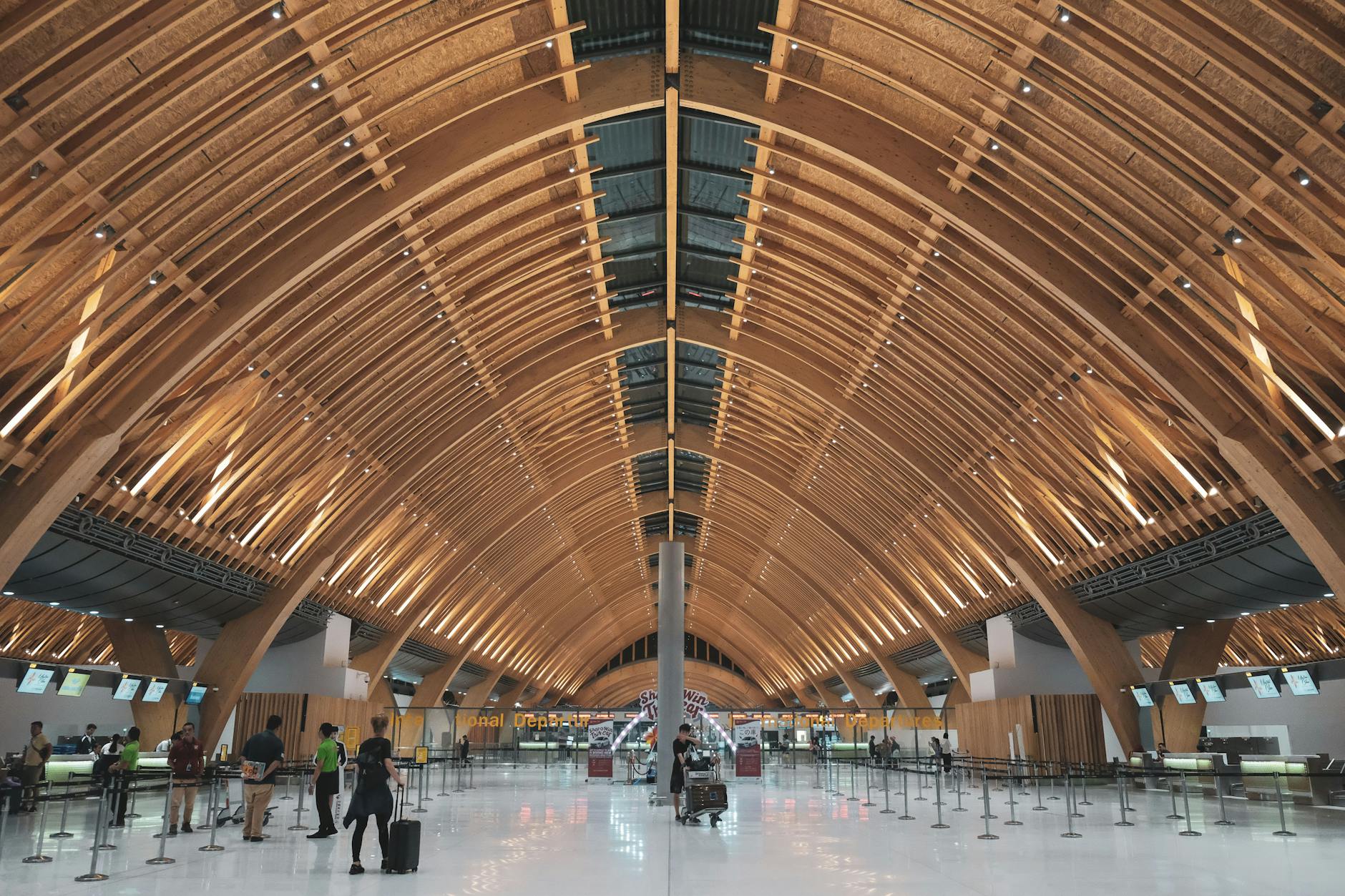
Mactan island has the second busiest airport in the Philippines, the Mactan-Cebu International Airport. The island of Mactan is connected to metropolitan Cebu. Two bridges, the Marcelo Fernan Bridge and the Mactan-Mandaue Bridge, serve this connection. Mactan offers some nice beaches on the coast, fantastic dive sites, and some very upscale hotel-resorts. While it still boasts a high-class tourism industry, many industrial businesses, mostly Japanese-owned, are also located on this island.
The Mactan Shrine Park is a must for first-time visitors to Mactan island. Here, you will see shrines dedicated to two of the most significant figures in Philippine history. These figures are Ferdinand Magellan and Lapu-Lapu.

Magellan is the Portuguese explorer who led the Spanish-commissioned expedition for the Spice Islands. This expedition resulted in the first circumnavigation of the world. It also commenced the discovery of the Philippines.
Lapu-Lapu is the chieftain of Mactan. He bravely defended his sovereignty, through which it led to a battle that eventually killed Magellan.
Practical Info & FAQs
How to get there
YEARS TRAVELED: 2007, 2012 & 2014
From Manila, you can catch a flight to Cebu, which only takes you an hour. Cebu is also an international destination with flights from Singapore, Hong Kong, Malaysia, Japan, Taiwan, and South Korea. Arrivals at the Mactan International Airport happen daily.
Cebu is also an ideal jump-off point for other tourist attractions in Visayas and Mindanao.
Where to stay & eat


Together with my husband when we went to Cebu in 2014, we chose to stay in BE Resorts in Mactan island.
From the airport to BE Resorts, it takes around 20 minutes. You will pass by exclusive resorts like Moevenpick, Abaca Boutique Resort, and Shangri-la before you reach BE Resorts.
Mactan is more of a coral island, hence the resort’s beach is not as bluish as the water, or as fine as the sand in Boracay. You will especially see the rocky surface early in the morning when the tide is incredibly low. You will also encounter locals walking on it and searching for some crustaceans.
BE Resorts is ideal for foreign tourists who want to enjoy a relaxing, quieter stay in a hotel-resort at a reasonable price yet can still conveniently get into Cebu’s city life. It is ideal for staycation weekends on the other hand, for couples and families who live in Cebu.


Outside BE Resorts, the nearest place to go for quick buys and some fast food must be Mactan Marina Mall. For a special dinner, we went for an international buffet treat at Tides in Mactan Shangri-la.
Cebu was our stopover as we were traveling from Bohol to Siargao and from Siargao back to Manila during our one-month stay in the Philippines in 2024. We stayed overnight at Goldberry Suites and Hotel in Mactan.
Travel Tips
Use public transportation like jeepneys and ferries for an authentic and budget-friendly way to get around Cebu.
Visit popular destinations such as Magellan’s Cross, Basilica del Santo Niño, and the Taoist Temple to experience Cebu’s rich history and culture.
Explore nearby islands—take day trips to Mactan, Malapascua, or Bantayan for stunning beaches and world-class diving.
Try local delicacies like lechon (roast pig), dried mangoes, and puso (hanging rice) at vibrant markets or local eateries.
Be prepared for tropical weather: pack light clothing, sunscreen, and an umbrella or raincoat for sudden showers.
Respect local customs and dress modestly, especially when visiting religious or rural sites.
Negotiate taxi or tricycle fares before starting your ride, as many are not metered.
Plan your travel times to avoid rush hour traffic in Cebu City, particularly in the mornings and late afternoons.
Stay hydrated—bottled water is recommended, and always carry some with you during your excursions.
Bring cash in small denominations, as many small shops and local attractions do not accept credit cards.

 What's Up With Perpie Lately
You must be logged in to post a comment.