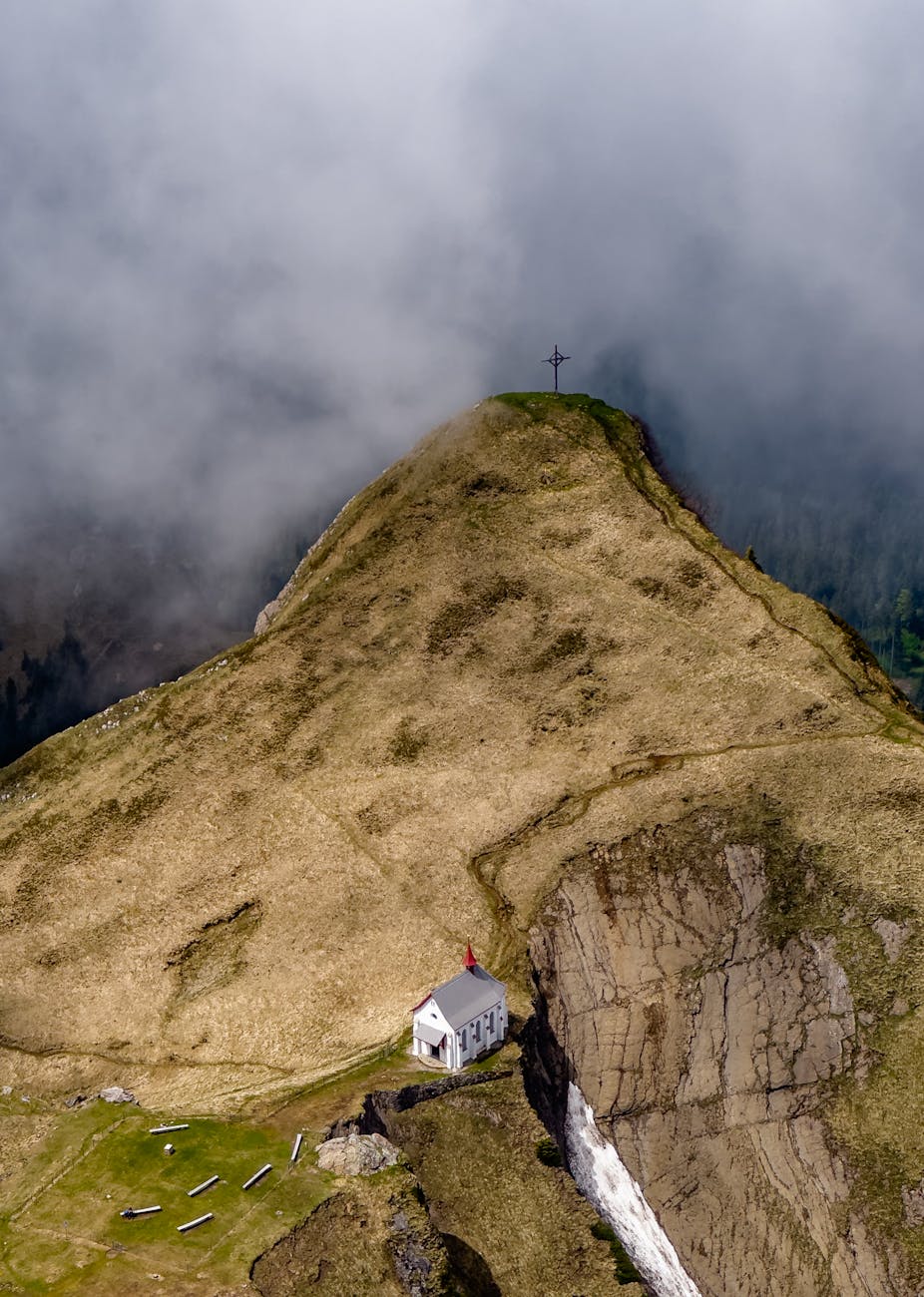
Going atop Mount Pilatus will still give you a stunning view. You can see Lucerne and its lake clearly. There is also a panorama of 73 Alpine peaks.
It is hard to deny that the Swiss are proud of their mountains. Why wouldn’t they? More than half of the country is covered by the Alps. About a hundred of its mountain peaks reach 4,000 meters and higher.
Matterhorn and Jungfrau lead the way to prominence. They have never ceased to amaze hikers, mountaineers, and tourists alike. Thus, they leave a good impression on how the Swiss treat their mountains. This also reflects on their respect for nature in general. I can assure you, very well indeed.
Mount Pilatus is definitely amongst the lucky ones. At 2,132 meters high, it is considerably just amongst below-average mountains in Switzerland in terms of height. The median height of Swiss mountains is around 2,900 meters.
Going atop Mount Pilatus will still give you a stunning view. You will see particularly Lucerne and its lake. It also offers a panorama of 73 Alpine peaks.
The most popular way to get to Pilatus is through what they dubbed as the “Golden Round Trip.” The trip takes around 5 hours.
You can start going up to Pilatus in two ways. One choice is taking the aerial and panorama gondola cableways at Kriens. The other option is the world’s steepest cogwheel railway at Alpnachstad.
Go start at Kriens when you prefer ascending up in the air. Or try at Alpnachstad, if you don’t mind going up at 25 degrees angle. Choose your starting point well.
The best time of the year to take this trip is from May to October. And yep, we just did.
Traveling by train for half an hour from Zurich, we finally arrived at Lucerne train station. From there, we left our travel bags at the automatic luggage lockers. I found this very appealing for car-less, commuting travelers like us at that time. It costs around 6 to 9 CHF. I would definitely pay for more convenient traveling. I prefer this rather than dragging my luggage along with me.
I personally recommend starting the Golden Round Trip by taking the boat on Lake Lucerne. It would have been nice. The Swiss steam boat is, as always, more beautiful than ever. But we arrived at midday and an hour-and-a-half boat ride would mean fewer hours to enjoy Pilatus.
We decided to take the train instead. After 20 minutes, we finally arrived in Alpnachstad. Oh yes, we find a steep climb and being suspended in air going down, much more fun.
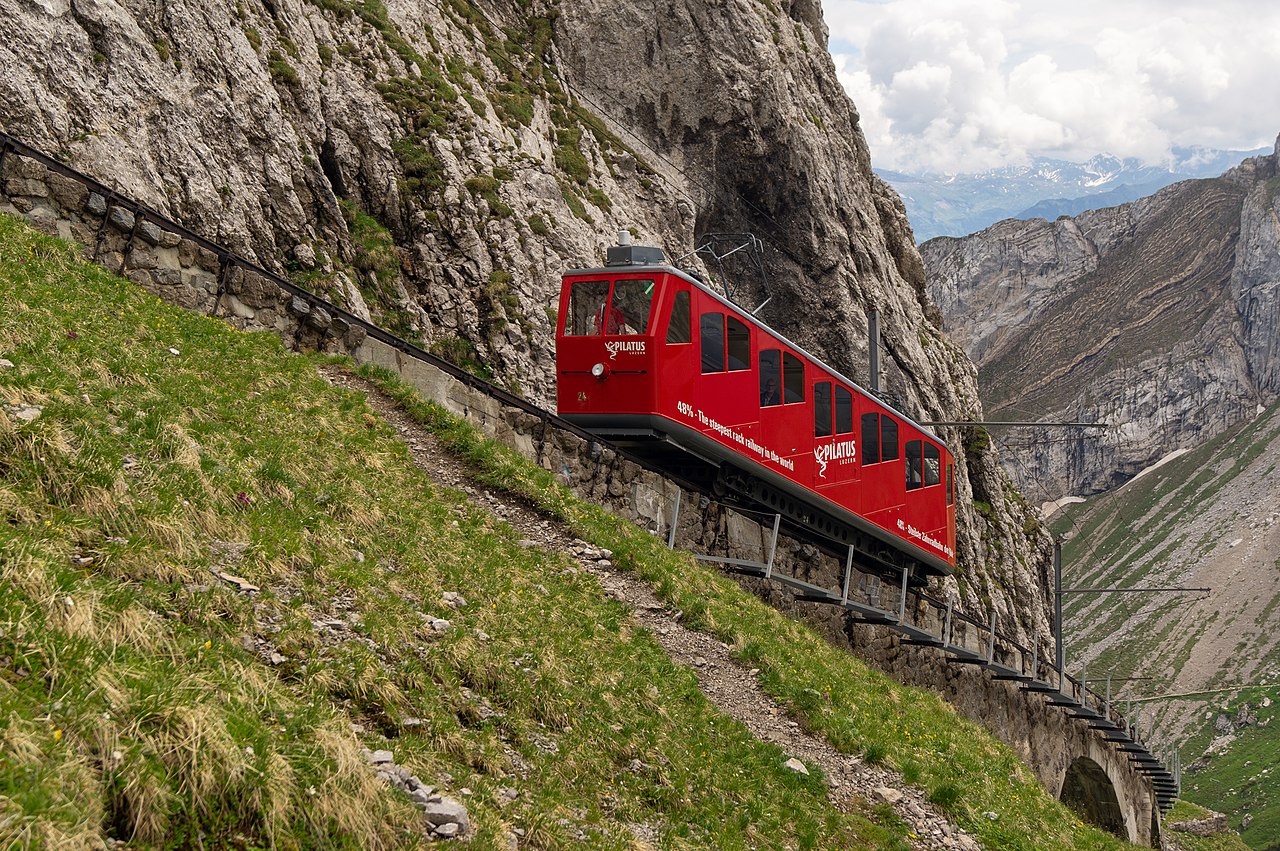
The Pilatus railway runs from Alpnachstad to the terminal near the Esel summit of Mount Pilatus. This mountain cogwheel railway in Switzerland has a top slope gradient of 48%. It must be the steepest railway rack in the world to date.
The railway’s steepness remains both a challenge and a charm. It has been operational for over a hundred years. The cogwheel train appears to be a living testament I guess. And yet impressively, it was still capable of keeping up with what it is expected to do. I’m no engineer, but it was pretty impressive, to the point I find it even a genius mechanical work.
Slowly going up, it was even a more beautiful sight. It’s a wonderful scenery of green pastures, rock formations, animals roaming free, and hikers of all ages. Believe me.

With such mystic beauty, it is not surprising to imagine legends and folklore encasing Mount Pilatus. You have guessed it somehow. The mountain was named after Pontius Pilate. His body is claimed to be submerged in a tiny remote lake on Oberalp.
Legend has it that the ghost of Pontius Pilate was causing the thunderstorms until 1585. In that year, the people decided to challenge the ghost. They threw stones in the lake and churned up the water. The ghost didn’t bother to retaliate so they believed that the spell was broken. Just to make sure, the people even dug a gap in the pond’s wall to dry it out.
Four hundred years later, the people put the lake back by closing its gap. It’s become a peaceful lake since then, the ghost of Pontius Pilate finally rests in peace.
After a 5-kilometer, 30-minute ride going up, we finally reached the peak. It was amazing to see an expansive viewing deck. As usual, inside you find a souvenir shop. They knew what clueless tourists like us would need. They’re selling winter jackets. Yes, we have lived in Switzerland all these years. Yet, we hadn’t realized how cold it would be up in the mountains!
On a side note, there’s also another Pilatus legend. In the medieval times it was believed that dragons with healing powers lived in this mountain.
Below the viewing deck is a walled fortress with gun emplacements. Further at the top of the mountain, you can also find radar and weather stations. They are still in full use. The cherry on top is the historic Pilatus-Klum Hotel.
This 3-star Swiss hotel first opened a year after the railway commenced in 1889 and was fully renovated in 2010. I would imagine staying here during winter time, in a snow-clad Mount Pilatus. There must be an amazingly beautiful view awaiting.
To give tourists a taste of their tradition, Swiss alphorn players rendered a folk song or two.

We really wanted to stay. There’s a mountain hotel anyway, too. Nevertheless, it was time for us to leave Mount Pilatus. How to descend, you wonder? We took the aerial tramway. At Krienseregg point, we got off and took a panoramic gondola. We rode it until we reached Kriens. The tour surely is a golden one!
Not so far from Pilatus peak, I found this nice, white, small house uniquely sitting atop of the mountain. I later found out that it is an equally historic chapel on Klimsenhorn. It was also built over a hundred years ago. The chapel was somewhat neglected for some time. In 1971, it was recognized to get protection and preservation. Well, this pretty deserves it!

Practical Info & FAQs
Travel Tips
Take the world’s steepest cogwheel railway from Alpnachstad to the summit for a scenic and memorable journey.
Arrive early to avoid crowds, especially during peak summer months, and to capture the best sunrise views.
Dress in layers; mountain weather can change rapidly, even in summer, and it’s often cooler at higher altitudes.
Try hiking one of the many well-marked trails, ranging from easy walks to challenging hikes for experienced trekkers.
Bring a camera or smartphone—Pilatus offers breathtaking panoramic vistas of Lake Lucerne, the Alps, and surrounding valleys.
Enjoy lunch or coffee at one of the mountaintop restaurants with terrace seating and spectacular views.
Check the Pilatus website for live weather updates and any maintenance schedules affecting transportation.
Consider purchasing the Swiss Travel Pass for discounted transport to and around Pilatus, including boat, train, and cable car options.
Watch for local wildlife such as marmots and alpine ibex—Pilatus is home to many fascinating mountain animals.
Don’t miss the thrilling “Dragon Ride” aerial cableway for a fast, smooth descent with panoramic windows.

 What's Up With Perpie Lately