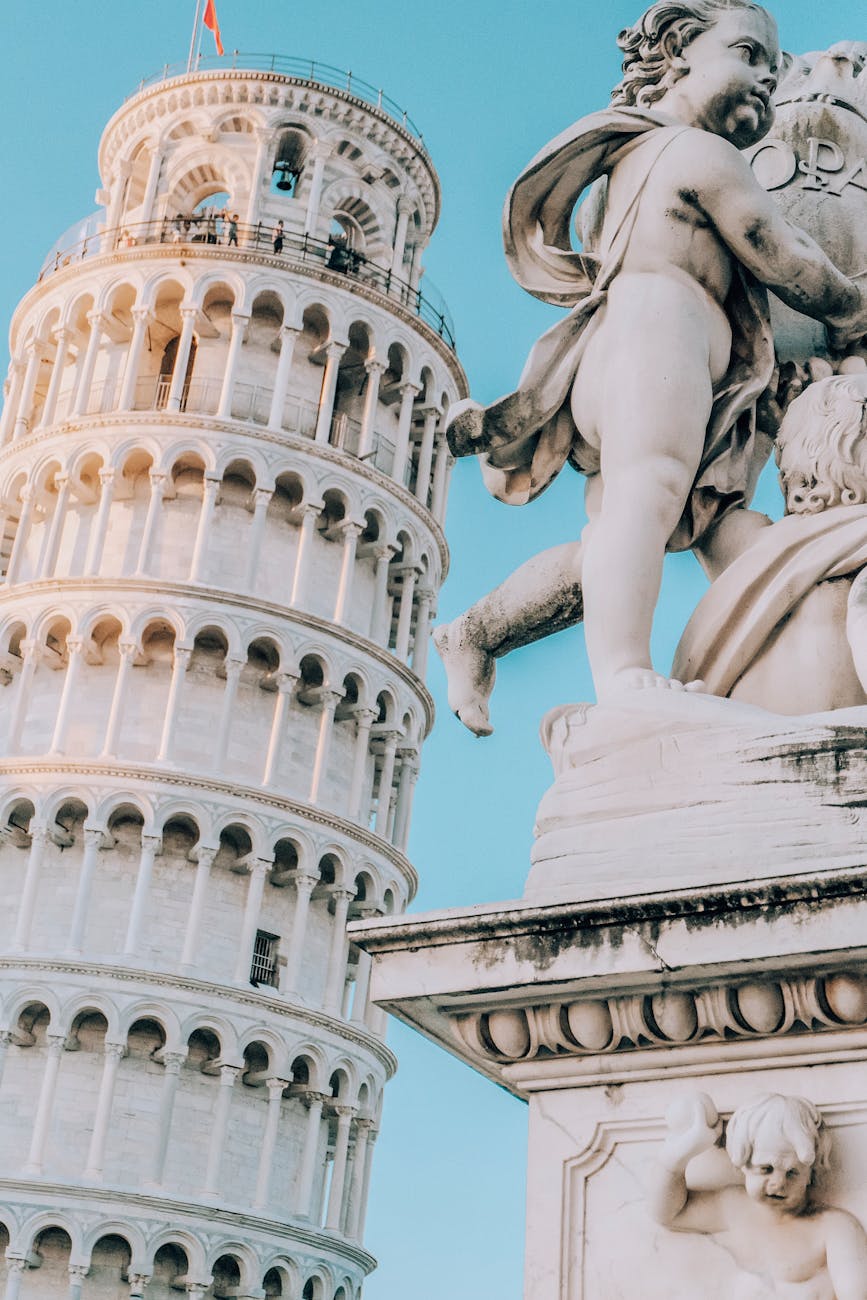
Visiting the Leaning Tower of Pisa and the historic walled city of Lucca offers a warm welcome. It lets you experience the grandeur of Florence and the Italian Tuscan life.
I got thrilled right away to see Pisa on the itinerary for our honeymoon journey in Italy. Then my excitement waned when I began to realize one thing.
“Oh no… Am I supposed to ‘lean’ on it, as everybody does?”
‘Lean’ at the Tower of Pisa
When we speak about Italy, the Leaning Tower of Pisa is among the firsts that pop in our heads. Pizza is another, just because of this Italian delicacy and the old city sound alike. I tickled to death when I heard somebody claiming that pizza originated from Pisa. Mamma mia!
It would have been a disgrace. This is especially true for the one who built it. The Tower of Pisa is an architectural mistake. Interestingly though, this miscalculation had actually brought a symbol of civic pride. Most cheeky tourists find the Leaning Tower of Pisa to be the perfect muse. They practice the art of ‘forced perspective’ with it.
Known as Torre Pendente di Pisa in Italian, the Leaning Tower of Pisa is actually different from most medieval architecture.
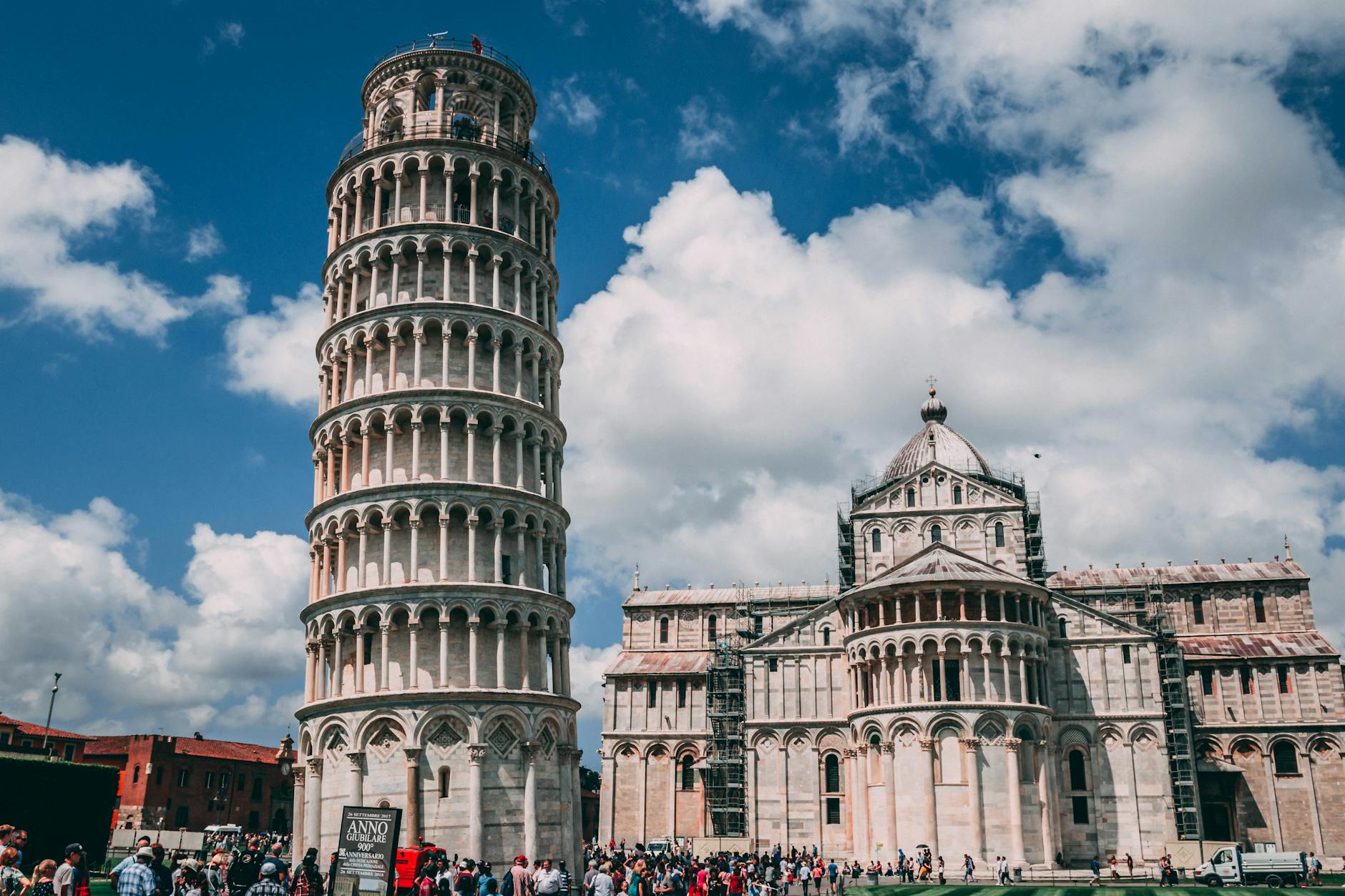
Upon seeing the tower, the first thing that came to my mind is the geeky anecdote on the famous Galileo. One of his pupils shared a story about Galileo. He reportedly dropped two balls of different masses from the Leaning Tower of Pisa. This demonstrated that their time of descent was independent of their mass.
The genius himself did not give an account of such a thought experiment. Most historians believe it never took place, more or less as the student described it! In his book On Motion though, Galileo outlined his famous thought experiment, thus arriving at his hypothesis:
Imagine two objects, one light and one heavier than the other one, are connected to each other by a string. Drop this system of objects from the top of a tower. If we assume heavier objects do indeed fall faster than lighter ones (and conversely, lighter objects fall slower), the string will soon pull taut as the lighter object retards the fall of the heavier object. But the system considered as a whole is heavier than the heavy object alone, and therefore should fall faster. This contradiction leads one to conclude the assumption is false.
I felt the geek in me wanting to climb up to the top, and try Galileo’s ‘urban legend-slash-experiment’ myself!
Piazza del Miracolli is the square in Pisa where you can find this famous sight. The Leaning Tower is not alone. As a matter of fact, it is not even the oldest building. The cathedral and the baptistery came first on this piazza.
The Pisa Duomo is the largest and main feature of the Piazza del Miracolli. It is the cathedral to which the bell tower (now leaning) belongs.
Located right next to the Leaning Tower of Pisa is the Baptistery of St. John. Both monuments are stunning and very ornamental. It is worth spending the time to admire all of the artistic details.

After getting the most out of Piazza del Miracoli, we visited another Tuscan town not so far from Pisa. It is a walled city, as a matter of fact, hence it intrigued me.
Lost in the walled city of Lucca
Seeing Lucca from afar quickly reminded me of Intramuros in Manila. Both of its fortified walls built many centuries ago have endured years of war and destruction.
What is more endearing with Lucca though is its cobbled streets. Also, Lucca showcases handsome piazzas and relaxing promenades hidden behind imposing Renaissance walls.
Lucca’s long history goes back to Etruscan and ancient Roman times. Lucca’s great era commenced in the Gothic period when the city built much of its marvelous architecture.
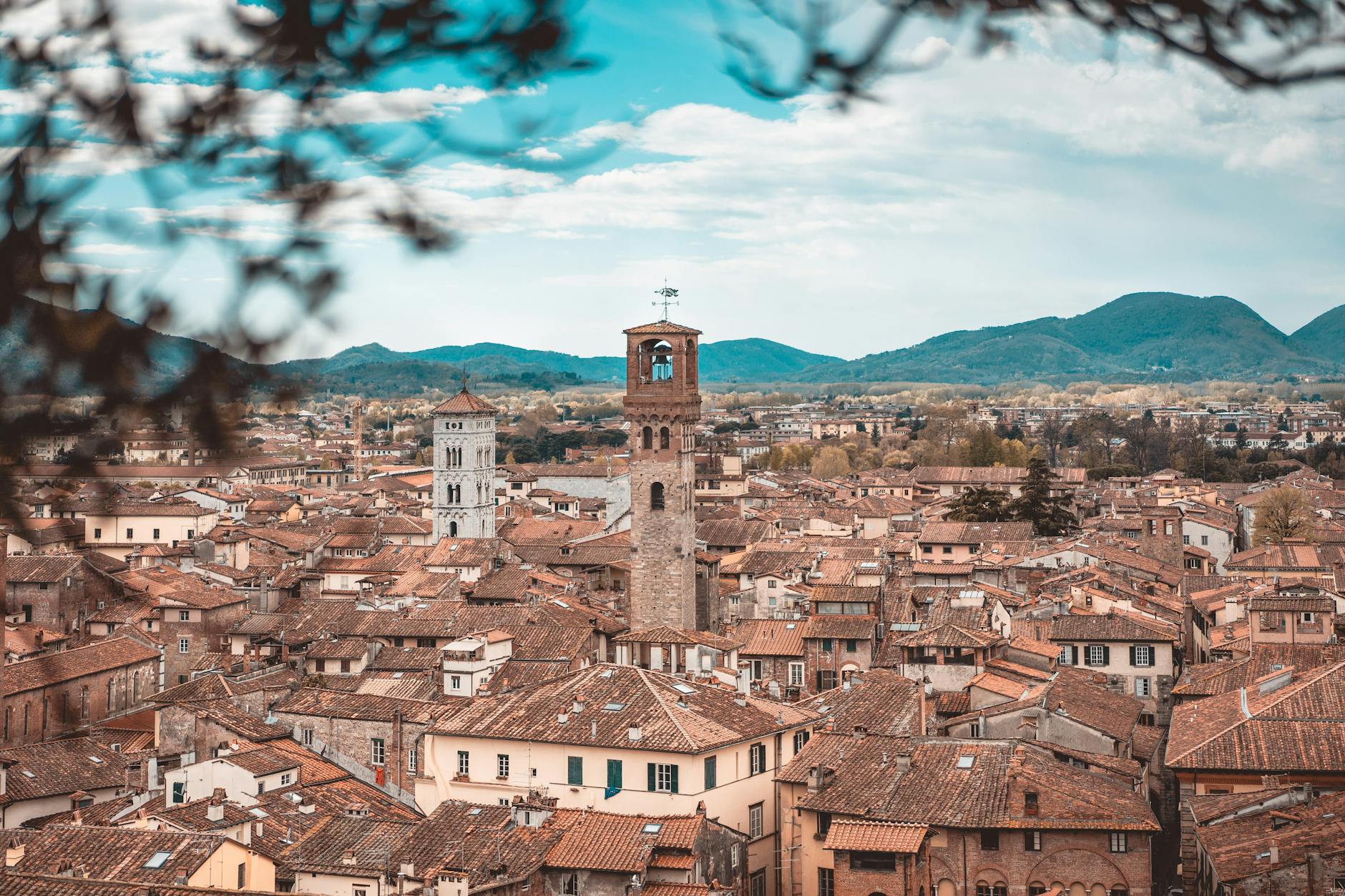
For one, Leonardo Da Vinci designed the city’s defensive walls, which impressively had never been reached. Nowadays, the top of these broad walls is a pleasant ring park where everyone can enjoy walking and biking. Lucca remained an independent city-state until the end of the 18th century.
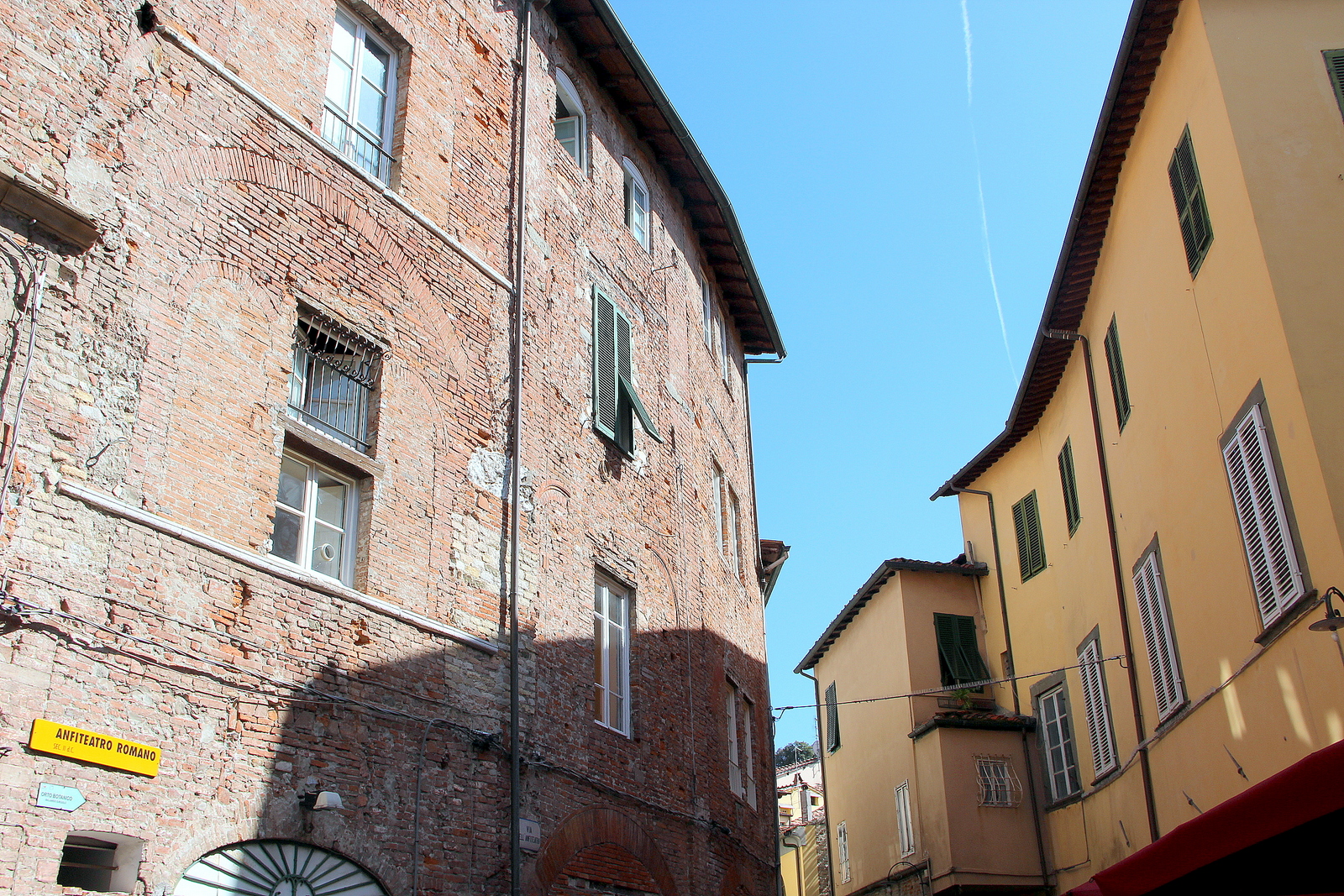
Piazza dell’Amfiteatro serves as the very symbol of Lucca and the center of town life today. Initially, the plaza served as an amphitheater as the center of entertainment outside the Roman town. The amphitheater of Lucca had 54 arches. Its cavea can hold as many as ten thousand spectators. It was such an imposing structure created for spectacles and gladiator games.
Centuries hereafter its role ended. The surviving structures turned into terraced houses, which later functioned as a salt warehouse, powder magazine, prison hall. By the 19th century, the restoration of the amphitheater became a fundamental structure for the urban development of the town.


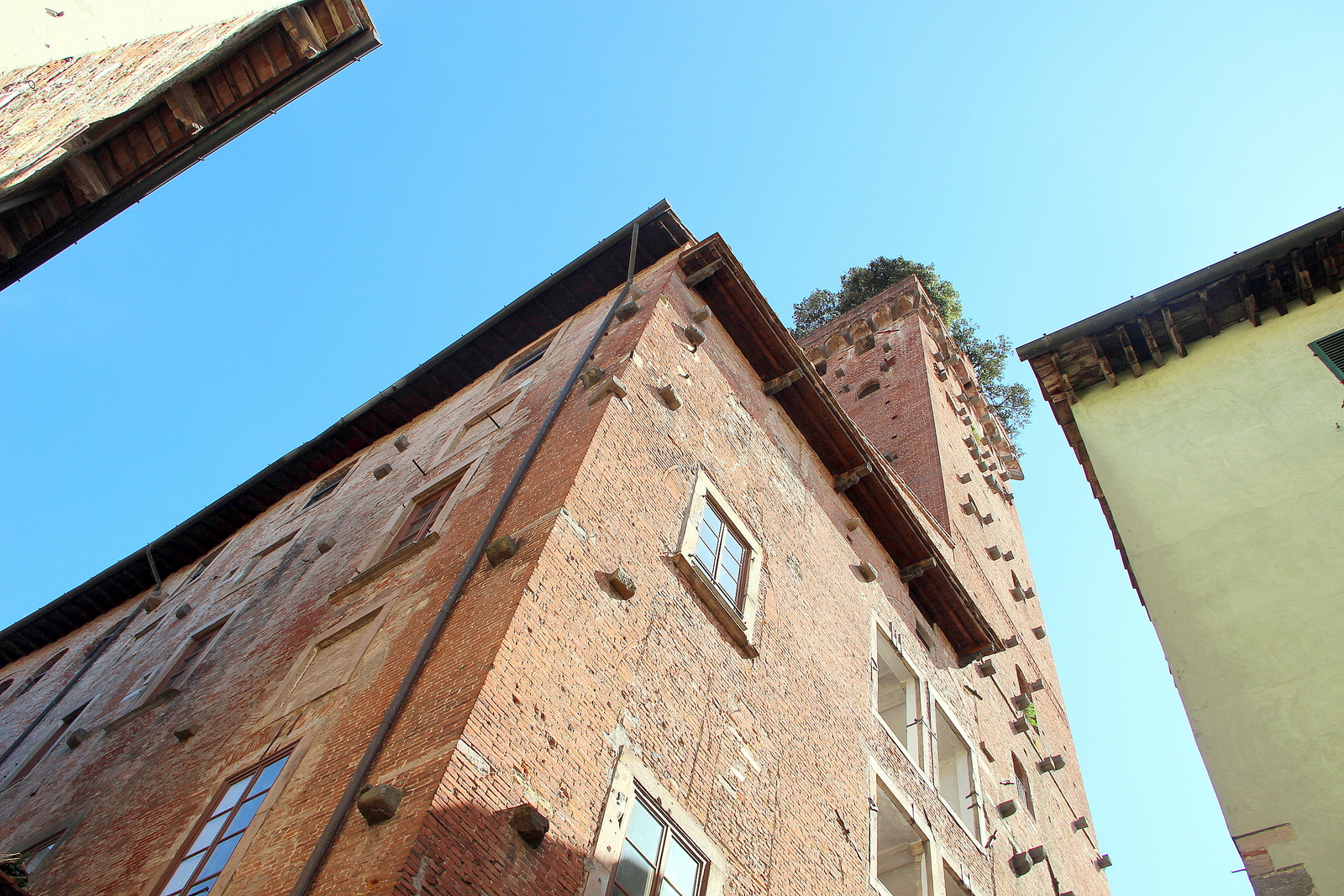
The Guinigi Tower is best known for its hanging garden on the roof. It is the most important tower in Lucca. Going up the tower, you’ll come to admire Lucca’s architectural jewels from above.
The Guinigi family were rich merchants and a leading family of the town. Their mansions straddle along via Sant’Andrea and via Guinigi. This tower showcases a classic example of Romanesque-Gothic Lucca architecture.
The holm oaks symbolize rebirth. They were placed at the top of the tower. The aim was to give the tower a refined look. During a time when many bell-towers were being constructed within the city walls, the towers served as symbols. They represented the prestige of the richest families.

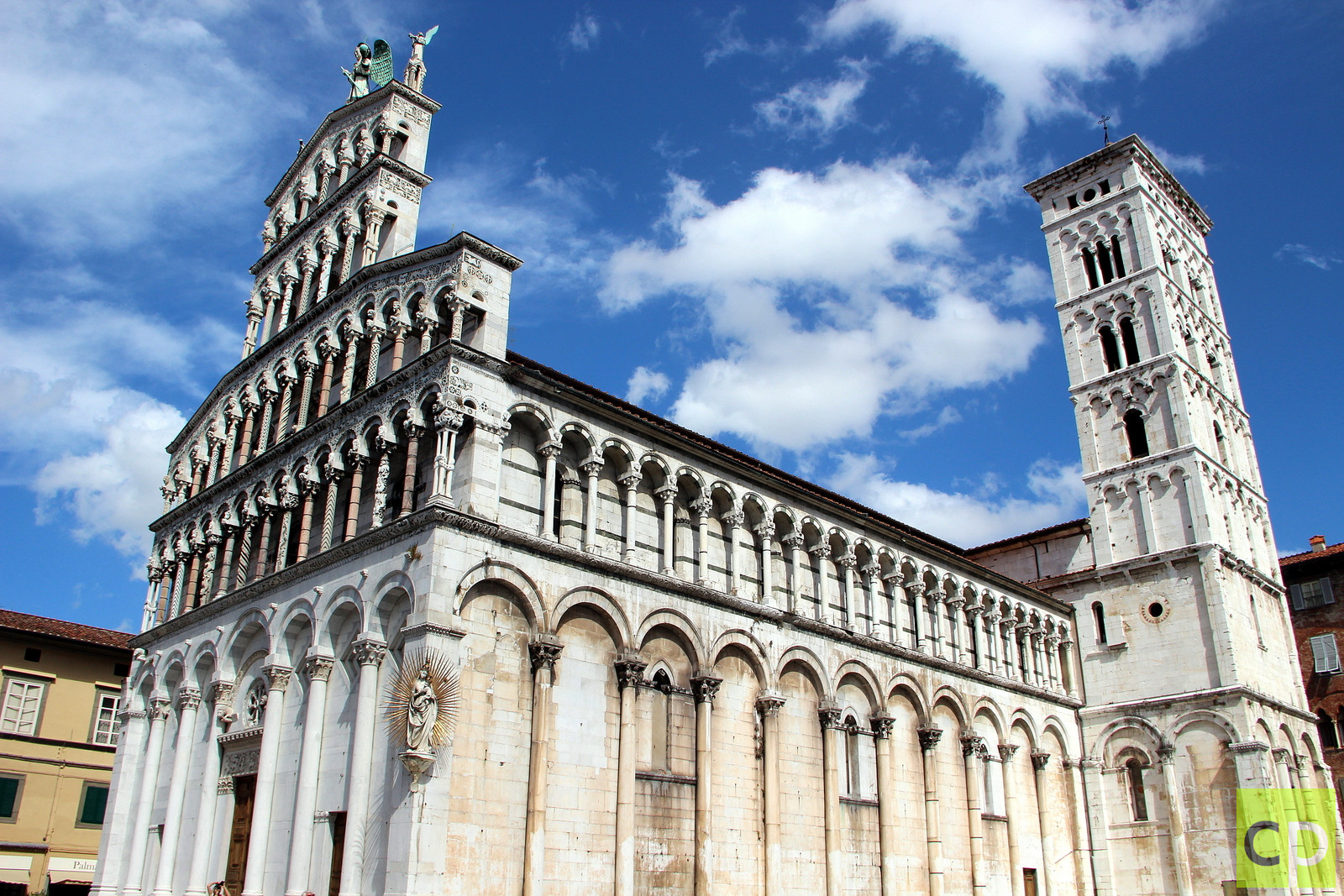
Lucca Cathedral and San Michele in Foro are the interesting churches in Lucca. Here you can sit down and enjoy beautiful Gothic and Romanesque facades. I personally like San Michele in Foro – it looks like a wedding cake!
The nice way to end the tour around the city wall of Lucca is by strolling around Passeggiata delle Mura. This name literally means ‘the walk on the walls’ in English. Through its 12-meter high walls, it defended the city by 126 canons. But now it is crowned with a wide, silky-smooth footpath.

This 4-kilometer long circular footpath gives you a glimpse of local Luccese life.
Practical Info & FAQs
How to get there
YEAR TRAVELED: 2013
From Cinque Terre, we drove to Pisa for an hour. After our stay in Pisa, off we drove to Lucca for a quick 30 minutes. If you don’t have a car, here’s an extra tip. You can get to Pisa and Lucca by plane. You can also travel there by train. Pisa has regular trains to and from Florence. There are usually three trains per hour. The trains to and from Lucca run every hour. Pisa is also accessible by bus. The city has an international airport. Yup, Pisa Galileo Galilei Airport is the main airport of Tuscany. It is served by several airlines. They run hundreds of weekly flights to national and international destinations.
Where to stay & eat
Villa Sermolli was restored in 2012. It dates back to the 16th century. The villa is set in a park with panoramic terraces and citrus groves. Rooms and apartments are rustic and elegant, and some offer views of the Tuscan hills. We stayed in a one-bedroom apartment with a garden for ourselves!

Accommodation can be in the main building or one of the annex buildings. It has traditional terracotta floors and some rooms come with frescoed ceilings and period furniture.
The villa features an antique kitchen with a large fireplace and wood-burning stove, ideal for making pizza and grills. The wine cellar is stocked with the best Tuscan wines. The villa also serves dinner on their terrace. On our first night in Tuscany, we enjoyed our first taste of Florentina steak. We savored a bottle of Tuscan reds. The delicate smell of olive trees surrounded us. We had a skyline view of Tuscany.


Villa Sermolli is set just outside the village of Buggiano Castello. The Montecatini Terme Thermal Baths are a 15-minute drive away.
Relish on the famous and much appreciated Tuscan cuisine. Simple, rustic dishes made from seasonal ingredients. Tuscan cooking is mostly made with poor basic ingredient and comes from a long and ancient tradition. Extra virgin olive oil is one of the most important ingredients that comes in almost every Tuscan dish.
This is a shortlist of Tuscan dishes and delicacies that are worth a try. It includes ribollita, pappa al pomodoro, panzanella, pane e fagioli, and fagioli all’uccelletto. You can also find prosciutto, salami, finnochiona, cinghiale, lepre, and daino. There is arista, pollo alla diavola, cacciucco, and bottarga. Also, try castagnaccio, pecorino, cantuccini, zuccotto, and torta della nonna. Buccellato, pane con l’uva, and bistecca fiorentina are also popular. And of course, pasta and lasagna are done in countless ways!

Eat (and drink) like an Italian. A typical Tuscan meal usually starts with a great variety of salami and cured meats. First, lasagna or pasta is served. Next, it’s the turn of fish or meat with side dishes. This is followed by fruit and, finally, a cake or dessert, usually homemade. Of course, no excuse to skip Tuscan wines!
Travel Tips
Purchase train tickets in advance for easy and affordable travel between Pisa and Lucca, as frequent regional trains connect the two cities in under 30 minutes.
Start your day early to enjoy popular attractions like the Leaning Tower of Pisa and Piazza dell’Anfiteatro in Lucca before the crowds arrive.
Climb the Leaning Tower of Pisa for panoramic city views, but be sure to reserve your ticket online to avoid long wait times.
Rent a bike in Lucca and cycle atop the city’s historic Renaissance walls for a unique perspective and a relaxing ride around the old town.
Take time to explore Pisa beyond the tower—stroll along the Arno River and visit the vibrant Borgo Stretto shopping district for local flair.
Enjoy authentic Tuscan cuisine at trattorias in both cities; try specialties like ribollita soup, pecorino cheese, and local wines.
Carry some cash for small purchases, café stops, or local markets, as not all vendors accept cards.
Check museum and church opening hours in advance, as many close for several hours midday or are closed on certain days.
Respect local customs and dress codes, especially when visiting religious sites—cover shoulders and knees as required.
Bring a reusable water bottle; both Pisa and Lucca have public fountains with safe drinking water, perfect for refilling on the go.
Relax in the historic thermal bath of Monsummano. Grotta Giusti was formed thousands of years ago in the calm of the age-old park at Monsummano Terme. It is so enchanting that the composer Giuseppe Verdi defined it as “the eighth wonder of the world”.
Its 3 caverns form a real and proper natural Turkish bath. The temperature ranges from 24C in the Paradiso cavern. It passes through Purgatorio to reach 34C in the Inferno cavern.
The warm damp vapors are rich in mineral salts. They favor a process of purification and detoxification. This process helps you regain your psychological and physical balance. It also provides an immediate sensation of well-being.
We’ve only had a quick taste of Tuscany. There’s just so many charming towns to discover!
Tuscany has been playing favorites through their art cities like Florence, Siena, Pisa and Lucca. Nonetheless, its countryside never missed the charm with its towns, villages, hills, castles and vineyards.

 What's Up With Perpie Lately
You must be logged in to post a comment.