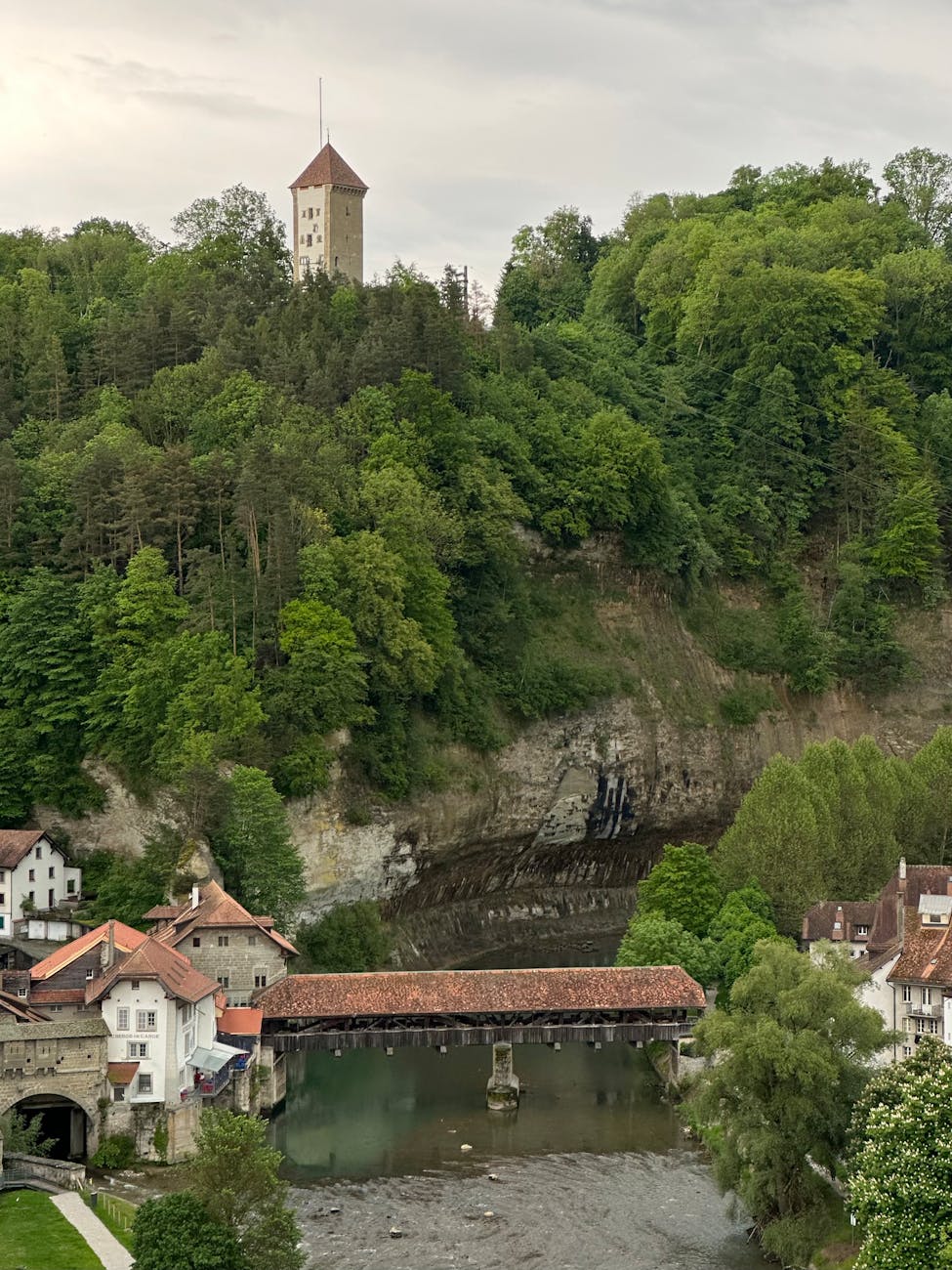
Have a sneak peak on these three quiet little villages in the French-speaking side of Switzerland.
Before visiting the historic tourist destination in Switzerland, Interlaken, we made some earlier stops. We visited the quaint yet equally eye-pleasing Swiss towns of Avenches, Thun, and Spiez.
Morning stroll at Avenches

Before we officially left Vaud, we took our morning walk in a dainty, quiet town called Avenches. It was the capital of Roman Helvetia. Emperor Augustus founded it 2,000 years ago.
A significantly-sized Roman amphitheater stands proudly in Avenche. It greets you as soon as you get into the town proper. This speaks about the town’s unique heritage from the Roman era.
Nowadays, this Roman amphitheater holds several festivals and cultural events in Avenches. Among its famous festivals are the Rock Oz’Arenes. This is an annual open-air rock festival. It has been around for almost 25 years. The Avenches Opera Festival is another well-known event. I think it closely resembles the opera festival in Verona.
Avenches is a charming medieval town in the canton of Vaud, Switzerland. It is renowned for its exceptional Roman heritage. Avenches was the former capital of Roman Helvetia, known as Aventicum. Located near Lake Morat in the Three Lakes region, this small municipality of around 4,000 residents sits atop ancient ruins that once housed up to 20,000 Romans at the settlement’s peak in the 2nd century AD. Today, visitors can explore the remarkably preserved Roman amphitheater, which still hosts concerts and festivals, along with extensive archaeological remains including Roman walls, mosaics, and artifacts displayed in the town’s Roman Museum. The juxtaposition of medieval architecture built upon Roman foundations creates a unique atmosphere where centuries of history coexist, making Avenches a fascinating destination for those interested in Switzerland’s ancient past and its evolution through the ages.
Al fresco lunch at Thun

We gazed toward the wide Broye Plain from the Avenches. While overlooking the Nespresso production facility, I asked, “How far are we still from Thun?”
“We still need to travel for almost an hour. We’ll pass by the ring road in Berne. It’s almost noon, so we should consider the possible slow traffic. Why do you ask?” my hubby replied.
“Well, I just had a light breakfast this morning. Now I’m hungry.” I sounded as if it was an emergency. Just like that, we quickly left Avenches. We wanted to be on-the-dot for lunch in Thun.
The city of Thun is situated at the lower end of the lake. This is where the River Aare flows out. Thun is considered the gate to the Bernese Oberland.
With skies getting clearer and brighter, a spectacular turquoise beauty of River Aare extending further to Lake Thun welcomed us.
The mountains of Eiger, Monch, and Jungfrau sit majestically across Lake Thun.
Thun’s old town streets are lined with cozy arcades and restaurants. Rushing river streams cross by wooden bridges. A white late-medieval castle sits atop of the hill.


Situated at the lower end of the lake to where the River Aare flows out, the city of Thun is considerably the gate to the Bernese Oberland. We were welcomed with skies getting clearer and brighter, and a spectacular turqoise beauty of River Aare that extends further to Lake Thun. The Eiger, Monch and Jungfrau sit majestically across this lake.
#TravelTuesday #PerpieInSwitzerland
Thun is a picturesque town of about 45,000 inhabitants situated at the northern end of Lake Thun in the Bernese Oberland region of Switzerland. Dominated by its striking 12th-century castle perched on a hill overlooking the town, Thun serves as both a cultural center and gateway to the Swiss Alps, with the dramatic peaks of the Eiger, Mönch, and Jungfrau visible on clear days. The town’s charming old quarter features covered wooden walkways called “Hohe Gasse.” These walkways run along elevated sidewalks above the street-level shops. This creates a unique two-level shopping experience. The crystal-clear waters of Lake Thun, fed by Alpine streams, offer opportunities for swimming. Boating and scenic cruises are also available. The town offers a blend of historical architecture and modern amenities. Visitors enjoy easy access to hiking trails and ski resorts in the surrounding Bernese Alps. Thun’s strategic location makes it a popular base for exploring the region. Its natural beauty combines urban convenience with stunning Alpine scenery.
It went perfectly sunny at lunchtime so everyone had their lunches outdoors. We also did just the same, but a quick al fresco lunch we only had. As much as we wanted to enjoy Thun with sunny weather, off we went to our next destination.
Old castle visit at Spiez

Spiez is a small town nestled between hills and vineyards and dominated by a magnificent castle along Lake Thun. We quickly visited the medieval castle and its thousand-year-old castle church. It started to drizzle, so we thought that we should go to Interlaken.

Spiez is a stunning lakeside town of approximately 13,000 residents located on the southern shore of Lake Thun in the Bernese Oberland region of Switzerland. The town is crowned by the iconic Spiez Castle, a medieval fortress dating back to the 10th century that sits dramatically on a promontory jutting into the turquoise waters of the lake, creating one of Switzerland’s most photographed scenes. This picturesque setting combines vineyards that cascade down hillsides toward the lake, well-preserved historical architecture, and panoramic views of the surrounding Alpine peaks including the Niesen mountain.
Spiez serves as an important transportation hub with its railway station connecting visitors to the Bernese Oberland’s mountain destinations, while the town itself offers charming waterfront promenades, a small harbor with pleasure boats, and hiking trails that wind through the surrounding vineyards and forests. The combination of medieval charm, natural beauty, and its position as a gateway to both lake recreation and Alpine adventures makes Spiez a beloved destination for both tourists and locals seeking the quintessential Swiss experience.

 What's Up With Perpie Lately