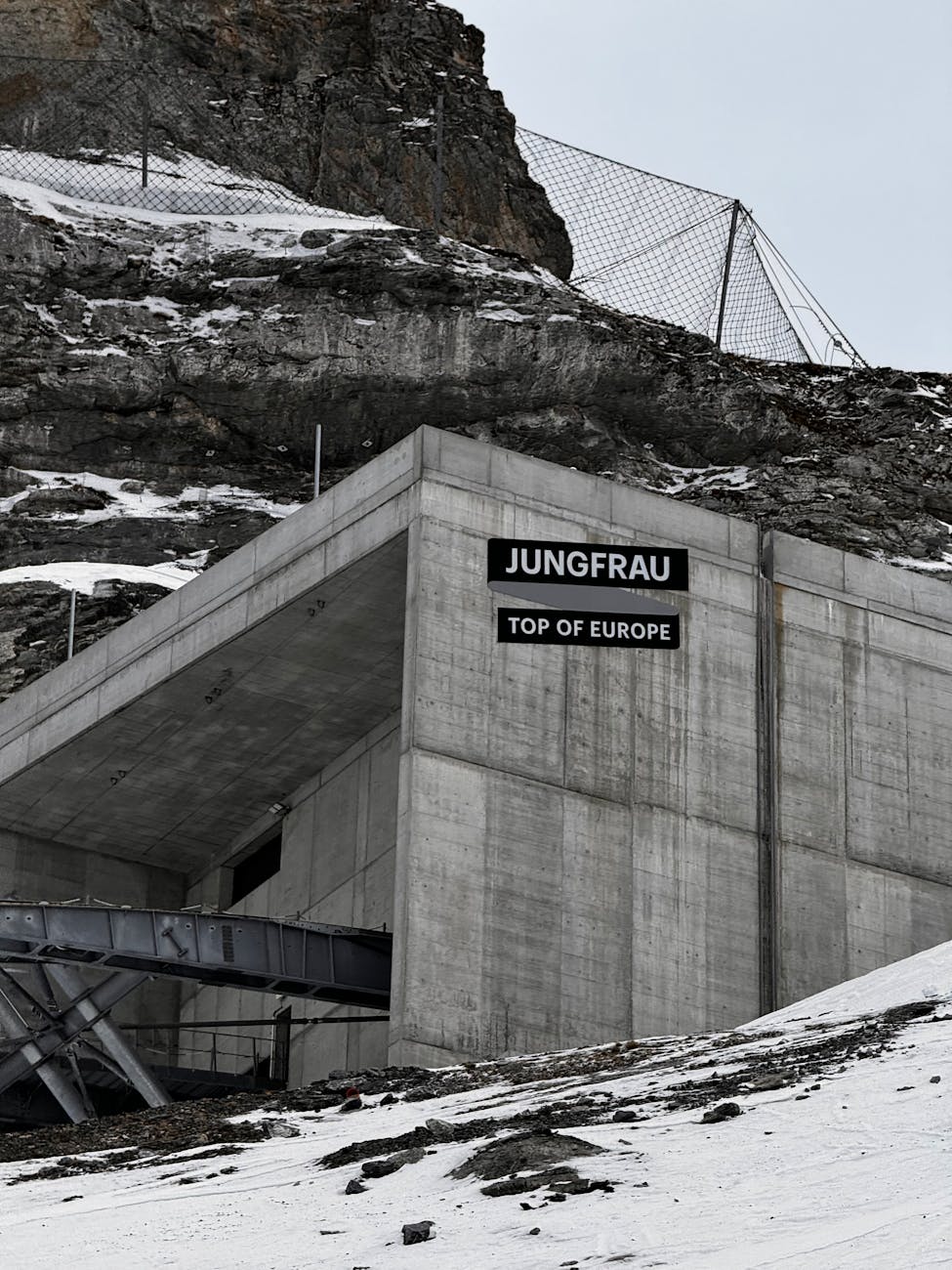
Jungfraujoch is the notable glacier ridge that connects the peaks of Jungfrau and Monsch. For anyone who wants to visit Switzerland, consider Jungfrau on the must-see list.nnJungfrau, the top of Europe.
If you’re geeking out over geography stuff, this marketing catchphrase would make you think twice. It makes you question whether Jungfraujoch is indeed the highest point in Europe.
Considering the Caucasus Mountains shared between the European and Asian borders, it makes Mount Elbrus the highest mountain in Europe. If the Caucasus is out of the picture, the highest point on the European mainland must be Mont Blanc. Mont Blanc is on the border between France and Italy.
Nonetheless, after our visit, I think Jungfrau deserves to take the credit after all. You can easily access the Klein Matterhorn by cable car and lift. The Mittelallalin is accessible by funicular. Nevertheless, the Jungfrau offers the most convenient and pleasant experience. It lets you reach icy peaks and wintry summits of the Alps, for which Switzerland is famous.

For an inexperienced “mountaineer” like me, reaching the mountain top is a proud achievement. It stands at 3,454 meters above sea level. That’s almost halfway through the Mount Everest, so that’s quite a feat.
I personally recommend for anyone who wants to visit Switzerland to consider Jungfrau on their must-see list. It doesn’t matter what time of year you visit; it’s always winter at the Jungfraujoch. The average temperature is -8 degrees. Even in the summertime, you can swim in the Swiss lake. You can then go to Jungfrau for sledding on snow within hours.
JUNGFRAU—Top of Europe
Icy air streams across your face, snow crunches under your feet, and the view nearly take your breath away: on one side the view of the Mittelland up to the Vosges, on the other the Aletsch glacier, bordered by four thousand meter peaks.
Standing on the Jungfraujoch 3,454 meters above sea level, you can feel it with your first step: this is a different world. It’s one you have to experience.
– jungfrau.ch
We drove from Interlaken to reach Lauterbrunnen. By the way, Lauterbrunnen is a real charm, especially in the summertime. It is known for its thunderous waterfalls and dramatic cliffs.
As it was wintertime then all we see was snow all around, but we did prefer to see all the snowcaps and glaciers at the top of Jungfrau anyway.
This majestic valley offers a postcard view and is considered a UNESCO World Natural Heritage Site. The village of Lauterbrunnen is nestled between towering limestone precipices. It is surrounded on three sides by the Eiger, Monch, and Jungfrau Mountains. Lauterbrunnen means “many springs” in German. This name is apt because it has 72 waterfalls that gush down into the valley.
You can also take the train from Interlaken East station via the Bernese Oberland railway.
From Lauterbrunnen, we took the cable car at Wengernalp that kicked off the scenic route.
After a few minutes, we finally reached Kleine Scheidegg.

Kleine Scheidegg is a mountain pass at an elevation of around 2,000 meters. It is situated below and between the Eiger and Lauberhorn peaks. As it was winter season, Klein Scheidegg was a busy central ski area around Grindelwald and Wengen. In summer it is a popular hiking destination, as being part of the famous Alpine Pass Route.
From here, we took our ride at the Jungfrau railway that would finally bring us to our destination.
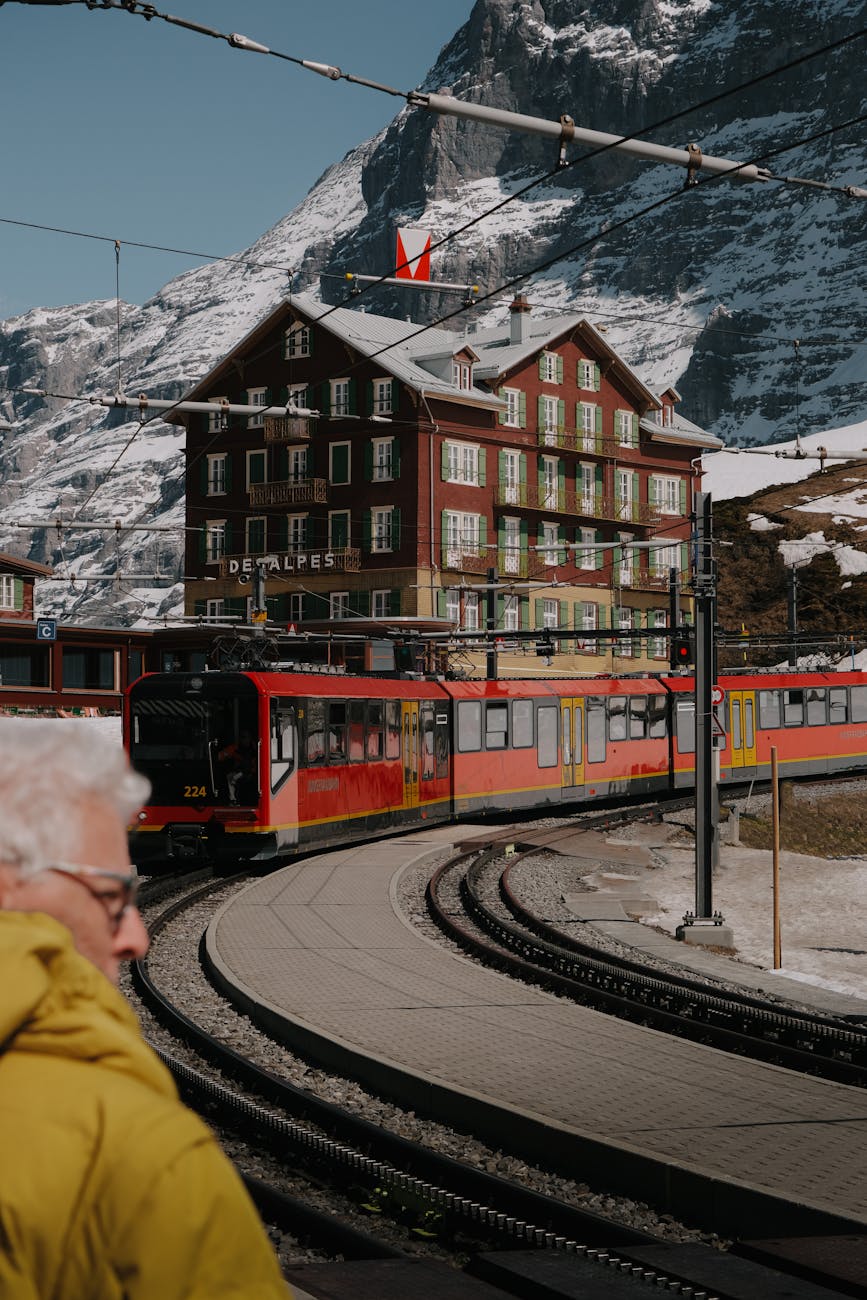
In 1912, the Jungfrau Railway was opened, a pioneering work among mountain railways. The cog railway transports passengers from Kleine Scheidegg to the Jungfraujoch – Top of Europe, which is located 3,454 meters above sea level in a world of rock, ice, and snow.
The journey to Europe’s highest railway station. Included in the nine-kilometer route are seven kilometers through the tunnel, where the railway traverses the Eiger and Mönch mountains. At the intermediate station of Eismeer, the trains stop for five minutes and visitors can admire the fascinating mountain world through the viewing window.
The Jungfrau Railway climbs a height difference of 1400 meters A trip takes 35 minutes.
– The Jungfrau Railway – A Pioneering Work
Here’s what we saw along the way as we were heading to Jungfrau’s top peak.
Bluish, furrowed ice blocks under a blanket of eternal snow, and in the distance the panorama of four-thousand-meter peaks: This is how the Eismeer station appears at 3,160 meters above sea level. This is where the train stops, so that the passengers can take their own personal souvenir picture.
What lasts five minutes seems like a journey through time lasting many thousands of years: During the last ice age, all of Switzerland must have looked like this mountain.
– Eismeer (Sea of Ice)
Welcome to the Top of Europe
Our Jungfrau passport got stamped – what a souvenir!

If you’re geeking out over geography stuff, this marketing catchphrase would make you think twice—on whether Jungfraujoch is indeed the highest point in Europe.
Considering the Caucasus Mountains shared between the European and Asian borders, it makes Mount Elbrus the highest mountain in Europe. If the Caucasus is out of the picture and considering only the European mainland, the highest point must be the Mont Blanc, on the border between France and Italy.
Nonetheless, after our visit, I think Jungfrau deserves to take the credit after all. Besides the Klein Matterhorn that you can easily access by cable car and lift and the Mittelallalin accessible by funicular, the Jungfrau gives the most convenient and pleasant experience of reaching icy peaks and wintry summits of the Alps, which make Switzerland famous for.
Especially for an inexperienced “mountaineer” like me, I can be very proud to say that I’ve conquered the mountain top of 3,454 meters above sea level. That’s almost halfway through the Mount Everest, so that’s quite a feat.
I personally recommend for anyone who wants to visit Switzerland to consider Jungfrau on their must-see list. It doesn’t matter what time of year you visit, it’s always winter at the Jungfraujoch. The average temperature is -8 degrees, so even in the summertime, you can go from swimming in the Swiss lake to sledding on snow in Jungfrau within hours.

“It is the life of the crystal, the architect of the flake, the fire of the frost, the soul of the sunbeam. This crisp winter air is full of it. “
– John Burroughs
Jungfraujoch is the notable glacier ridge that connects the 4,000 peaks of Jungfrau and Mönsch. In 1893 Adolf Guyer-Zeller came with a plan of constructing a tunnel to reach the peak of the Sphinx. The construction began in 1896 and took 16 years to complete. This was due to many problems it encountered, including monetary shortages, brutal weather, and mounting deaths due to accidents. The construction was completed. The railway only reached the height of the Jungfraujoch saddle. It had only two intermediate stations. Nonetheless, the Jungfraubahn still holds the title for highest railway in Europe, another significant proof of Swiss ingenious engineering.


Here are the highlights that we enjoyed in our Jungfrau visit.
Sometimes on the Jungfraujoch you can’t see the mountains for the clouds. However, this has nothing to do with bad weather – quite the opposite. Clouds are fascinating. Who has not dreamed of plunging into this soft cotton-like wonder? The Jungfrau panorama film makes it possible. It provides a 360-degree panorama of the mountain world that you could never see otherwise – 365 days a year. Visitors race with the camera through clouds, sink into ice crevices or fall into heaps of snow. And this is regardless of what the weather is doing right now.
– Jungfrau Panorama
A shudder runs down the spine of whoever enters the 250 metre long corridor between the Sphinx Hall and Ice Palace. Not only because of the frosty temperatures, but also because of the sacrifices made by the miners to open up the Jungfraujoch to the railway. 30 memorial tablets bear witness to this. The music on the way also gives you goosebumps: It brings back to life the beginnings of the Jungfraubahn, together with the images from the time of the tourism visionaries. Even if visitors are more comfortable today than the miners were – they feel relieved when, at the end of the experience, they can pose in front of the giant snow globe and say: I made it!
– Alpine Sensation
The more transient something is, the more beautiful. This is especially true of the Ice Palace and its treasures. Mountain guides created the aisles and halls in the 1930s with picks and saws in the middle of the Jungfraufirn. Today, artists create the ice – with a great deal of flair. On a mirror-smooth tour through a frosty world, visitors will discover their works of art in nooks and crannies. An eagle, ibex or bear, as though they had just been frozen, appear quite natural. Even at minus three Celsius, they are melting.
– Ice Palace
Tribute to the Workers in the Jungfrau Mountain
I presume this is a temporary highlight in Jungfrau so it’s a privilege to see this around. Together with the Alpine Sensation, it opened in 2012 to mark the centenary of the Jungfrau railway.
Travellers of antiquity who could not solve the riddle of the Sphinx were strangled by the monster. Visitors of the eponymous rock formation on the Jungfraujoch need not worry about this. And they can travel in greater comfort: An ultrafast lift takes you to the observatory, an international research station. It climbs 108 metres in 25 seconds. They need do nothing more than enjoy the view up there. They can safely leave the riddles to the explorers.
– Sphinx Observatory
Just as we arrived back in Interlaken, we found ourselves lucky. We saw the Jungfrau Mountain clearly from afar. This can be a rare glimpse as it is usually hiding behind the clouds at this wintry season. We’re counting that as a final reward we got from visiting Jungfrau.
Practical Info & FAQs
How to get there
YEAR TRAVELED: 2014
We went by car, but you can still be able to get there by train. Believe me, the transport system in Switzerland is quite remarkable. The train ride to the top of Europe speaks for itself already.
To get to the peak of Jungfrau, we started from Lauterbrunnen. We took the Wengernalp cable car to reach Kleine Scheidegg. Then, we rode the Jungfrau railway directly from there to Jungfraujoch – Top of Europe.
Where to stay & eat
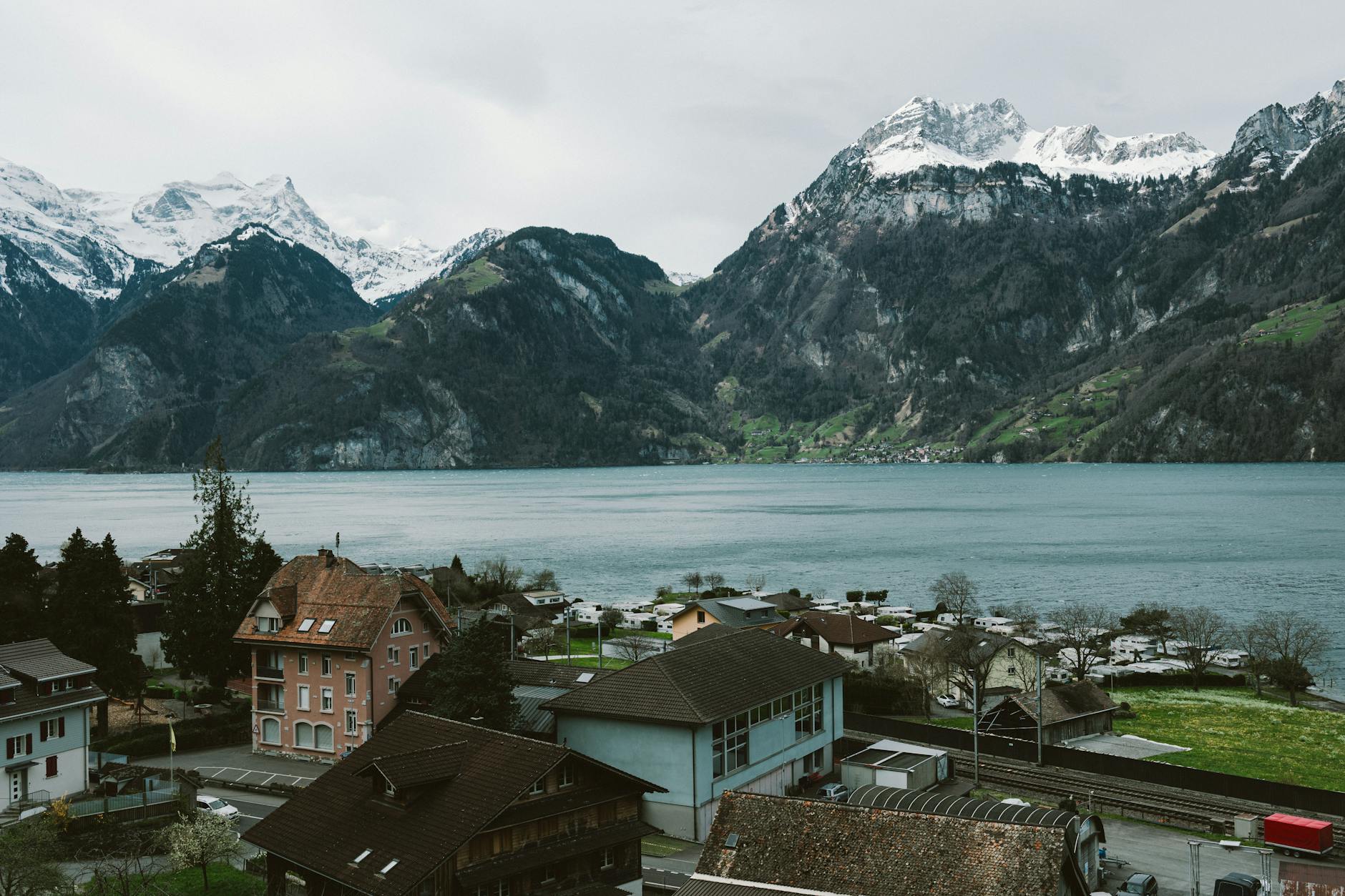
We stayed at the mountain village of Beatenberg. From there, you get the best vantage points set against the Bernese Alps. You also have a view of the deeply blue Lake Thun.
It was already our second time to visit Interlaken when we went up to Jungfrau. On our first visit, we stayed at Dorint Blüemlisalp Hotel in Beatenberg. We then discovered a much smaller, cozier warm, and rustic hotel and restaurant right beside it. We went to that place for dinner over and over. Obviously, we enjoyed it that when it’s up for us to come back, we chose to stay at Hotel Gloria.
Quite a special mention here but the best dish that you must eat when you are in this side of Switzerland is the classic Swiss rösti. Nothing beats that crispy, pancake-like but loose collection of buttery potato. Served with a silky sunny side up egg and greasy yummy ham, it was the perfect lunch of alpine dreams.
Travel Tips
Dress in layers and bring waterproof clothing, as weather in the Jungfrau region can change quickly and be unpredictable.
Purchase a Swiss Travel Pass or Jungfrau Travel Pass to save money on trains, cable cars, and mountain excursions.
Start your day early to avoid crowds at popular spots like Jungfraujoch and Schynige Platte.
Take the scenic cogwheel train to Jungfraujoch, the “Top of Europe,” for breathtaking views and unique ice attractions.
Explore picturesque villages such as Grindelwald, Lauterbrunnen, and Wengen for authentic Swiss charm.
Don’t miss hiking opportunities—trails like the Eiger Trail and the walk from Männlichen to Kleine Scheidegg offer stunning alpine scenery.
Keep cash on hand for small purchases, as some mountain huts and local shops may not accept cards.
Try regional specialties like rösti and alpine cheese at mountain restaurants for an authentic taste of Switzerland.
Check the forecast and local avalanche warnings before venturing out for winter sports or high-altitude hikes.
Respect nature and stay on marked trails to preserve the pristine environment and ensure your safety.

 What's Up With Perpie Lately
You must be logged in to post a comment.