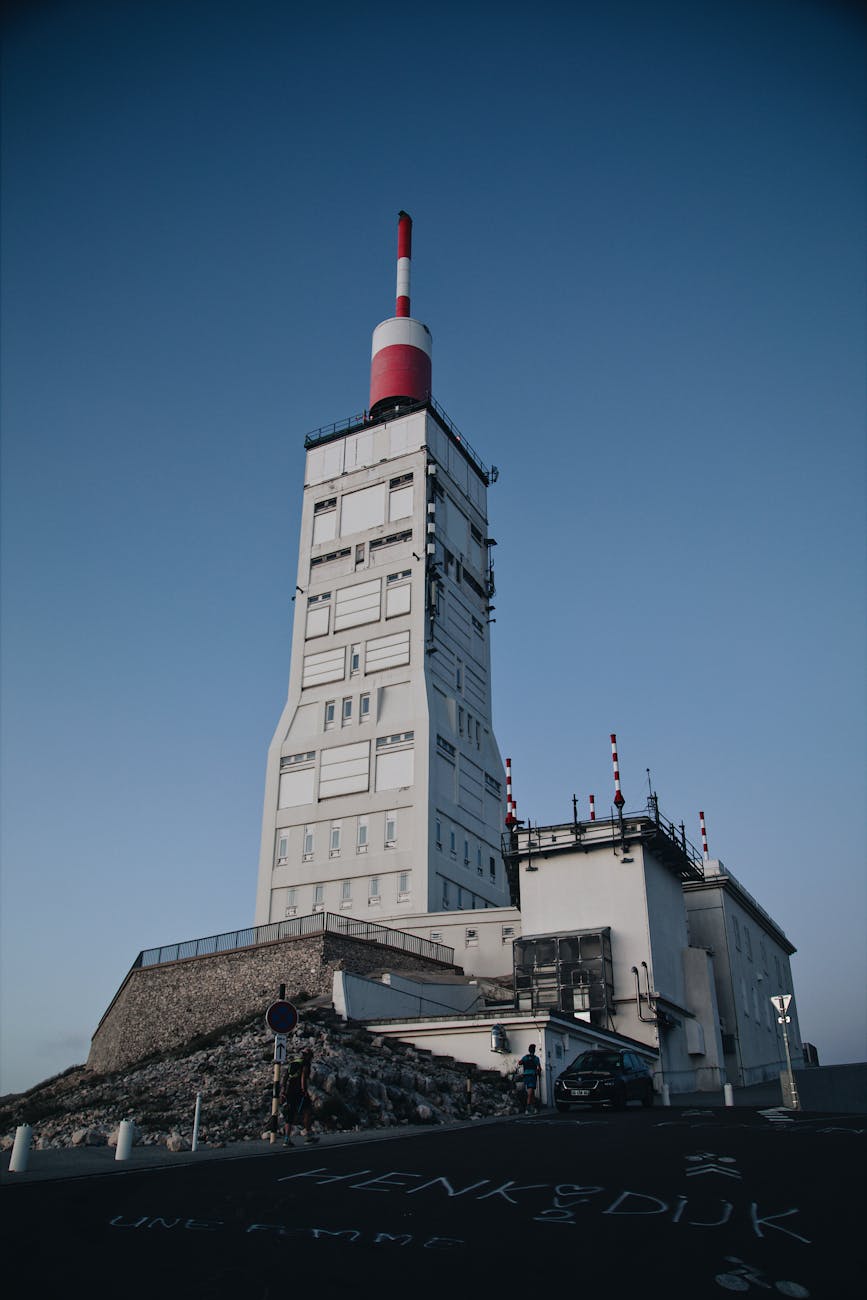
Rising like a bald giant above the lavender fields of Provence, Mont Ventoux stands as cycling’s most legendary and unforgiving challenge, where Tour de France dreams are made and broken on its windswept, lunar-like summit.
It was in its 100th year when I started watching the Tour de France. Stage 15 was intense. I focused intently on the race. My favorite Columbian underdog, Nairo Quintana, was racing against Team Sky’s lead, Chris Froome, at Mont Ventoux. As they raced frantically hard against each other, my cheers for Quintana started to wane. Then I became suspicious of Froome. “He must be on steroids!” I exclaimed. How can Froome speed up so quickly during this death-defying climb? How can he reach the top of this mountain?
“Physically, the Ventoux is dreadful. Bald, it’s the spirit of Dry: Its climate (it is much more an essence of climate than a geographic place) makes it a damned terrain, a testing place for heroes, something like a higher hell.”
– Roland Barthes, French philosopher and bicycle racing fan
Mont Ventoux is the largest mountain in the region of Provence. It is called the “Beast” or the “Giant” of Provence. It is also referred to as “Bald Mountain” due to its barren, rocky white top. Its name dates back to the first century. It was named after a Gaulish god of the summits. In the Gallic language, it also means “snowy peak.” The mountain’s greatest prestige is linked to the Tour de France. Whenever the popular race does a stage here, it claims fame. Riders gain fame by riding up and reaching the top in the fastest way ever possible.

Spanish cyclist Iban Mayo presently holds the fastest ascent from Bedoin to Mont Ventoux summit. He achieved this during the individual time trial at the 2004 Dauphiné Libere race. His time was 55 minutes and 51 seconds. Unfortunately, almost all the top 10 fastest cyclists are alleged to have used performance enhancers. The unquestionable and most impressive climb was from Charly Gaul in 1958, at 1 hour and 2 minutes.
The mountain gained its notoriety during the 13th stage of the 1967 Tour de France. It claimed the life of English cyclist Tom Simpson. Despite being delirious as he fell down, he urged his spectators, “Put me back on my bike!” He biked further within 1.5 kilometers of the summit before he collapsed dead. Today, a memorial to Simpson can be found near the summit. It is often visited by devoted cyclist fans from all over.
In 1970 the great Eddy Merckx rode himself to the brink of collapse. Yet, he managed to win the Mont Ventoux stage. Even more impressively, he won the Tour itself.
We arrived at Bedoin, a lovely small village located at the foot of Mont Ventoux. Bedoin is also known as the starting point of one of the three routes to the mountain’s summit. Luckily for us and the visitors who’d perhaps come for bike riding, it was sunny spring weather indeed.
Not so far from Bedoin is another small French village called Mormoiron. From there, we stayed at the rustically charming Au Brabo.
Mont Ventoux is more considerably known as a paradise for cyclists. It is less popular as a biosphere reserve recognized by UNESCO. I can definitely attest that Mont Ventoux is a nice place to walk. It is also great to hike and discover unique flora and fauna.
From the hiking ground, at around 1500 meters, we have a fantastic view over the Vaucluse. Right on the other side, the peak of Mont Ventoux eagerly awaits our arrival.
It would take half a day by foot to reach the summit. We decided to take the car and drive towards it instead.
So then, we made it to the top.

 What's Up With Perpie Lately