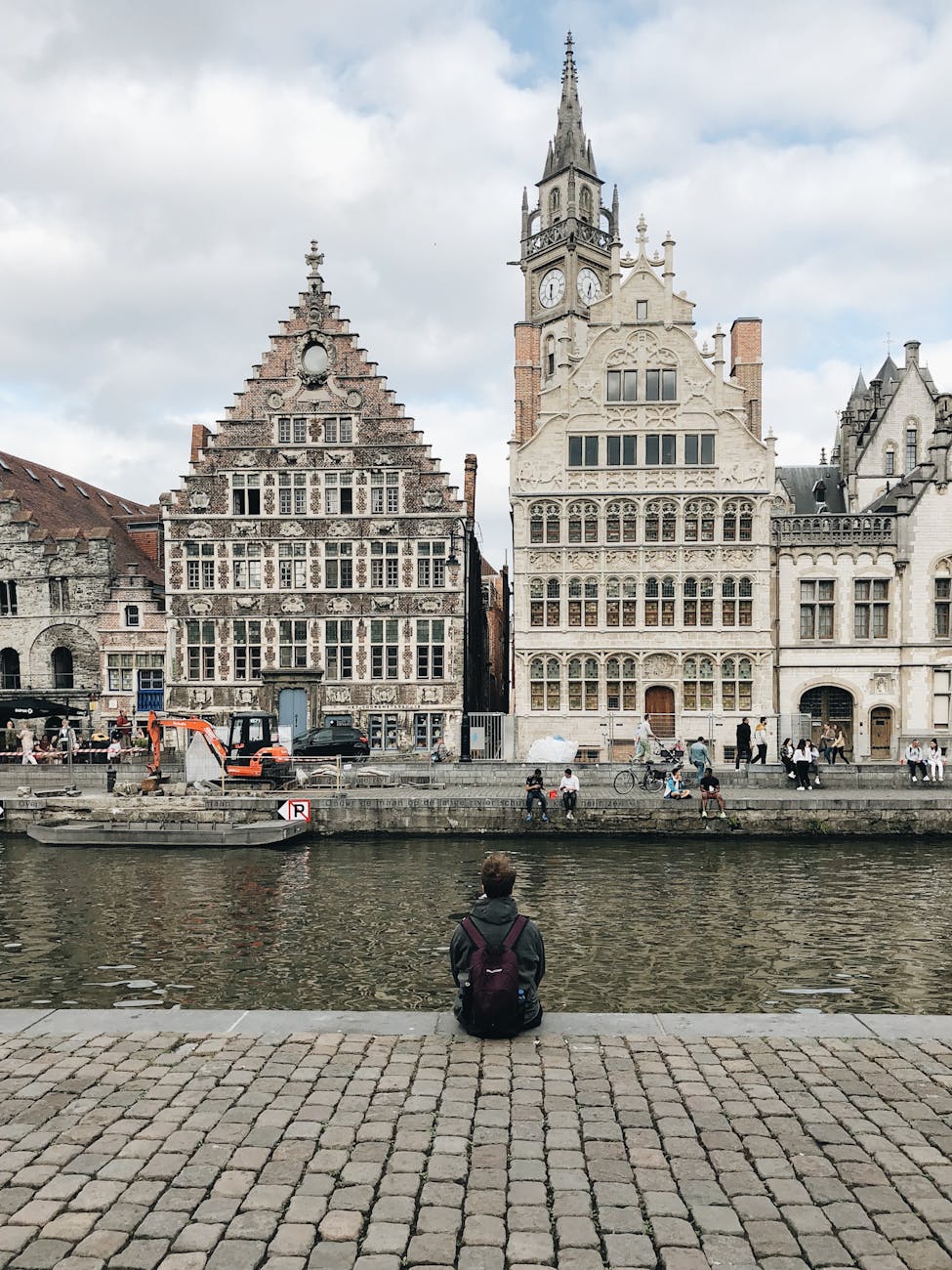
Belgium is worth visiting for its picturesque towns with beautiful architecture, such as Bruges and Ghent, its lush green forests and outdoor activities in the Ardennes, and its numerous historic castles and ruins. Here are more reasons why you must go and visit Belgium.
Belgium is a captivating destination worth visiting for its blend of picturesque towns, lush green forests, and historic landmarks. The medieval city of Bruges, with its romantic canals and cobblestone streets, is a must-see, while Ghent and Antwerp offer a mix of beautiful architecture and vibrant cultural scenes. The Belgian Ardennes, located in the south, provides a haven for outdoor enthusiasts with opportunities for hiking, mountain biking, and exploring charming villages. Additionally, Belgium boasts an impressive number of castles and ruins, such as Bouillon Castle and Gravensteen Castle, which offer a glimpse into the country’s rich history.
Whether you’re drawn to its scenic beauty, cultural heritage, or outdoor adventures, Belgium has something to offer every traveler.
I came to know more about Belgium when my husband and I met back in 2011. His peculiar interest in good quality mayonnaise and beef stew cooking with beer likewise piqued my interest to know more about him and his home country.
By then, conversations also went on from comparing Swiss and Belgian chocolates, to the unique form of Belgian government, when during that time, Belgium continued to go on as a country without “forming a government” for more than a year. I couldn’t fathom that idea, as well as the rest of the country’s idiosyncrasies, not until I went on to live here in Belgium since 2015, become its citizen and acquire my voting rights. Now I understand, but then if you start to ask me why and how, I will start by saying, niet zo gemakkelijk or c’est très compliqué. I won’t be surprised if you’d give up asking me.
My first visit of Belgium entailed with a goal of meeting my soon-to-be in-laws and announcing to the family about our secret wedding plans, all the while my soon-to-be husband touring me around in Brussels and Antwerp. Of course, after we got married, I came to visit Belgium more often than before, from which I visited Mechelen, Ieper and Brugge for the first time.
By the end of 2014, we finally decided to move to Belgium to start our family life and call Belgium our home. Since then, with our kids in tow, I’ve explored Belgium through and through, all the way from the big cities of Brussels and Antwerp to the klein German-speaking parts of Belgium.
I’m proud to share with you about the country that I now call home, Belgium it is! So here are the places in Belgium that I’ve visited and I can recommend for you to visit. TIP: Learn to eat fries with mayonnaise, and drink Belgian beer like drinking water. Don’t be surprised. Get used to it. 😉
Brussels
Brussels is the capital of Belgium and serves as the de facto capital of the European Union, hosting major EU institutions and NATO headquarters, which has earned it the nickname “capital of Europe” and made it a true global city and center of international politics.
The Brussels-Capital Region is situated in the central portion of Belgium along the Senne River, and is officially bilingual in French and Dutch, though French predominates as the majority language and lingua franca. The city is renowned for its stunning historic Grand-Place, a UNESCO World Heritage Site surrounded by magnificent 17th-century guildhalls, along with iconic landmarks like the Atomium, Manneken Pis statue, and its celebrated culinary offerings including Belgian chocolate, waffles, frites, and an extraordinary variety of beers, making it both a major cultural attraction and an important economic hub in Western Europe.
Leuven
Leuven is a historic university city in Flemish Brabant, Belgium, located about 25 kilometers east of Brussels, and is home to KU Leuven, founded in 1425 as one of Europe’s oldest and most prestigious universities with over 50,000 students that give the city its vibrant, youthful atmosphere. The city features stunning architecture including an ornate Gothic Town Hall built between 1448 and 1463, the Great Beguinage UNESCO World Heritage Site, and the rebuilt university library that was tragically destroyed during both World Wars, along with numerous medieval churches and the oldest botanical gardens in Belgium. Leuven is also known as a major brewing center, serving as the worldwide headquarters of Anheuser-Busch InBev and home to the historic Stella Artois brewery, while the lively Oude Markt square, often called the longest bar in Europe due to its surrounding cafés, embodies the city’s celebrated beer culture and convivial student life.
Genk
Genk is a city in the Limburg province of Belgium known for its remarkable transformation from an important coal mining center into a modern, multicultural hub that has successfully repurposed its industrial heritage into cultural and creative spaces. The city has an exceptionally diverse population, with over half of its residents having foreign origins from more than 100 different nationalities, primarily Italians, Turks, and Greeks who originally came to work in the coal mines, making Genk one of the most multicultural cities in Flanders where integration has been particularly successful.
Today, Genk offers visitors a unique blend of attractions including the famous Bokrijk open-air museum, the innovative C-Mine cultural center built on a former mining site, stunning natural areas like the Hoge Kempen National Park (Belgium’s only national park), and creative installations such as the “Cycling Through Water” bike path, all reflecting how the city has evolved from its industrial past into a forward-thinking destination that combines history, nature, culture, and innovation. Park.
Limburg
Limburg is the easternmost province of Flanders in Belgium, with its capital in Hasselt. The province is renowned as Belgium’s largest fruit-growing region, producing over half the country’s fruit, particularly in the picturesque Haspengouw area often called the “Tuscany of the North,” while also offering unique attractions like cycling through treetops, Belgium’s oldest city Tongeren with its Roman heritage, and the transformed C-Mine cultural center in the former coal-mining town of Genk.
Strategically positioned in the heart of industrialized Europe with excellent connections to major ports like Antwerp and Rotterdam, Limburg has evolved from its coal-mining past into a modern economic hub focusing on industries such as automotive, logistics, clean technology, life sciences, and information technology, earning it the nickname “the Beating Heart of Europe.”
Antwerp
Antwerp is Belgium’s largest city and second-largest urban area after Brussels, situated on the Scheldt River about 25 miles north of Brussels, and serves as one of the world’s major seaports with Europe’s second-largest port after Rotterdam. The city is globally recognized as the hub of the international diamond trade and has emerged as a vibrant cultural capital known for its avant-garde fashion scene, with designers and fashion houses making it a must-visit destination for style enthusiasts.
Antwerp beautifully blends its rich historical heritage, including the stunning Gothic Cathedral of Our Lady containing works by Baroque master Peter Paul Rubens, the ornate Grote Markt square with gilded guild houses, and the medieval Het Steen fortress, with contemporary energy through world-class museums, trendy neighborhoods, exceptional dining, and impressive modern architecture like the striking Antwerp Central Station, often hailed as one of the world’s most beautiful railway terminals.
Durbuy
Durbuy is a charming medieval town in Belgium’s Walloon region that proudly markets itself as “the smallest city in the world,” a title it received in 1331 when King John of Bohemia granted it city status, and though it has only about 400 permanent residents in its historic center, it attracts numerous tourists throughout the year. The town features beautifully preserved cobblestone streets lined with 17th and 18th-century slate-roofed houses often covered in ivy, a privately-owned castle dating back to the 14th century, and the scenic Ourthe River flowing through it, all set against the forested hills of the Belgian Ardennes.
Beyond its picturesque medieval atmosphere, Durbuy offers visitors a surprising range of activities including the Topiary Park with sculpted bushes, Adventure Valley Belgium’s largest adventure park, kayaking and hiking opportunities, artisan chocolate shops, fine restaurants, and a famous Christmas market that transforms the town into a winter wonderland from November through early January.
Dinant
Dinant is a picturesque town in Wallonia, Belgium, dramatically situated along the narrow banks of the Meuse River beneath towering limestone cliffs, with its name deriving from the Celtic words meaning “Sacred Valley.” The town’s most iconic landmark is its imposing citadel that looms high above the Gothic-style Collegiate Church of Notre Dame, both of which create a stunning riverside vista that has made Dinant one of Belgium’s most photographed destinations.
Dinant is celebrated as the birthplace of Adolphe Sax, the inventor of the saxophone in 1846, and is famous for producing Leffe beer, which monks at the Leffe Abbey began brewing as early as 1240, making it a charming destination that combines rich history, distinctive architecture, and beloved Belgian traditions.
Namur
Namur is the capital of both Wallonia and Namur province in Belgium, strategically positioned at the confluence of the Sambre and Meuse rivers, where it has served as an important settlement since pre-Roman times and became the seat of the counts of Namur from 908 until 1421. The city is dominated by its impressive medieval citadel perched atop a rocky promontory between the two rivers, which once served as one of Europe’s largest fortresses and now offers panoramic views along with historical underground passages that can be explored by visitors.
Namur combines its rich historical heritage, including the Baroque Cathedral of St. Aubain and a UNESCO-listed belfry, with a vibrant contemporary atmosphere as a thriving university city known for its charming pedestrianized old town filled with intimate streets, boutique shops, art museums, excellent restaurants, and a lively cultural scene featuring theater, film festivals, and nightlife.
Brugge
Bruges is a beautifully preserved medieval city in West Flanders, Belgium, often called the “Venice of the North” for its picturesque canals lined with historic buildings and its enchanting cobblestone streets that wind through a UNESCO World Heritage historic center. The city is renowned for its Gothic architecture, including the iconic 13th-century Belfry bell tower with its 47-bell carillon, the ornate Basilica of the Holy Blood, and the oval-shaped Markt square surrounded by colorful guild houses that create a fairy-tale atmosphere.
Beyond its architectural splendor, Bruges is celebrated for its world-class Belgian chocolates, exceptional beer culture featuring historic breweries, delicate handmade lace, and an impressive collection of Flemish Primitive paintings, making it one of Europe’s most romantic and culturally rich destinations.
The Belgian Ardense
Bruges is a beautifully preserved medieval city in West Flanders, Belgium, often called the “Venice of the North” for its picturesque canals lined with historic buildings and its enchanting cobblestone streets that wind through a UNESCO World Heritage historic center. The city is renowned for its Gothic architecture, including the iconic 13th-century Belfry bell tower with its 47-bell carillon, the ornate Basilica of the Holy Blood, and the oval-shaped Markt square surrounded by colorful guild houses that create a fairy-tale atmosphere.
Beyond its architectural splendor, Bruges is celebrated for its world-class Belgian chocolates, exceptional beer culture featuring historic breweries, delicate handmade lace, and an impressive collection of Flemish Primitive paintings, making it one of Europe’s most romantic and culturally rich destinations.
The Belgian Seacoast
The Belgian coast stretches approximately 67 kilometers along the North Sea from the French border to the Netherlands, featuring wide sandy beaches, charming seaside resort towns like Ostend, Knokke-Heist, and De Panne, each with its own distinct character ranging from elegant Belle Époque architecture to lively promenades. The coastline is connected by the world’s longest tram line, known as the Coastal Tram, which runs the entire length and provides convenient access to all the seaside towns, beaches, natural dune reserves, and attractions along this compact but diverse stretch of Belgian shoreline.
Famous for its fresh North Sea seafood, particularly mussels and gray shrimp caught by traditional horse fishermen, the Belgian coast offers visitors a blend of beach relaxation, water sports, cycling paths, family-friendly amusement parks, and cultural experiences that make it a popular destination for both Belgians and international tourists.
EXPERIENCE THE BELGIAN NORTH SEA
Gent
Ghent is a historic city in the Flemish Region of Belgium and the capital of East Flanders province, positioned at the confluence of the Scheldt and Leie rivers, where it thrived as one of medieval Europe’s largest and wealthiest cities in 1300. The city is renowned for its exceptionally well-preserved medieval and Renaissance architecture, including the magnificent Gravensteen Castle, the UNESCO-listed Belfry tower, and St. Bavo’s Cathedral which houses the world-famous Ghent Altarpiece by the van Eyck brothers, considered a masterpiece of Northern Renaissance art.
Today, Ghent combines its rich historical heritage with a vibrant, contemporary atmosphere as a university city and Belgium’s third-largest municipality, offering picturesque canals, creative street art, excellent Belgian cuisine and chocolate, and a more authentic, less touristy experience compared to nearby Bruges.
Ieper
Ieper, known in French as Ypres, is a historic city in West Flanders, Belgium, that became the center of some of the bloodiest battles of World War I, where three major confrontations took place in what became known as the Ypres Salient, including the first use of poison gas as a weapon by German forces in 1915. Though the city was almost completely destroyed during the war, it has been meticulously reconstructed in its original medieval style, with highlights including the magnificent Cloth Hall on the Grote Markt dating back to medieval times when Ypres was a major cloth-weaving center, and the Menin Gate memorial where the Last Post ceremony is still played every evening to honor the fallen.
Today, Ieper is surrounded by well-preserved ramparts from 1385, numerous war cemeteries and memorials, and museums dedicated to the Great War, making it a profoundly moving destination for those wishing to understand the sacrifices made during one of history’s most devastating conflicts.
Mechelen
Mechelen is a historic city in the Flemish region of Belgium, strategically positioned between Brussels and Antwerp, which served as the capital of the Low Countries during the 16th century under Archduchess Margaret of Austria and remains the seat of Belgium’s only archbishopric since 1559. The city’s most iconic landmark is the UNESCO-listed St. Rumbold’s Cathedral tower, a 97-meter Gothic structure that dominates the skyline and is associated with the local legend of the “Maneblussers” or Moon Extinguishers, residents who once mistook moonlight on the tower for a fire.
Today, Mechelen is an underrated gem offering visitors beautifully preserved medieval architecture, world-class museums including the Kazerne Dossin Holocaust memorial, the renowned Het Anker brewery producing the acclaimed Gouden Carolus beer, and a thriving culinary scene, all within a compact, walkable historic center that provides an authentic Belgian experience without the tourist crowds of larger cities.

 What's Up With Perpie Lately