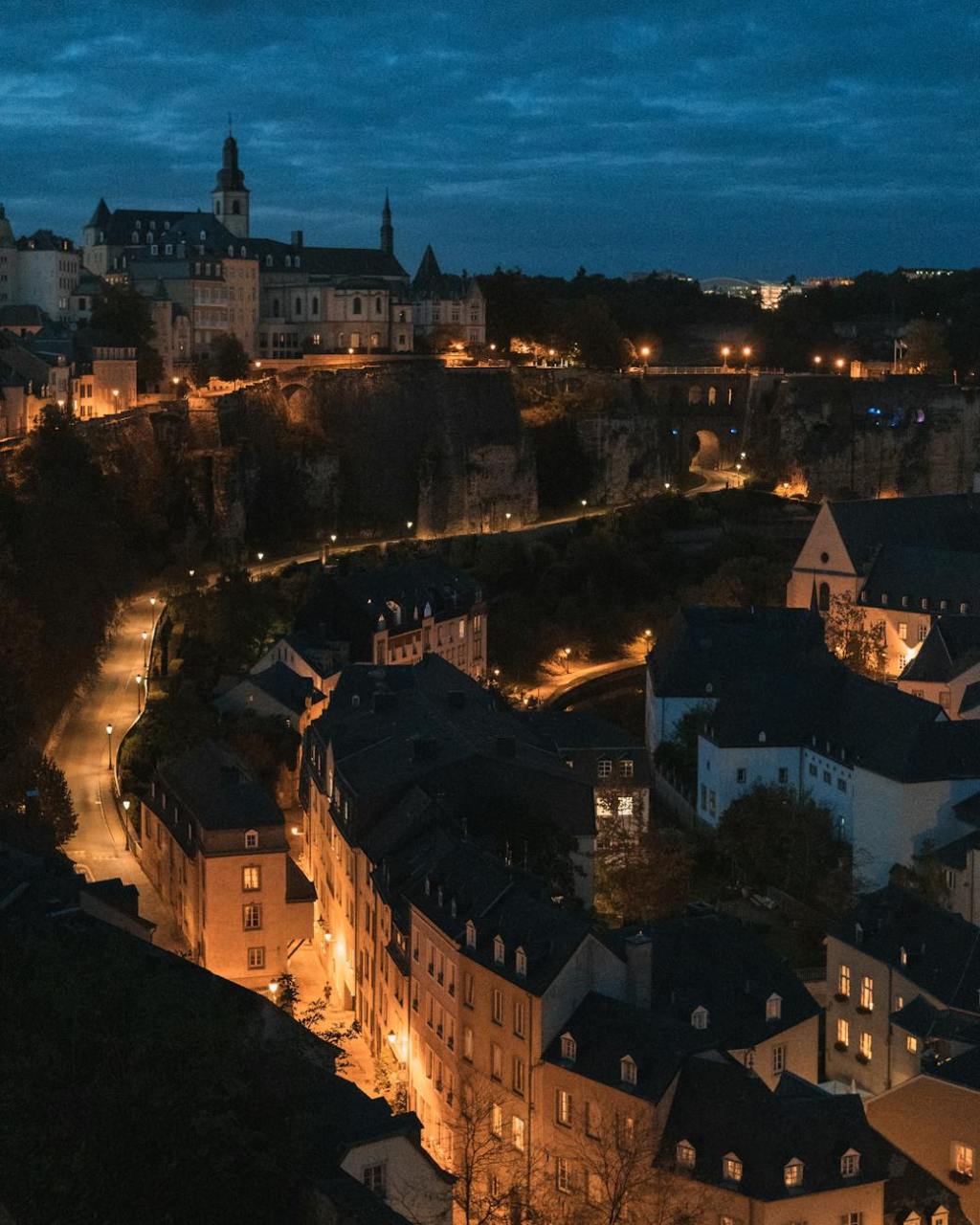
Learn about Luxembourg, a country landlocked in western Europe. Discover things you can do for a long weekend. You can visit the medieval city Vianden. Witness the Echternach Dancing Procession. Tour around Luxembourg city, which is its financial center.
Another long holiday weekend gave us another opportunity to get out-of-town. An out-of-the-country getaway, as a matter of fact, we chose to visit Luxembourg this time. One new country, it’s a big check on travel goals for mama and the kindje. Since we briefly crossed the German side, for the little one, it’s technically two new ones.
Luxembourg is a small country landlocked by Belgium, France, and Germany. It is one of the smallest sovereign states. It is also one of the least-populous countries in Europe. Luxembourg has the highest population growth rate. This is thanks to foreigners accounting for nearly half of the country’s population.
Its capital, Luxembourg City, together with Brussels and Strasbourg, is one of the three official capitals of the European Union. The city also has the seat of the European Court of Justice, the highest judicial authority in the EU. Many of its inhabitants are trilingual in French, German and Luxembourgish. Steel manufacturing was the country’s source of prosperity. Not until the decline of this industry, Luxembourg shifted its focus and priorities. The country is now prominent as Europe’s most powerful investment management center.
Quick Visit to Clervaux

We started our Luxembourgian journey by stopping by at Clervaux for lunch. Clervaux is a quaint village situated amid a deep and narrow valley beside the Clerve river. The white Clervaux castle was originally built during the 12th century. It stands prominently on a rocky spur above the said town.
Besides the castle, its Benedictine Abbey of St. Maurice and St. Maur was built in 1910 in Romanesque-Burgundian style is quite must-see.
Our Stay in Vianden
After lunch, we drove away to finally reach our next destination—Vianden.
Vianden is likely one of Luxembourg’s well-kept medieval treasures outside of its city. This is due to its impressive castle and its beautiful location in the Our valley. Dating back to the ninth century, the feudal manor holds unparalleled architectural significance in the Ardennes. The medieval outer wall surrounds the town. It has many impressive guard towers ready to astound visitors and others alike.


Our hotel is situated beside the house where Victor Hugo lived during his exile in 1871. That house now houses a collection of souvenirs from his various visits to Vianden.
Several well-maintained walking paths offer access to the countryside of Our valley. A chairlift climbs to 440 meters high. It is available for visitors to enjoy splendid views.
Avancer au pas d’Echternach

The region of Mullerthal is what is claimed as Luxembourg’s “Little Switzerland,” due to its hilly landscape reminiscent of Switzerland. Here you can find Luxembourg’s oldest town, also the capital of this region called Echternach.
Situated on the bank of River Sûre, Echternach has retained its medieval ambiance. The city boasts labyrinthine streets and old aristocratic houses. It features ancient ramparts and towers of the ancient city wall. There is also a marketplace with a Gothic town place.


Echternach is well-known for its centuries-old Dancing Procession, which takes place on Whit Tuesday and attracts visitors all over. Before reaching the Benedictine abbey and basilica founded by St. Willibrord, which had become known due to this procession, hubby blurted out.
“Avancer au pas d’Echternach. Three steps forward and two steps back, have you heard about that expression?” No, I said so he went on, “To advance in the step of Echternach. To go forward to Echternach’s pace is to say go backward. It means to progress very slowly because of frequent retreats.”
This custom dates to the sixteenth century when male pilgrims for St. Willibrord from Waxweiler started performing a hopping dance on the way to Echternach during the Whitsuntide holidays.
Nowadays, around 9,000 pilgrims from all over Europe hop to a polka melody. They are mostly dressed in white shirts and dark trousers. They move through the medieval streets of Echternach to the crypt past St. Willibrord’s tomb.
The famous dancing procession of Echternach became part of UNESCO’s Intangible World Cultural Heritage in 2010. Obviously, the seventh-century Benedictine abbey, with its four long wings built around a large square courtyard; and the Basilica that is home to a crypt with a magnificent white marble sarcophagus containing the remains of St. Willibrord are the places you must visit.
Upper Sûre Natural Park and Esch-sur-Sûre


Part of the Upper Sûre Natural Park, Esch-sur-Sûre is a small village set in the mountain alongside the Sûre river. A ruined manor-house built in AD 927 is a domineering sight in this village.
At its outskirts, there is, of course, the nature park. It consists of plateaus and narrow valleys with wooded slopes. The park also includes the lake of the Upper Sûre dam, a domineering sight in this village.
Going around the Luxembourg Ardennes—Battle of the Bulge
The Ardennes is actually a region of extensive forests and rough terrain. It features rolling hills and ridges. These are formed by the geological features of the Ardennes Mountain range and the Moselle and Meuse River basins. It starts in southeast Belgium extending into Luxembourg, Germany, and France.
In the Luxembourg Ardennes, you’ll find high forested plateaus, sheer cliffs, wooded hills, and hidden valleys. Additionally, there are numerous castles, fortresses, and fortified farms rising out of the hilltops.
The Ardennes is famous for being the place where Hitler staged his last great campaign of World War II. This event is historically known as the Battle of the Bulge. As we explored this area, we found several monuments. These monuments commemorate this event and honor the deaths of war heroes.
Ettelbruck & General Patton


Hubby was keen to see where General Patton lies, so off we also visited Ettelbruck.
General George Smith Patton Jr. was a senior officer of the United States Army who commanded the U.S. Seventh Army in the Mediterranean and European theaters of World War II but is best known for his leadership of the U.S. Third Army in France and Germany after the Allied invasion of Normandy in June 1944.
Ettelbruck is another pleasant town in Luxembourg. Travelers from all over visit this place to see the monument and the museum that honor the American General Patton. In the American cemetery not far from Ettelbruck center, hubby personally visited the grave of this courageous general. I had to stay behind because our little one was taking a nap in the car.
In the American cemetery not far from Ettelbruck center, hubby personally visited the grave of this courageous general. I had to stay behind because our little one was taking a nap in the car.
Bourscheid Castle
The ruin of this fairy-tale medieval castle is located near the village of Bourscheid in north-eastern Luxembourg. It stands high on a rocky peak 137 meters above the river Sûre. The castle is enclosed by a circular wall with watchtowers.


Luxembourg City
We saved the best for last. On our final day in Luxembourg before leaving the next day, we drove towards Luxembourg city.


It’s a hilly conquest I must say. With little Imma on a stroller, visiting must-see spots is tremendously difficult. These spots include the historic Old Quarter, the Walls of Corniche, and the Bock and the City Basements. We ended up overlooking from the city top instead.
During our short stroll around the city center nonetheless, we managed to visit Luxembourg’s Place Guillaume. It is a former site of a Franciscan convent that has since been converted into a pedestrian zone. You’d find the town hall. You would also see the famous Trémont’s lions. Additionally, there is the equestrian statue of William II, King of Holland, and Grand Duke of Luxembourg.
Also nearby is the 16th-century House of Raville that showcases its beautiful façade, well-restored balcony, and spiral staircase. Another landmark close by is the Grand-Ducal Palace, a gorgeous Renaissance building dating from 1572.

Practical Info & FAQs
How to get there
We drove all the way from Belgium to Luxembourg. It was a road trip throughout our visits to these places in Luxembourg. We even briefly crossed the German side!
Overal Immatje is heel braaf.
Where to stay & eat
We stayed at Auberge de L’Our. The hotel has a sun terrace and views of the city, and it has its own bar and restaurant. Beside it is its own charcuterie, which was functioning awkwardly as their reception area as well for their hotel guests. The hotel is beautifully located in Vianden. However, a long flight of stairs to the “family” room is quite an inconvenience for a family like us. Additionally, limited parking adds to this inconvenience.
Try some Luxembourgish specialties like: ‘
Bouneschlupp‘: green bean soup, to which carrots, onions, leeks, celery, potatoes, milk or cream and smoked bacon can be added;
‘Judd mat Gaardebounen‘: smoked neck of pork with broad beans;
‘Kuddelfleck‘: tripe served breaded or with a spicy tomato sauce;
‘Stäerzelen‘: a dish made of buckwheat flour with smoked bacon and sometimes cream;
‘Friture‘: small fried fish from Luxembourg’s part of the Moselle river, eaten with the fingers;
Pike in a Riesling sauce, fried fish and home-smoked ham; and
‘Hameschmier‘ a sandwich served with Ardennes ham.
Travel Tips
Purchase a Luxembourg Card for free or reduced admission to many museums and attractions, as well as unlimited public transport.
Take advantage of Luxembourg’s efficient and free public transportation network to easily explore the city and surrounding regions.
Wear comfortable walking shoes—Luxembourg City’s old quarters feature cobbled streets and plenty of hills.
Sample local specialties like Gromperekichelcher (potato fritters) and Judd mat Gaardebounen (smoked pork with beans) at traditional brasseries.
Pack an umbrella or light rain jacket, as weather in Luxembourg can be unpredictable, even in summer.
Visit the historic Bock Casemates and the picturesque Grund district for unique views and photo opportunities.
Plan a day trip to Vianden Castle or the Moselle wine region for a taste of Luxembourg’s scenic countryside.
Be mindful of opening hours—many shops and restaurants close early on Sundays and holidays.
Carry a reusable water bottle; tap water is safe and widely available throughout the country.
Learn a few basic phrases in French, German, or Luxembourgish; locals appreciate the effort and it can enhance your travel experience.

 What's Up With Perpie Lately