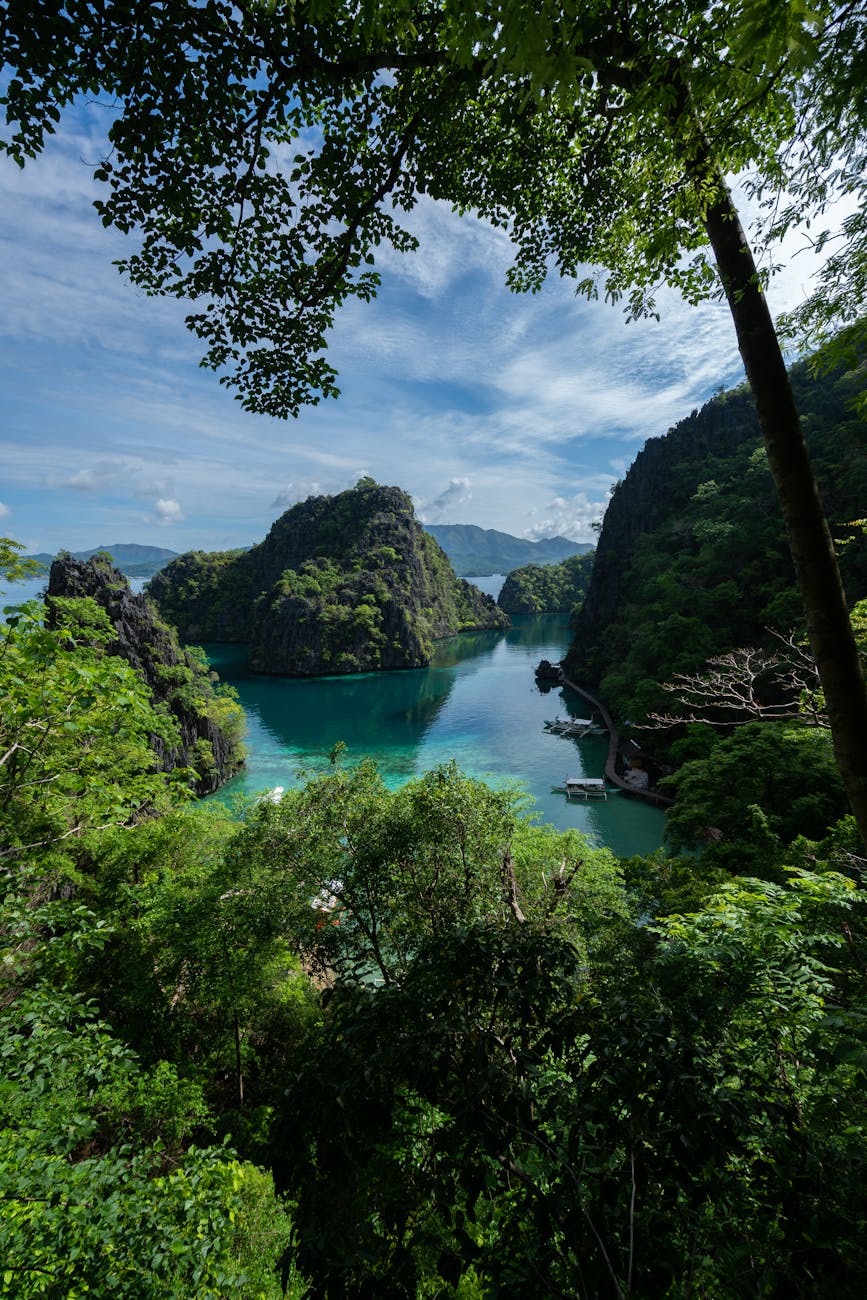
Dubbed as the last frontier of the country, Palawan is the largest island in the Philippines. This majestic island is located between the South China Sea and the Luzon group of islands. Coron is one of its stunning islands Palawan has to offer.
It was originally voted as the number two island in the world according to its readers. An article from Conde Nast Traveler appears to be playing favorites, as it even placed Palawan to top spot.
I would not disagree with that. When I, together with my husband, finally came to visit Palawan (Coron, in particular) we’re obviously impressed. We are convinced that Coron is a natural paradise on earth.
Dubbed as the last frontier of the country, Palawan is the largest island in the Philippines. Located between the South China Sea and the Luzon group of islands, Palawan counts around 1,780 islands and islets.
Palawan is a dream destination because of its stunning white beaches and turquoise lagoons. It has astonishing seascapes and unique limestone rock formations. The mountains, jungles, and diverse wildlife add to its charm. For scuba diving, hiking, kayaking, island hopping, snorkeling, or just even chillaxing in this tropical place…
About Coron
Coron and El Nido are the two major islands in Palawan that most of all travelers want to visit. Both Coron and El Nido host limestone cliffs that create a wonderful karst scenery like Halong Bay in Vietnam.
The difference here is that Coron is more laidback. The island is also particularly famous among the scuba diving enthusiasts for its well-preserved Japanese shipwreck. El Nido, on the other hand, is becoming more of a go-to place for beach partygoers. So, they’d say, the next Boracay or a better version of it.
Coron is considered a municipality in Palawan that consists of a town sharing the eastern part of Busuanga Island. It also consists of over 50 islets in the Calamian archipelago.
Currently, tourism is the top industry, thanks to its local beaches, dive sites, and other natural tourist spots. With a dozen sunken Japanese warships at depths between 10 and 40 meters, Coron is becoming a favorite diving destination.
In 1998, the Tagbanwa people received this ancestral domain over 22,000 hectares of land and sea in Coron island.
As a result, these people give them the right to manage the area and preserve its marine and land resources. They continue to live their lives according to their culture and traditions.
There are 13 lakes in Coron island but only 2, the Kayangan and Barracuda Lakes are open for public. The indigenous Tagbanwas are very cautious as they consider Coron island as sacred ground.
Lualhati Park & Coron Town Proper
A half-day tour, we first took the Coron Town Tour package. This tour allows us to explore Coron town. We visited landmarks such as Mount Tapyas and Maquinit hot spring.
The tour started in the afternoon by exploring the town center and visiting Lualhati Park. Bancas for island excursions are normally docked in this bay walk area.

Mount Tapyas & Maquinit Hot Springs
Then, we went on to take over 700 steps to reach the viewing deck in Mount Tapyas. Mount Tapyas is one of the most dominant land-features around the town of Coron in Busuanga Island, Palawan.
The prompt ascend to the top on late afternoon offers a reward to the successful climber. They enjoy a view overlooking the town. The enchanting Coron island can be seen from afar.
It is a predictable and easy climb, supposedly so. Due to humid heat, I can’t bear myself from sweating a lot. Conquering Mount Tapyas was surprisingly too much for me. I stayed behind somewhere halfway, at the nth step, waiting for hubby as he continued on.
Good for him for chasing the sunset view over that mountain top.
The unique and natural saltwater Maquinit hot springs offer a charming setting along the mangrove forest and shore. Maquinit hot springs is a two-tiered circular pool.
Its waters are said to be fed by volcanic activity. As one of the world’s few saltwater hot springs, the water here is hot, running as high as 104 F.

Malcapuya Island
The neighboring islands of Malcapuya, Banana, and Bulog Dos boast beautiful scenery of clear waters and white sand beaches. This is what we got from the Beach Hopping Tour package.
The tour started early morning at the Lualhati bayview. From there we took our tourist boat to set forth for a 2-hour journey to Malcapuya Island.
It’s no wonder Palawan ranked as the most beautiful island in the world this year, as the clear aquamarine water, limestone cliffs, and lagoons of the island province of the Philippines are only the most basic highlights. Palawan is home to nature reserves on both land and sea, with dolphins just offshore, marine gardens of giant clam, sea turtles nesting on white-sand beaches, 600 species of butterflies, and lush palm forest like a Gilligan’s Island fever dream.
– Cynthia Drescher, Conde Nast Traveler contributing editor
Malcapuya Island consists of a long stretch of white powdery sand with shallow crystal blue waters. The snorkeling area of Malcapuya is far off from the shore. It makes an ideal destination for swimming and just lounging under the hot midday sun.
With rest huts and an air-conditioned bungalow available, it is possible to stay on the island at least overnight.
It is quick to compare Malcapuya island to Boracay. It reminds us of the once unspoiled beauty of Boracay before the modern development and madding crowd.
By noon we left Malcapuya island and went on for a 30-minute boat ride heading to Banana Island.
Banana Island
Banana island is privately owned, but open to tourists. It has better amenities and overnight accommodation options available through the several cottages scattered around the island.
Compared to Malcapuya, Banana’s beach is shorter and the waters, though also as clear, are deeper. Officially the island is called Dicalabuan, but its shape resembles a banana, hence its other name.
The scorching heat allured us to take a dip into the waters. But the hammock seemed to have been calling me to take a nap instead. I love taking naps by the beach! I would have slept away and stayed on that island overnight.
Of course, we had to leave and visit the last island on our itinerary.
Bulog Dos Island
Just five minutes away, we headed off to Bulog Dos Island. The word “bulog” means bald, which aptly describes the bulge/viewpoint on the island that resembles a bald head.
A beautiful snorkeling spot has a sandbar that connects to its island twin (Bulog Uno) where Two Seasons Resort is. This quick 1-hour visit to Bulog Dos Island officially ended our tour.
After the beach hopping tour, we went on for another one. This Coron Island Ultimate Tour, my friends, is the highlight of our entire vacation in Coron. At last, we’re off to “pay tribute” to the infamously enchanting Coron island.
As expected, we took our boat at the docking site in Lualhati Park to set off.
Siete Pecados Marine Park
The Siete Pecados Marine Park is a popular snorkeling site. It attracts visitors because of its shallow waters and rich marine life. It also has a story to tell.
Legend has it that there were seven sisters who went swimming against their mother’s wish. As a consequence, all sisters drowned, and afterward, seven islets sprouted from the sea.
After snorkeling at Siete Pecados, off we went to the most famous, postcard beauty in Coron—the Kayangan lake.lso has a story to tell.
Kayangan Lake
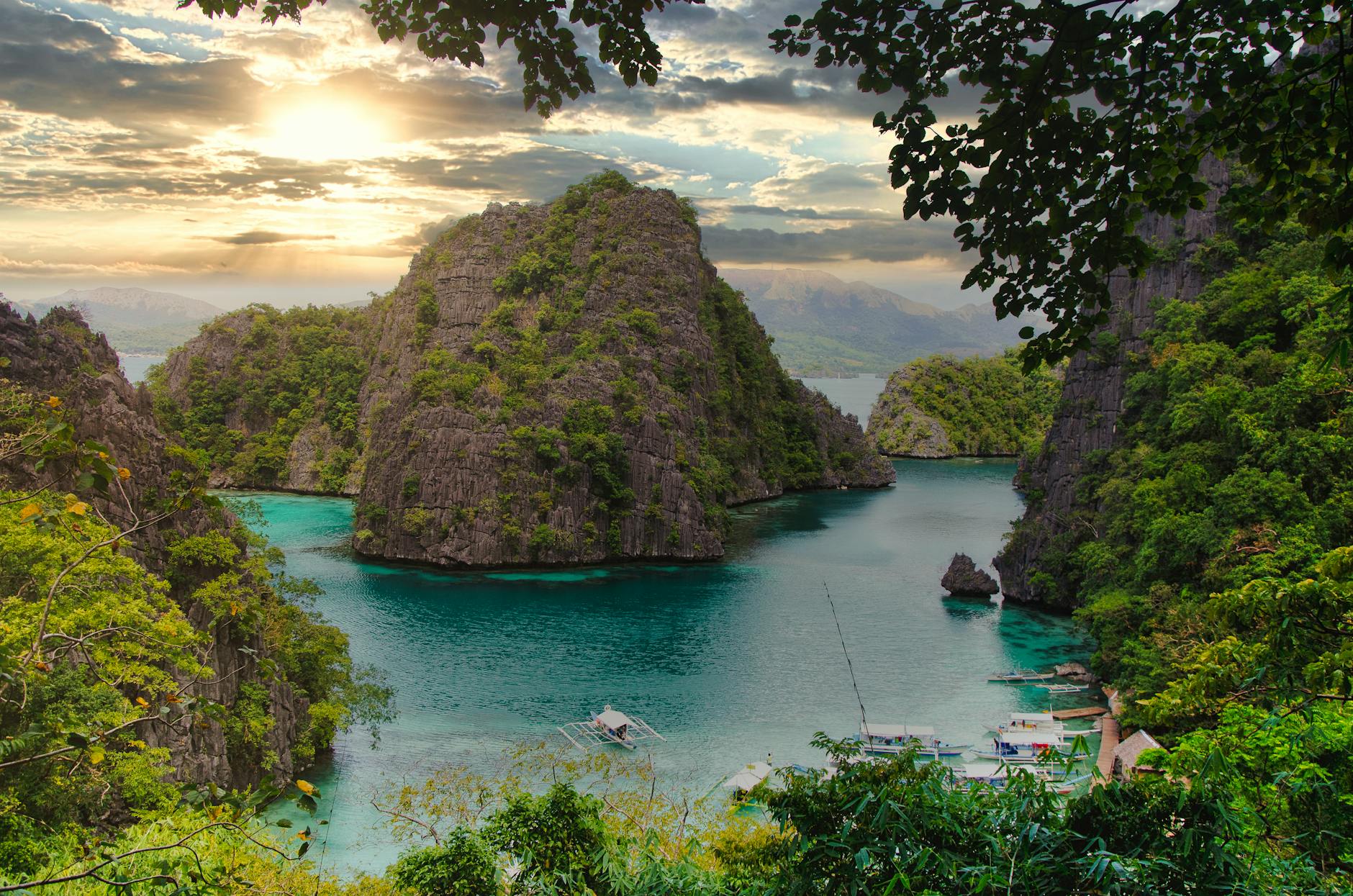
Kayangan Lake is much sought-after by most travelers. Everyone is motivated to capture this most photographed scenery that can only be found in Coron. Standing at the viewpoint, the shot that is actually being taken here is Coron bay. The bay does seemingly serve as the lake’s majestic gateway.
A 10-minute climb took us first to the viewpoint. We took another steep step down before we made it to the crystal-clear waters of Kayangan lake. Kayangan lake is touted to be the cleanest and clearest not only in the country but also in Asia. As we stood close at the stilt, we can already see its surface plenty of interesting rock formations. The lake possesses a cunning mix of both fresh and salt waters.
Banol Beach
Banol Beach consists of a small stretch of sandy white beach with aquamarine water. It is also surrounded by a splendid background of limestone cliffs.
The beach is open for the public and a popular stop for lunch during island tours. It is another ideal place for snorkeling and kayaking. Just like us, after a sumptuous seafood lunch, you can also just opt to swim or wade along the shore.
Twin Peaks Reef and Barracuda Lake
After Banol beach, we sailed away and anchored off somewhere around in the middle of the sea. We stopped by at Twin Peaks Reef. It is another snorkeling and diving spot that is teeming with colorful corals and a variety of reef fishes.
After that short snorkeling in Twin Peaks reef, we went to our next stop. The Barracuda Lake is a freshwater lake situated in a former crater 40 meters deep, surrounded by sharp limestone cliffs.
It is named after its elusive resident barracuda fishes. The lake is also famous for its thermocline, thus making it known as an unusual dive site.
Twin Lagoon
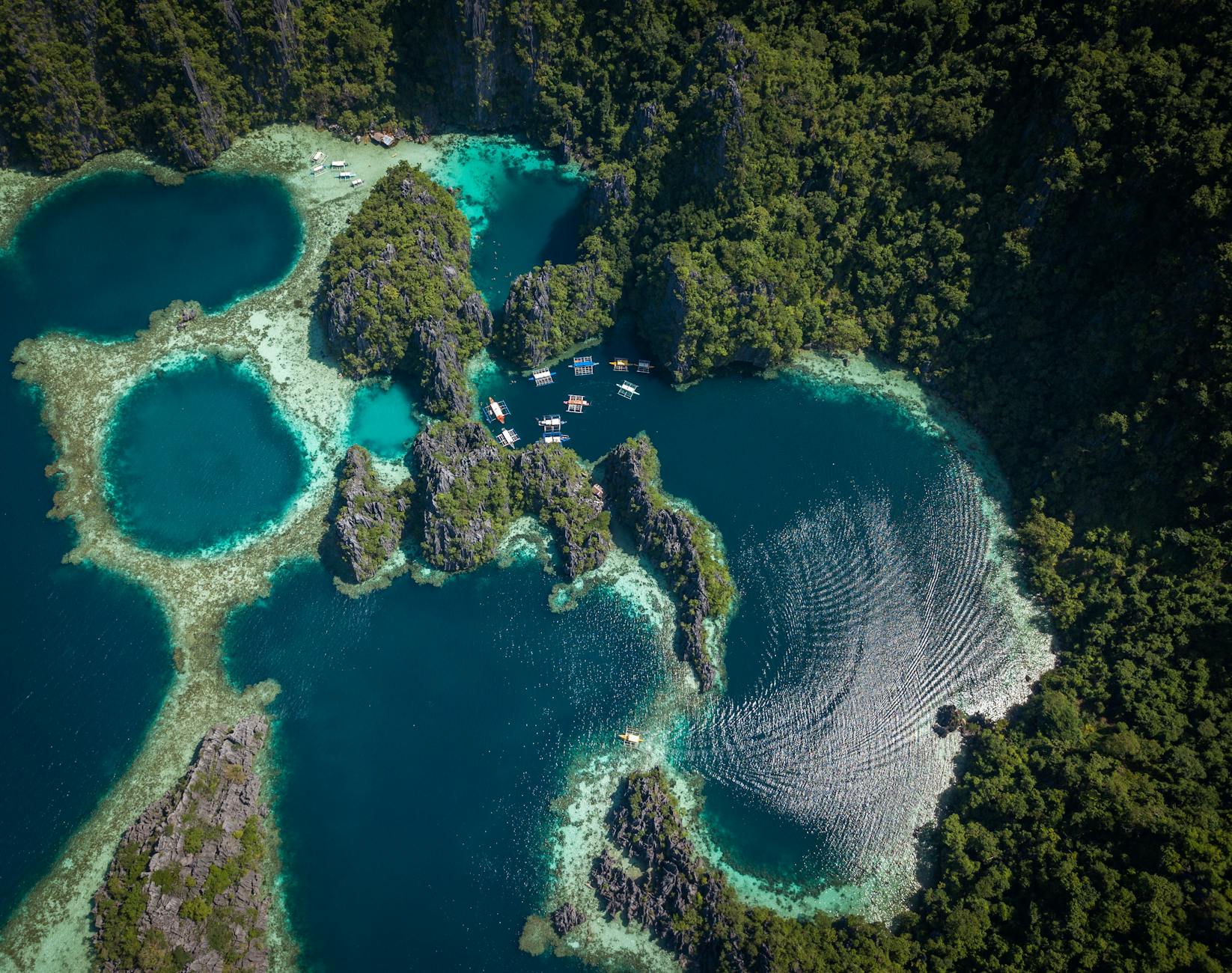
Not so far from Barracuda Lake, off we went to our last destination. The Twin Lagoon coastline is splendid and its bay mystifying as you approach.
The first lagoon is where the boats dock. The way to the second lagoon can be accessed by two means. One is through a small crevice underneath the rock; the other is a ladder over the rock.
The waters in the twin lagoons may sometimes be blurry due to the mix between salt and freshwater. The water temperature in the lagoon also changes, a similar phenomenon we experienced in Barracuda Lake.
Practical Info & FAQs
How to get there
Coron is a stunning island destination located in northern Palawan, Philippines, famous for its crystal-clear lakes, world-class diving sites, and dramatic limestone cliffs. Getting there requires some planning, but the journey is well worth it for the natural beauty that awaits.
The most common and convenient way to reach Coron is by air from Manila. Fly into Busuanga Airport, also known as Francisco B. Reyes Airport, which serves the Coron area. The flight takes approximately 45 minutes to one hour, and several airlines operate this route including Philippine Airlines, Cebu Pacific, and AirAsia Philippines. It’s advisable to book your flights in advance, particularly during the peak tourist season from December to May when prices tend to rise and seats fill up quickly. Upon landing at Busuanga Airport, take a van or tricycle for the 30 to 45-minute journey to Coron town proper. In our case, we reserved transfers from the hotel we stayed in Coron. While the airport is technically on Busuanga Island rather than Coron Island itself, the destination is universally referred to as Coron.
When traveling from other parts of the Philippines, there are a few options. Some direct flights to Busuanga operate from cities like Cebu and Clark, though these may be less frequent than Manila flights. In many cases, it’s easier to connect through Manila. For those already exploring Palawan, there’s a popular ferry route connecting El Nido to Coron that takes about 3.5 to 4 hours. This is an excellent option if you’re planning to visit multiple destinations in Palawan and want to enjoy some island hopping along the way.
For the more adventurous or budget-conscious traveler, sea travel from Manila is also possible. 2GO Travel operates ferry services that make the journey in about 13 to 14 hours overnight, typically departing on Tuesday evenings. While this option is significantly more economical than flying, it’s also much longer and less comfortable. However, some travelers enjoy the experience of an overnight sea voyage and the opportunity to save on both transportation and accommodation costs.
Upon arriving in Coron, getting around is relatively straightforward. Tricycles are the primary mode of transportation in town and are readily available for short trips. Most hotels and resorts offer airport or port transfer services if you arrange them in advance, which can make your arrival much smoother. One important practical tip is to bring sufficient cash with you, as ATMs in Coron can be unreliable and sometimes run out of money, especially during busy periods.
Where to stay & eat
We stayed at Coron Westown Resort. It is 4 kilometers away from the town proper, so it is relatively calm and quiet here. It has 2 large outdoor swimming pools, with kiddie pools available as well. Our room has a nice view overlooking the sea. The staff is helpful and accommodating.
Food is relatively good in this hotel. Interestingly though, we preferred to have two dinners at the other hotel. It is facing in front of it, Coron Soleil Garden Resort. Both resorts are owned and run by the same management, but we find the latter cozier. We also had most of our dinners outside the hotel, but don’t expect gourmet food. Coron is a relatively undeveloped island, so food is mostly simple and rustic.
Travel Tips
Book island-hopping tours in advance to secure your spot and ensure you don’t miss the famous lagoons, lakes, and snorkeling sites.
Bring cash, as ATMs are limited and many local establishments don’t accept credit cards.
Pack reef-safe sunscreen to protect both your skin and the marine ecosystem when swimming or snorkeling.
Stay hydrated and carry a reusable water bottle, especially during hot and humid days on the islands.
Wear comfortable water shoes or sandals for rocky shorelines and boat transfers.
Rent a scooter or tricycle to explore Coron town and nearby hot springs at your own pace.
Try local seafood specialties at the town’s markets and waterfront restaurants for an authentic culinary experience.
Wake up early for tours to avoid crowds and enjoy the serene beauty of the islands.
Respect local customs, be mindful of the environment, and avoid touching or stepping on coral reefs.
Pack light and bring waterproof bags to protect your belongings during boat trips and unexpected rain showers.
Coron is one sleepy little town that offers beauty in its island nature and teeming marine life. Don’t expect nightlife or sophisticated facilities. It’s all about this rough island adventure. It’s a unique opportunity to get a personal insight into the rustic, unassuming life in a tropical archipelago.

 What's Up With Perpie Lately
You must be logged in to post a comment.