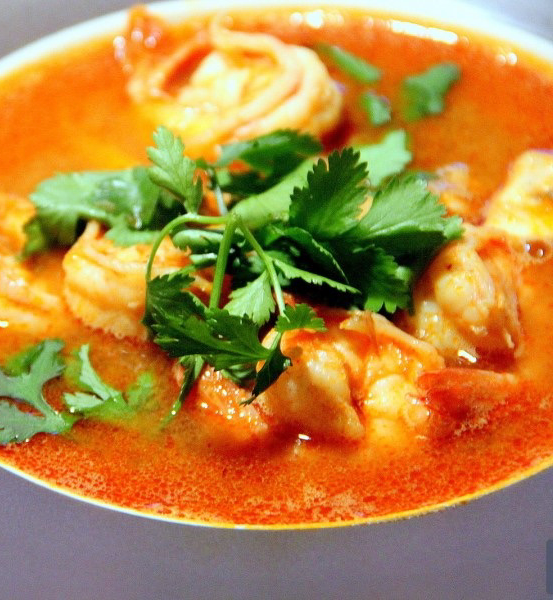
Experience the vibrant flavors of Thailand with tom yum soup — a zesty, aromatic broth infused with lemongrass, lime, and chili. This classic Thai dish captures the perfect harmony of spicy, sour, and savory notes, making it a beloved favorite for both comfort and celebration across the globe.
Tom yum soup is a renowned Thai dish celebrated for its bold, refreshing flavors and aromatic ingredients. Its history dates back to the central region of Thailand, where it originated as a rustic soup made with locally available herbs and seafood.
Traditionally, the soup is prepared by simmering lemongrass, kaffir lime leaves, galangal, and chili in a clear broth, which is then infused with fish sauce, lime juice, and fresh shrimp or chicken. Sometimes mushrooms and tomatoes are added for depth and body.
What makes tom yum soup truly fascinating is its balance of spicy, sour, and savory notes—each spoonful delivers a vibrant punch, enlivened by fragrant herbs and zesty citrus. This harmony of flavors not only warms the palate but also reflects the essence of Thai cuisine, making tom yum a comforting and festive dish enjoyed worldwide.
This tom yum goong recipe from Hot Thai Kitchen is surprisingly easy, requiring only 10 minutes of cooking time, although it demands a 20-minute prep for gathering and preparing the essential aromatic herbs. The flavor profile is a complex, world-famous symphony of hot, sour, and savory tastes, defined by the “trinity” of lemongrass, galangal, and makrut lime leaves. This classic balance is enriched by the seafood base, umami from the fish sauce, and a slight sweetness from the Thai chili paste.
Tom Yum Goong
Ingredients
- 4 cups shrimp stock (recipe below) or unsalted chicken stock
- 12-15 medium or large shrimp, head-on, shell-on (if making shrimp stock)
- 2 stalks lemongrass, bottom half only, smashed until broken and cut in 2-inch pieces
- 6 makrut lime leaves, bruised and torn (ribs removed)
- 8 slices galangal
- 2-5 Thai chilies, to taste, pounded into a rough paste or finely minced
- 7 oz oyster mushrooms, torn into bite-sized pieces
- ¼ cup Thai chili paste (nam prik pao)
- 3 tablespoons fish sauce
- ½ cup fresh lime juice
- 1 teaspoon sugar
- Chopped cilantro, or sawtooth coriander, for garnish
- Jasmine rice, for serving For the Shrimp Stock (if making)
- Shrimp shells and heads from above
- 1 tablespoon neutral oil
- 4 ¼ cups water
- ¼ cup finely chopped daikon (optional)
- ¼ cup finely chopped onion (optional)
Directions
- For the Shrimp Stock (if making)
- Place the shrimp heads and shells into a stock pot along with the oil and the optional daikon/onion.
- Sauté over medium-high heat, pressing out any tomalley (orange fatty substance) from the shrimp heads.
- Once the bits stuck to the bottom of the pot start to brown, deglaze with the water and scrape all the bits off the bottom. Bring to a simmer, then simmer for 5 minutes.
- Use a wire skimmer to scoop out and discard the shrimp shells. Measure the stock; you need 4 cups (960 ml) for the next step. Add water if you are short on stock. For the Tom Yum Soup
- Add the measured stock, lemongrass, galangal, chilies, and mushrooms to the pot. Twist and tear the makrut lime leaves, discarding the center ribs, and add them to the pot.
- Bring the soup to a simmer and simmer for about 5 minutes to infuse the herbs.
- Turn the heat up to bring the soup to a boil. Ladle a little broth into the Thai chili paste and stir to loosen it, then pour it into the soup. Add the fish sauce.
- Add the shrimp. Cook the shrimp until they are halfway done (about 30-50 seconds), then immediately turn off the heat and let the residual heat finish cooking the shrimp (another minute or so).
- Add the lime juice. Taste and adjust the seasoning to your liking. The soup should lead with a sour flavor, but if it is too sour, add the sugar to balance it.
- Stir in the cilantro leaves and serve immediately with jasmine rice on the side.


 What's Up With Perpie Lately