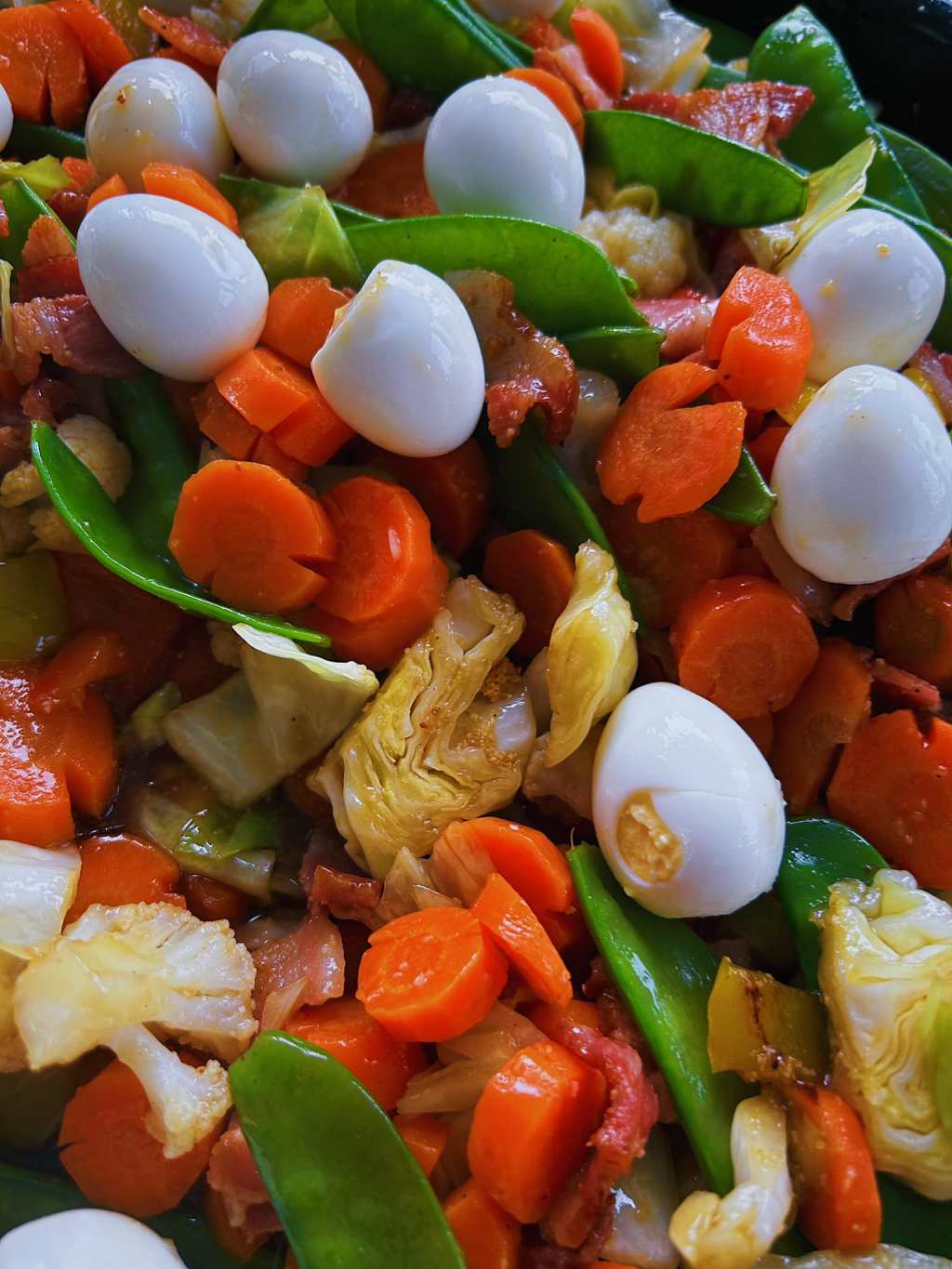
Filipino Chopsuey is a vibrant stir-fry dish featuring a medley of vegetables like carrots, cabbage, and bell peppers, often combined with shrimp, chicken, or pork. This savory and colorful dish is seasoned with soy sauce and oyster sauce, making it a beloved staple in Filipino cuisine.
Chopsuey has an interesting history in the Philippines that reflects the country’s complex cultural exchanges, particularly with Chinese immigrants and American colonial influence.
Chopsuey likely arrived in the Philippines through Chinese immigration, which began in earnest during the Spanish colonial period and continued through the American era. Chinese traders and settlers brought their culinary traditions, though chop suey itself is somewhat controversial in origin – some food historians argue it was actually created by Chinese immigrants in America rather than being a traditional Chinese dish.
During the American colonial period (1898-1946), American food culture also influenced Filipino cuisine. Since chop suey had become popular in the United States by the early 1900s, American influence may have reinforced or reintroduced the dish to Filipino tables through American expatriates, military personnel, and cultural exchange.
Like many foreign dishes that entered Philippine cuisine, chopsuey underwent localization. Filipino versions typically include local vegetables like sayote (chayote), carrots, cabbage, and bell peppers. They adapt to local tastes with different seasoning profiles. The versions integrate with Filipino cooking techniques and available ingredients. These dishes are often served with rice, fitting to Filipino dining customs.
Today, chopsuey is considered a staple of Filipino-Chinese cuisine and is commonly found in Filipino households, Chinese restaurants, and even local eateries. It’s often associated with special occasions and family gatherings, and many Filipino families have their own variations of the recipe.
The dish represents the broader story of how Filipino cuisine developed through cultural mixing – absorbing influences from Chinese, American, Spanish, and indigenous traditions to create something distinctly Filipino.
I start by preparing a colorful array of fresh vegetables like carrots, bell peppers, and cabbage, ensuring they are all evenly sliced. The aroma of garlic and onions sautéing in hot oil fills the kitchen, creating a warm and inviting atmosphere. Adding shrimp, chicken, or pork to the mix, I watch as the proteins turn golden and succulent. The vegetables are then tossed in, their vibrant colors popping against the backdrop of the pan.
A blend of soy sauce and oyster sauce is poured over, infusing the dish with its signature savory flavor. The final touch is a bit of cornstarch slurry, which thickens the sauce to a perfect consistency. As the dish simmers, the flavors meld together beautifully, resulting in a hearty and satisfying meal that brings a taste of the Philippines to my table.
Panlasang Pinoy is such a reliable source of recipes for authentic Filipino dishes, and its Filipino Chopsuey recipe says everything on what needs to be done. More Filipino dishes for sure to try out!
Filipino Chop suey
Ingredients
- 7 pieces shrimp cleaned and deveined
- 3 ounces pork sliced
- 3 ounces boneless chicken breast sliced
- 1 1/2 cup cauliflower florets
- 1 piece carrot sliced crosswise into thin pieces
- 15 pieces snow peas
- 8 pieces baby corn
- 1 piece red bell pepper sliced into squares
- 1 piece green bell pepper sliced into squares
- 1 1/2 cups cabbage chopped
- 12 pieces quail eggs boiled
- 1 piece yellow onion sliced
- 4 cloves garlic crushed
- 1/4 cup soy sauce
- 1 1/2 tablespoons oyster sauce
- 3/4 cup water
- 1 tablespoon cornstarch diluted in ½ cup water
- 1/4 teaspoon ground black pepper
- 3 tablespoons cooking oil
Directions
- Heat oil in a wok or pan.
- Pan fry the shrimp for 1 minute per side. Remove from the wok. Set aside.
- Saute onion. Add garlic and continue to saute until the onion becomes soft.
- Add pork and chicken. Stir fry until light brown.
- Add soy sauce and oyster sauce. Stir.
- Pour water. Let boil. Cover and cook in medium heat for 15 minutes.
- Add cauliflower, carrots, bell peppers, snow peas, and young corn. Stir.
- Add cabbage. Toss. Cover and cook for 5 to 7 minutes.
- Put the pan-fried shrimp into the pot and add ground black pepper.
- Add the boiled quail eggs and cornstarch diluted in water. Toss.
- Transfer to a serving plate. Serve. Share and enjoy!


 What's Up With Perpie Lately