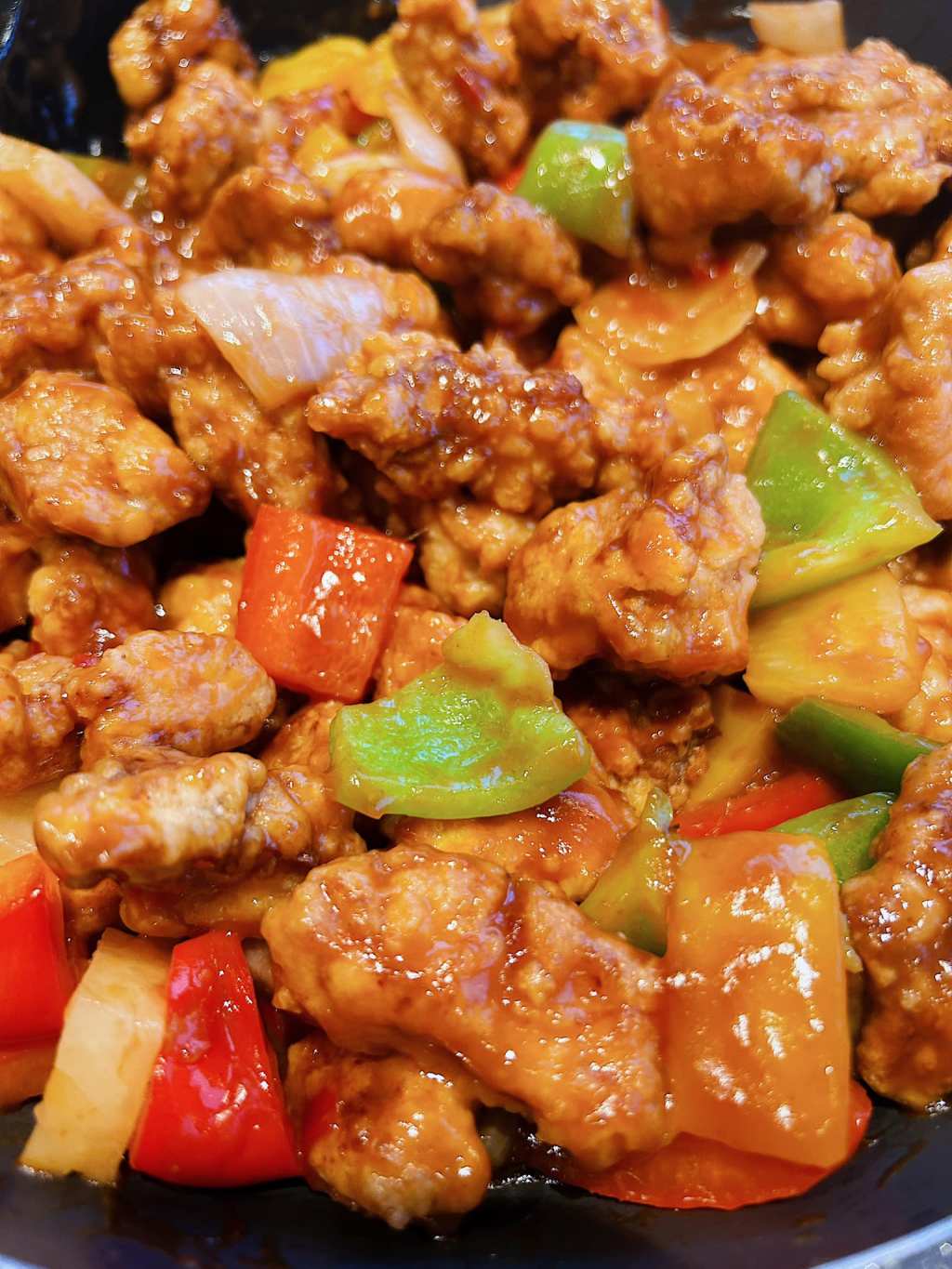
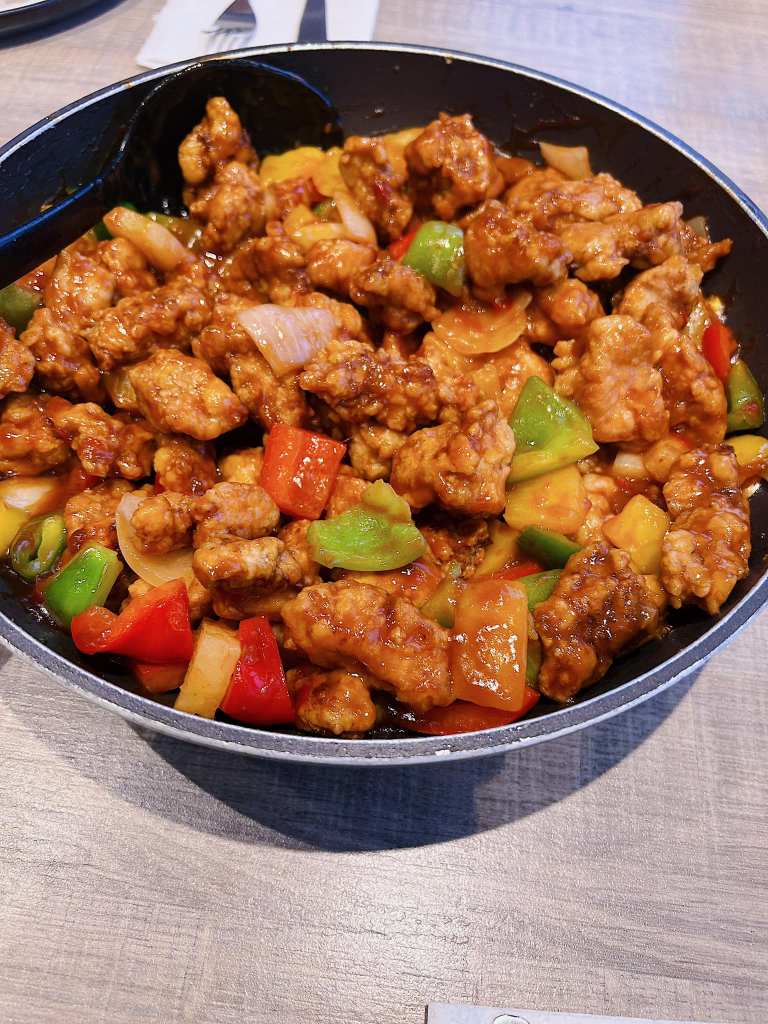
Sweet and sour pork is a classic Chinese dish featuring crispy fried pork pieces coated in a tangy sauce made from vinegar, sugar, and ketchup. Often paired with pineapple, bell peppers, and onions, this flavorful dish is a favorite in Chinese cuisine worldwide for its perfect balance of sweet and savory.
Sweet and sour pork originated in China, specifically from 18th century Canton or earlier, with its roots tracing back to traditional Jiangsu cuisine. The dish represents the classic Chinese culinary principle of balancing opposing flavors.
Sweet and sour pork arrived in the Philippines through Chinese immigration and trade relationships. Since most of the early Chinese traders and settlers in the country were from the Fujian province, it is Fujian/Hokkien food that is most widespread in influence. However, since restaurant food is often Cantonese, most of the Chinese restaurants in the country would serve both cuisines.
The dish underwent significant localization to suit Filipino tastes. In the Philippines, the dish evolved to cater to the local palate, often incorporating ingredients like banana ketchup, a uniquely Filipino condiment. This adaptation showcases the fusion of Chinese culinary techniques with Filipino tastes, creating a dish that is both familiar and unique.
Filipino cuisine developed its own version of sweet and sour sauce called “agre dulce” or Filipino sweet and sour sauce. They are made by mixing cornstarch with water, salt, sugar, and a tangy ingredient (typically tomato ketchup, banana ketchup, or pineapples). The name means “sour-sweet” in Philippine Spanish, from Spanish agrio (“sour”) and dulce.

Colorful, crunchy, and unapologetically delicious. 🍍🍖
If happiness had a flavor, it would taste like sweet and sour pork!
CLICK ON THE IMAGE TO WATCH ON INSTAGRAM
Today’s Filipino version has distinct characteristics. The original Cantonese version typically features a thicker sauce. However, the Filipino-Chinese interpretation offers a lighter coating. This allows the crispy texture of the pork to shine through. Local cooks often incorporate calamansi instead of traditional lemons, showcasing how Filipino ingredients have been integrated into this Chinese dish.
The history of sweet and sour pork in the Philippines exemplifies the broader pattern of Chinese culinary influence in Filipino cuisine, where traditional Chinese dishes were adapted using local ingredients and cooking preferences to create uniquely Filipino-Chinese fusion dishes.
I remember when I finally decided to try my hand at cooking sweet and sour pork for the first time. I had all the ingredients ready: pork, bell peppers, pineapple, and the perfect blend of sweet and tangy sauce. Everything was going smoothly until it was time to fry the pork.
I heated the oil in the pan, but I might have been a bit too eager. As soon as I dropped the first piece of pork into the hot oil, it splattered everywhere, causing me to jump back in surprise. In my haste to avoid the splattering oil, I accidentally knocked over the bowl of sauce, which spilled all over the counter and onto the floor.
Determined not to let this mishap ruin my dish, I quickly cleaned up the mess and made a new batch of sauce. When I finally served the sweet and sour pork, my family couldn’t help but laugh at my kitchen adventure. Surprisingly, the dish turned out to be quite tasty, and we all enjoyed a good meal.
After cooking sweet and sour pork, I’ve finally mastered this dish and no more oil splatter experience for me since then. The sweet and sour pork recipe from Made with Lau is the one I follow the most. Better watch and learn from the experts; who else, from a (retired) Chinese chef, of course!
Sweet and Sour Pork
Ingredients
- 7.5 oz pork shoulder butt
- 0.75 oz red bell pepper
- 0.75 oz yellow bell pepper
- 0.75 oz green bell pepper
- 0.75 oz red onion
- 0.75 oz yellow onion
- 3 oz pineapple
- 0.38 lb corn oil (for frying)
- 0.75 tsp garlic salt
- 0.75 tbsp light soy sauce
- 1 egg
- 1.5 tbsp all-purpose flour
- 2.3 tbsp cornstarch
- 3 tbsp ketchup
- 3 tbsp brown sugar
- 2.3 tbsp vinegar
- 0.75 tsp cornstarch
- 0.38 tsp salt
- 1.5 tbsp water
Pork Marinade
Sweet and Sour Pork Sauce
Directions
- Cut to divide the pork into a few pieces, parallel to the grain. Slice pieces perpendicular to the grain into about ¼ and ½ inch pieces.
- Add garlic salt (0.75 tsp), light soy sauce (0.75 tbsp), and mix and massage with the pork slices for about 1 minute.
- Crack, beat, and pour the egg into the bowl, and mix and massage for another 30 seconds. Let the pork marinate while preparing the rest of our ingredients.
- Cut the bell peppers and onions into small triangles. Cut pineapple slices into bite-sized pieces.
- Make the sauce with ketchup, brown sugar, vinegar, cornstarch, salt, and water. Mix it thoroughly for about 45 to 60 seconds.
- Add flour (1.5 tbsp) to the marinated pork and massage for about 1 to 2 minutes to coat the pork evenly in the flour. You may need to add dashes of water to help spread the flour around.
- Add cornstarch (2.3 tbsp) to a plate, and coat each piece of pork with it. Squeeze each pork piece a few times to help cover each piece.
- Fill the wok with enough corn oil to submerge the pork pieces. Set the stove on high heat and wait for the oil to heat up. Heat the oil to 300° to 350°F / 149° to 176°C. Carefully transfer the pork into the wok and fry for 7 to 8 minutes. Squeeze the pork to help the flour stick more.
- Leave the pork alone for 1 to 2 minutes, because disturbing it will cause the flour and cornstarch to come loose. Transfer the pork out with a slotted spoon once the pork starts browning and crisping.
- For the second fry, heat the oil to 400°F / 204°C and fry for 1 to 2 minutes. Transfer the pork out with a slotted spoon. To test if the oil is hot enough, try dropping a small piece of a vegetable (like our bell peppers) into the oil. If it starts bubbling immediately, then the oil is hot enough.
- After frying, empty the oil from the wok to save for future cooking. Then, combine everything in the wok. Add the chopped vegetables and cook for 30 seconds. Add the pineapple slices and cook for another 30 seconds. Transfer the veggies and pineapples out of the wok. Add some corn oil and start reducing the sauce for 1 to 2 minutes, until boiling. Throw everything (pork, veggies, pineapples) back into the wok. Mix around with the sauce for 1 to 2 minutes.
- Transfer onto a plate and enjoy immediately to maximize the crunchiness.

 What's Up With Perpie Lately
You must be logged in to post a comment.