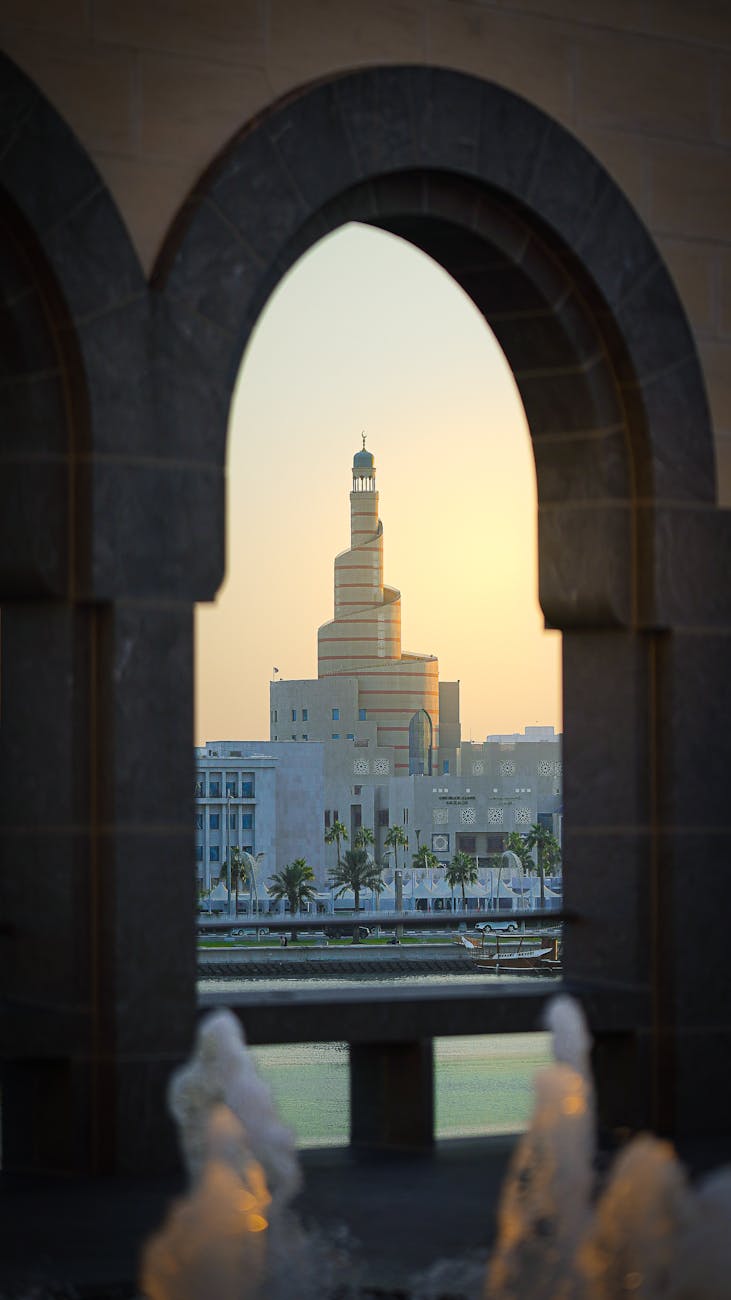
Doha, Qatar’s rapidly evolving capital on the Persian Gulf, blends futuristic architecture like the Museum of Islamic Art with traditional souqs and cultural attractions while serving as a global business hub powered by the country’s vast natural gas wealth. Since Qatar was our layover point between Brussels and Muscat, we decided to stay a bit further in Doha to get around the city. Impressive architecture juxtaposing between the old and the new, Doha seems likely a thriving modern city in the Middle East.
Doha, the capital of Qatar, is a dazzling metropolis rising from the shores of the Persian Gulf. This rapidly evolving city harmoniously blends ultramodern architecture with traditional Arabic heritage. The skyline features iconic structures like the twisted Tornado Tower and the Museum of Islamic Art, designed by I.M. Pei.
The Corniche, a seven-kilometer waterfront promenade, curves around Doha Bay offering spectacular views of the cityscape. Visitors can explore the atmospheric Souq Waqif with its maze-like alleys selling spices, handicrafts, and traditional garments.
As Qatar’s economic center, Doha has transformed from a pearl fishing village to a global business hub fueled by vast natural gas resources. The city gained international prominence hosting the 2022 FIFA World Cup, which accelerated infrastructure development.
Cultural attractions include Katara Cultural Village, the National Museum of Qatar, and Education City’s satellite campuses of prestigious universities. Despite its modernity, Doha maintains deep connections to Bedouin traditions and Islamic heritage.
Qatar National Museum & Museum of Islamic Art
The Qatar National Museum, designed by architect Jean Nouvel, is a striking cultural landmark inspired by the desert rose crystal formation. Opened in 2019, this 430,000-square-foot masterpiece features interlocking discs creating a dramatic exterior that signifies Qatar’s emergence from the desert.
The museum chronicles Qatar’s history from geological origins through pearl diving traditions to modern petroleum-driven prosperity. Its immersive galleries use cutting-edge technology, including panoramic films and interactive displays, to showcase Qatari heritage and identity.
The restored historic Palace of Sheikh Abdullah bin Jassim Al-Thani is incorporated within the modern structure. It symbolizes the nation’s connection between past and future. The palace houses artifacts that trace Qatar’s cultural evolution.
Souq Waqif
Souq Waqif stands as the cultural heart of Doha, Qatar, offering an enchanting glimpse into traditional Arabian marketplace life. This restored 19th-century souq was originally a gathering place for Bedouin traders. It maintains its historic charm with labyrinthine alleyways. These are made of mud-rendered shops crowned with exposed wooden beams.
The bustling marketplace spans several blocks near the Corniche, specializing in traditional garments, spices, perfumes, handicrafts, and souvenirs. Its atmospheric restaurants and shisha lounges serve authentic Middle Eastern cuisine. These venues attract both locals and tourists. This is especially true in the evening hours when the souq truly comes alive.
Distinct sections include the falcon souq, where these prized birds get special treatment in their own hospital, and the heritage-focused equestrian center housing Arabian horses. Street performers and seasonal cultural events enhance the vibrant atmosphere.
Despite extensive renovation in 2006, Souq Waqif’s traditional Qatari architectural character was carefully preserved. It maintains an authentic ambiance. This ambiance contrasts dramatically with Doha’s ultramodern skyline. Together, these elements create a fascinating cultural bridge between Qatar’s past and present.
Qatar National Library
Qatar National Library (QNL) serves as Qatar’s national library, public library, and research institution. Located in Education City, Doha, this architectural marvel designed by Rem Koolhaas’s OMA opened to the public in 2017.
The library houses over one million books and rare manuscripts, including a significant Heritage Collection of Arabic and Islamic historical texts. Its distinctive diamond-shaped design features an innovative book terrace system where bookshelves serve as both storage and the building’s interior.
QNL offers comprehensive digital resources alongside physical materials, with specialized services for researchers, students, and the general public. The facility includes collaborative spaces, children’s areas, assistive technology resources, and a preservation and conservation laboratory.
As a member of the Qatar Foundation, QNL supports Qatar’s transition to a knowledge-based economy while preserving national heritage. It serves as both a modern information hub and a guardian of Qatar’s cultural identity through its collections and programming.
The Pearl Island
The Pearl-Qatar is an artificial island spanning nearly four million square meters off the coast of Doha’s West Bay. This luxurious residential and commercial development was built on a former pearl diving site. It resembles a string of pearls. This design honors Qatar’s pearl fishing heritage.
The Pearl was developed by United Development Company and launched in 2006. It features Mediterranean-inspired architecture. The island has distinct districts including Porto Arabia, Qanat Quartier (resembling Venice), and Medina Centrale. The island offers premium waterfront living with marinas accommodating over 1,000 boats.
The Pearl offers an exclusive retail experience with over 350 stores. These stores feature international luxury brands. There are diverse dining options ranging from casual cafés to fine restaurants. Additionally, it has pristine beaches. Its pedestrian-friendly promenades and plazas create a sophisticated outdoor lifestyle.
Home to approximately 35,000 residents, The Pearl combines Qatari heritage with contemporary luxury, establishing itself as one of the Middle East’s most prestigious addresses and a symbol of Qatar’s rapid development and cosmopolitan vision.
Practical Info & FAQs
How to get there
Qatar was our layover destination between Brussels and Muscat and en route to Belgium, we decided to spend a few days in Muscat before officially heading back home.
Getting to Doha, Qatar is most convenient by air, as Hamad International Airport (DOH) serves as a major hub for international flights from Europe, Asia, Africa, and the Americas. Many airlines operate direct routes to Doha, making it easily accessible for travelers from around the world. If within the Gulf region, consider short flights from nearby countries such as the United Arab Emirates, Oman, or Bahrain. For those seeking alternative options, long-distance buses connect Doha with other cities in the region, though flying is generally faster and more comfortable. Taxis and car rentals are also available for travelers who prefer more flexibility and comfort. During our stay in Doha, we hailed for cabs via the Uber app, which was the go-to cab hailing app in the city. We also briefly took the metro in The Pearl Island to reach Place Vendôme Mall.
Where to stay & eat
During our 2-day stay in Doha, we stayed at The Royal Riviera Hotel, which is a free accommodation Qatar Airways provides for those who wish to do a longer layover and get a chance to go around Doha. We also intended to visit my husband’s friend who’s living in Doha. What’s the most appealing about this hotel is its central location that makes it easy to explore the city’s shops, restaurants, and attractions on foot, particularly the Souq Waqif.
We went to have a sumptuous Lebanese dinner at Damasca One Restaurant located in Souq Waqif. The next night, we stayed further in Pearl Island and went for dinner in Fabio’s – Ristorante Italiano located along at the marina.
Travel tips
Dress modestly. Qatar is a conservative country, so it’s best to wear clothing that covers shoulders and knees, especially in public areas and cultural sites.
Respect local customs. Public displays of affection are discouraged, and it’s important to be mindful of local traditions and religious practices, particularly during Ramadan.
Stay hydrated. Doha can get extremely hot, especially during the summer months. Always carry water with you and avoid outdoor activities during peak afternoon heat.
Use ride-hailing apps. Apps like Uber and Careem operate in Doha, making it easy and convenient to get around the city.
Explore the Souqs. Don’t miss Souq Waqif, a traditional market where you can shop for souvenirs, sample local cuisine, and immerse yourself in Qatari culture.
Visit cultural landmarks. Take time to explore attractions like the Museum of Islamic Art, the National Museum of Qatar, and Katara Cultural Village.
Be mindful of the weekend. The Qatari weekend falls on Friday and Saturday, with many businesses closing or operating reduced hours on Fridays, especially during Friday prayers.
Sample local cuisine. Try traditional Qatari dishes such as machboos, harees, and fresh seafood at local restaurants and cafes.
The Qatari riyal (QAR) is the local currency. Credit cards are widely accepted, but it’s handy to have some cash for small purchases or in markets.
Plan for airport transit. Hamad International Airport is a major hub and offers excellent amenities, so even short layovers can be comfortable and enjoyable. We just did.

 What's Up With Perpie Lately