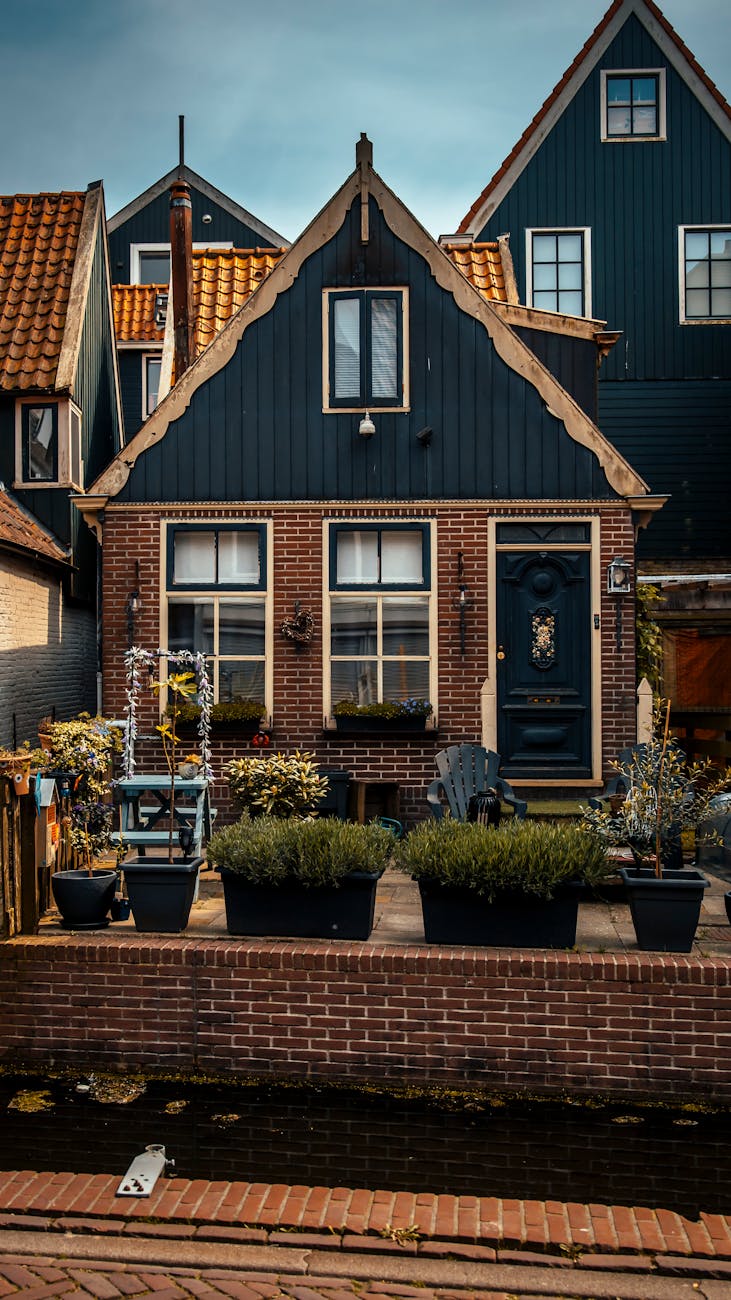
My first trip to Amsterdam wasn’t enough for me. Revisiting the city again, along with other nearby places, was a chance to dig deeper. I wanted to see what this country called Holland, or the Netherlands, truly has.
Spring has arrived, and so is May. Everyone in Belgium seems to be extra happy.
For sure it’s getting warmer again, but aside from that, it’s also in May that public holidays are most plentiful. And it starts right away on the first day – it’s Labor Day! Lucky we are too, it was on a Friday.
While many countries like Belgium celebrate May 1 as an official non-working holiday, in the Netherlands it is not. Because days before it, the Dutch had already gone “orange mad” on their King’s Day. A day of such frenzy at that time of the year seems to be good enough already.
Day 1: Castricum

What is Holland in my mind? It actually hadn’t changed much since I had that short visit.
Wooden shoes. Windmills. Tulips. Bikes.
Dams & canals. Red light district & coffee shops!
And tall, just very tall Dutch people…
…not until we came to visit Castricum.
Without the North sea and the geomorphologic features of the Dutch coast, the Netherlands would be different. It wouldn’t be as it is known today. There would be no need for dams and windmills. No tulips and wooden shoes too.
For all we know, the Netherlands literally mean “Low Country,” attributed from its low land and flat geography. Before its dikes and dams, it was even used to be half of the country below sea level. After hundreds of years of its never-ending battle against floods, almost 75% of the Netherlands is now a meter above.
Approximately 400 kilometers long, the Dutch coast has over 40 beach resorts. Castricum aan Zee is among these, which is located at North Holland Dune Reserves.
For centuries, the Dutch sand dunes have been the steadiest protector against rising sea levels in the country. Since it is a low-lying delta, the Netherlands is very sensitive to climate change. Apart from protecting the old and existing ones, new dunes are being formed as well, up to now. Sand is dredged from the bottom of the North Sea bed. It is gathered up to create the dunes and broaden the beach. This process helps gain land territory from the sea. The more dunes, the less seawater can infiltrate.
BIG SIGH. Just like the Netherlands, The Philippines is especially vulnerable to climate change. My only hope in my home country is that sustainable, long-term solutions are implemented. These solutions need to predict irreversible issues that global warming will bring. If only our government can be as progressive-thinking as the Dutch.
I hope that sustainable, long-term solutions are made to predict irreversible issues that global warming will bring.
Day 2: Amsterdam

Amsterdam is the capital city of the Netherlands. It’s also the most populous as well; though the seat of the Dutch government is actually at The Hague.
Amsterdam is derived from Amstelredamme, which refers to the city’s origin as a dam of the river Amstel. Amsterdam began as a simple fishing village in the 12th century. It flourished as one of the most important ports during the Dutch Golden Age in the 17th century.
Today, Amsterdam is the commercial and cultural capital of the Netherlands. The oldest stock exchange in the world is located in this city center, as well as top companies and institutions. Amsterdam attracts millions of visitors from all over. This is due to its historic canals and outstanding museums. The city also has an intriguing red light district and cannabis coffee shops.
We actually planned to visit the Rijksmuseum and the Van Gogh museum on that day. The Rijksmuseum, in particular, was closed to the public for a ten-year-long renovation. It reopened only in 2013.
I was excitedly looking ahead to that visit. Yet, we suddenly lost our interest after seeing long cues in both museums. The canal cruises were busier than we expected. So in the end, we opted to stroll along the canals and small streets.
Day 3: Windmill Museum

We’re lucky to get a sunny day in Amsterdam, but the next day, we got a cloudy and wet one. Luckily, we didn’t have to stay outside at most. On our last day in North Holland, we visited a windmill museum in Schermerhorn and a tourist’s favorite called Volendam.
WHAT A FLAT COUNTRY. It is outrageously flat here! Having lived in the Swiss Alps for so long, I felt relieved to see much flatter ground in Belgium. But nothing beats The Netherlands. It was amazing to see houses, trees and even people (especially the tall Dutches) from a very, very far distance. No wonder people are obsessed with cycling here, too!
THE MUSEUMMOLEN SCHERMERHORN. One of the windmills in this area was transformed into a museum, so that curious tourists like me can see the insides of this pretty thing…
The windmills are most closely linked with the Dutch. There are also traditional windmills in other places like England, Germany, France, Belgium. The windmills ideally characterize the Dutch landscape. They are an impressive symbol of their innovation to keep their land out of the water.
Indeed, Holland and the windmills are inseparable.
Almost three centuries, from 1633 until 1929, the Schermer polder has been drained by the use of windmills.
In total, 52 windmills worked together in a disciplined manner. They had to bring the water in four stages from polder-level up to the circular canal level.
For over three centuries, large groups of windmills have dominated the surroundings of Schermerhorn and Driehuizen. In various other places in the polder, windmills were also at work.
Besides a tool to move water the Schermer windmills were also the official residence for the miller. Because rain and wind are unpredictable factors it was ideal that the miller lived at his work; he could set to work at any time of the day. When the water in the polder was not yet on the right level and the wind was good, the miller worked, irrespective of the time; sometimes even more than 24 hours continuously. – Museummolen.nl
THE WHEEL THAT DOES THE REAL WORK, PLUS THE MILLER OF COURSE. The earliest version has a paddle-wheel; this wheel with its water-spindle and water-wheel took half the ground floor. In the 19th century, Archimedian screws replaced the paddle-wheels. This change allowed the entire ground floor to be used for living.
Day 4: Volendam

After a visit to the windmill museum in the morning, off we went to Volendam. It is a very popular tourist destination because here you’ll find everything that speaks Dutch. You’ll see what I mean…
Sometimes called “the pearl of Zuidersee,” Volendam is a town in North Holland situated at the mouth of IJ Bay.
It used to be the location of the harbor of its neighboring town, Edam. This was the case until 1357 when Edam dug a canal to Zuidersee to create its own harbor. A new community emerged soon after that. Farmers and fishermen began to settle in the old harbor. It was then dammed and used for land reclamation.
It’s a “filled dam,” from which Volendam got its name. It gradually developed into a prosperous fishing village. By 1892, its fleet of 258 fishing vessels had become the largest along the old Zuidersee.
It’s been a popular tourist destination ever since the early 20th century. Volendam attracted renowned artists like Picasso and Renoir. They were captivated by this fishing village hardly touched by time. The town’s characteristics were captured in some of their artworks.
Up to now, Volendam remains a popular tourist spot. It is well-known for its old fishing boats and cheeses. The town also has distinct country houses.
Yet most of it all, the traditional clothing (klederdracht) in Volendam is a head-turner, too. The woman’s costume of Volendam, with its highly pointed bonnets (kraplaps), is one of the most recognizable Dutch traditional costumes. A few of its residents still wear this dress daily. It is believed that less than 50 elderly women continue this tradition.
And of course, I wouldn’t want to skip a chance eh?
AND VOILA! Mahal and I became a Dutch maid and a Dutchman for a while. Thanks to Volendam! Believe me, we just look exactly like this…

 What's Up With Perpie Lately