We had an unforgettable Easter holiday in Egypt, staying at the resort in Makadi Bay. Our trip included memorable visits to the historical wonders of Luxor and the coastal city of Hurghada.
Our 2023 family journey to Hurghada and Luxor in Egypt was truly unforgettable, especially for the girls. In Hurghada, we reveled in the beauty of the Red Sea’s waters, spending sun-soaked days relaxing on sandy beaches. Luxor’s ancient wonders left us in awe as we explored the grand temples of Karnak and Luxor, and wandered through the Valley of the Kings, where history seemed to come alive before our eyes. The girls were fascinated by the stories of pharaohs and treasures, and the warmth of the Egyptian people made our adventure even more special, creating cherished memories that will last a lifetime.
About Egypt
Egypt is a place full of amazing sights and stories. From the awe-inspiring pyramids of Giza, showing off the skills of ancient builders, to the lively markets of Cairo where modern Egyptian life buzzes, every part of this country has something to tell. The calm waters of the Nile flow through Egypt, bringing life and history to its lands. With its mix of old and new, Egypt is a fantastic destination, ready to impress anyone who visits.
Egypt’s history is one of the richest in the world. It was home to one of the earliest and longest-lasting civilizations, ancient Egypt, which began around 3100 BC. The ancient Egyptians are known for their impressive achievements in architecture, writing, and art, as seen in their temples, tombs, and hieroglyphs. Throughout different periods, Egypt saw the rise and fall of powerful dynasties, including the Old Kingdom, Middle Kingdom, and New Kingdom. Significant historical figures such as Tutankhamun, Cleopatra, and Ramses II have left enduring legacies. The influence of ancient Egyptian culture is still evident today, making Egypt a fascinating place to explore its historical depths.
Staying at Stella Gardens Resort & Spa at Makadi Bay
Stella Gardens Resort & Spa at Makadi Bay offers a range of facilities designed to ensure a comfortable and enjoyable stay. The resort features multiple swimming pools, including a large main pool and several smaller ones, perfect for both adults and children. The modern spa provides a variety of treatments and therapies, allowing guests to unwind and rejuvenate in a serene setting. For those who enjoy staying active, the resort offers a well-equipped fitness center, tennis courts, and opportunities for water sports.
In addition to the leisure facilities, the resort boasts several dining options that cater to diverse tastes. Guests can savor local Egyptian cuisine at one of the resort’s specialty restaurants or enjoy international dishes at the buffet-style dining areas. The resort also has a number of bars and cafes, providing the perfect spots to relax with a drink or a light snack. For families, the resort offers a miniclub and various entertainment programs to keep children engaged and happy. With its comprehensive range of facilities, Stella Gardens Resort & Spa ensures a memorable and relaxing holiday experience for all its guests.
Nestled along the Red Sea coast, Makadi Bay is a picturesque destination renowned for its crystal-clear waters and vibrant marine life. The bay is a haven for snorkeling and diving enthusiasts, offering an array of coral reefs teeming with colorful fish and other sea creatures. Aside from its underwater treasures, Makadi Bay boasts sandy beaches where visitors can bask in the sun or indulge in water sports. The serene environment makes it an ideal location for both relaxation and adventure. Moreover, the hospitality and luxury of resorts like Stella Gardens Resort & Spa enhance the experience, providing guests with good amenities and a taste of Egyptian cuisine. Makadi Bay perfectly blends natural splendor with comfort, making it a must-visit spot in Egypt.
A Visit to Luxor
Often referred to as the world’s greatest open-air museum, Luxor is a treasure trove of ancient Egyptian history and culture. Located on the east bank of the Nile River, Luxor was once the thriving capital of the New Kingdom, and its magnificence is still evident today through its grand temples and tombs. The city is home to the renowned Karnak Temple, a sprawling complex dedicated to the Theban gods, which features an impressive array of statues, obelisks, and columns. Another must-visit site is the Luxor Temple, which was constructed by Amenhotep III and later expanded by Ramses II, showcasing the finest examples of ancient Egyptian architectural prowess.
For those eager to delve deeper into the mysteries of ancient Egypt, the Valley of the Kings on the west bank offers a profound experience. This necropolis is the final resting place of many pharaohs, including the illustrious Tutankhamun, whose tomb was discovered by Howard Carter in 1922. Visitors like us can also explore the Karnak Temple, one of the largest religious structures ever built. We also visited the Temple of Ramses II, also known as the Ramesseum, a mortuary temple built by Ramses II to celebrate his victories and receive offerings in the afterlife.
Luxor’s rich historical legacy, coupled with its stunning monuments, makes it an essential destination for anyone seeking to unravel the secrets of Egypt’s ancient civilizations.
Karnak Temple
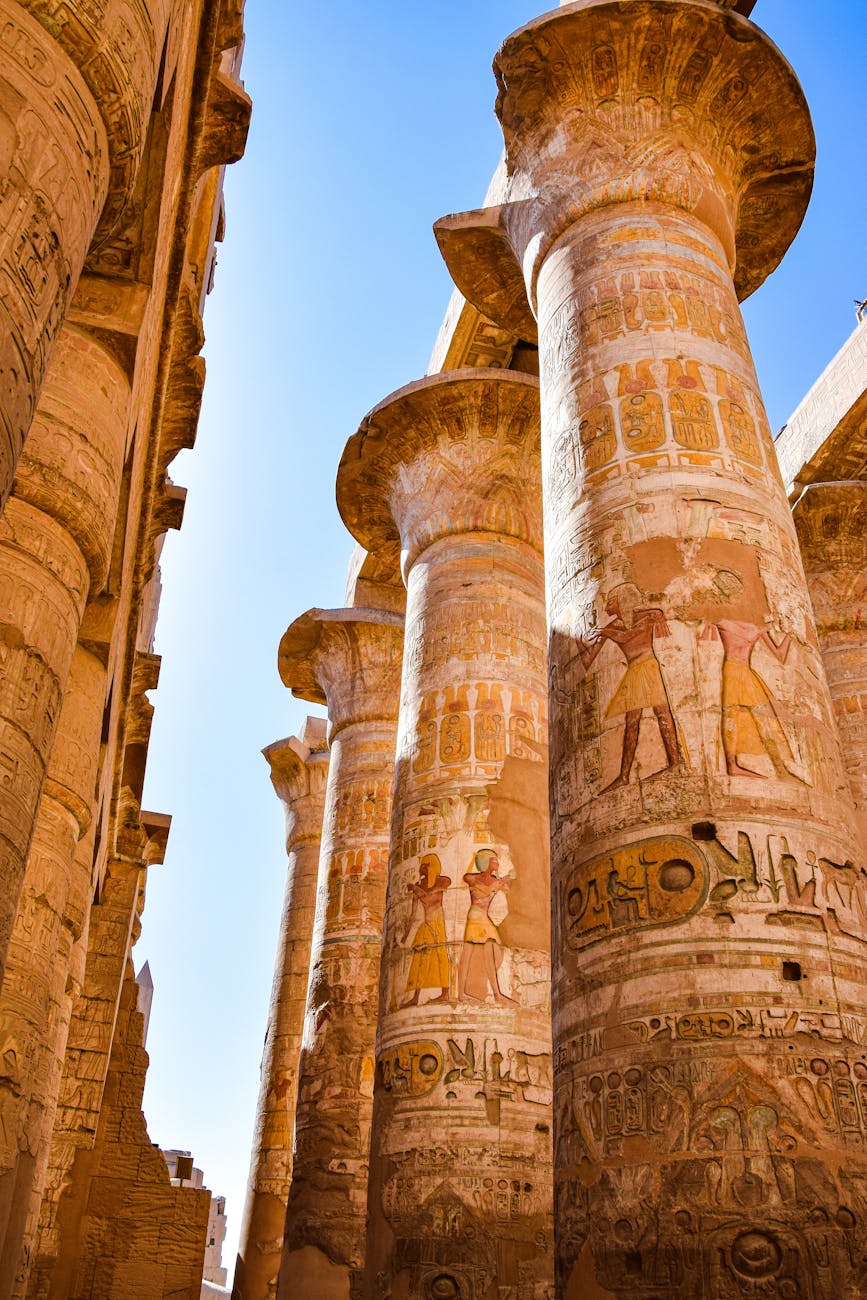
The Karnak Temple, situated in the ancient city of Thebes, is one of the most remarkable and vast religious complexes in the world. Construction began during the reign of Senusret I in the Middle Kingdom and continued through to the Ptolemaic period, reflecting the contributions of numerous pharaohs. The temple is dedicated primarily to Amun-Ra, the chief deity of the Theban triad, but also honors other gods such as Mut and Khonsu. One of the most striking features of Karnak is the Hypostyle Hall, an immense space filled with 134 massive columns arranged in 16 rows. These columns, intricately carved with hieroglyphics and scenes of rituals, create a forest of stone that leaves visitors in awe of ancient Egyptian architectural ingenuity.
Beyond the Hypostyle Hall, Karnak boasts a series of grandiose structures, including pylons, obelisks, and sanctuaries. Each part of the complex served a distinct religious purpose, from ceremonial processions to offerings and worship. Notable among these is the Sacred Lake, which was used for ritual purification. Visitors can also admire the towering obelisks of Hatshepsut and Thutmose III, testaments to the pharaohs’ devotion to the gods and their desire to immortalize their reigns. The temple’s layout, initially designed to align with the sun’s passage and the Nile’s flow, exemplifies the ancient Egyptians’ deep understanding of astronomy and their reverence for natural and divine elements. Exploring Karnak is an immersive journey through centuries of history, religion, and the grandeur of ancient Egyptian civilization.
The Nile River
Extending over 4,000 miles, the Nile River is recognized as the longest river in the world and serves as the lifeblood of Egypt. Originating from Lake Victoria in East Africa, it flows northward through eleven countries before discharging into the Mediterranean Sea. For millennia, the Nile has been the cradle of Egyptian civilization, providing a vital source of water, fertile soils, and transportation. Its annual inundations were instrumental for agriculture, enabling ancient Egyptians to cultivate essential crops such as wheat and flax. The river is revered not only as a natural resource but also as a deity, symbolizing life, rebirth, and sustenance. The banks of the Nile are adorned with historical landmarks, including temples, tombs, and ancient cities, which bear witness to the rich cultural heritage and enduring legacy of one of the world’s oldest civilizations.
The Nile River isn’t just a river; it’s the lifeblood of Egypt. The Nile has been the cradle of Egyptian civilization for millennia. Cruising along this ancient waterway, our boat ride was nothing short of magical, offering us panoramic views of lush green fields and traditional mud-brick villages. It’s easy to see why the ancient Egyptians revered the Nile as both a deity and a source of sustenance.
As we drifted along, we couldn’t help but think about all the history that has unfolded along these banks. From the grand processions of pharaohs to the bustling markets of ancient Thebes, the Nile has witnessed it all. We even caught glimpses of fishermen casting their nets, much like their ancestors did thousands of years ago. After our boat ride, docking by the riverside felt like stepping back in time. We made our way to a quaint local restaurant where we enjoyed a delicious meal with the Nile as our backdrop. It was the perfect way to wrap up our morning, feeling connected to this timeless river that continues to nourish and inspire.
Temple of Ramses II
The Temple of Ramses II, also known as the Great Temple of Abu Simbel, stands as a monumental testament to the power and grandeur of one of Egypt’s most celebrated pharaohs. Carved into the mountainside in southern Egypt, near the border with Sudan, the temple was constructed during the 13th century BCE to demonstrate Ramses II’s prowess and to honor the gods. The façade of the temple is dominated by four colossal statues of Ramses II, each standing at over 60 feet tall. These imposing figures serve as guardians to the temple entrance, welcoming visitors into a hall that is equally awe-inspiring. The interior walls are adorned with intricate carvings and hieroglyphs depicting the pharaoh’s military victories, religious rituals, and his divine relationship with the gods.
One of the most remarkable features of the Temple of Ramses II is its alignment with the sun. Twice a year, on February 22nd and October 22nd, the rising sun penetrates the length of the temple’s inner sanctuary, illuminating the statues of Ramses II and the gods seated beside him. This phenomenon not only showcases the ancient Egyptians’ advanced understanding of astronomy but also underscores the temple’s spiritual significance. The relocation of the temple in the 1960s, due to the construction of the Aswan High Dam, stands as a modern marvel. In an international effort led by UNESCO, the entire structure was meticulously dismantled and rebuilt on higher ground to preserve it from flooding. Today, the Temple of Ramses II continues to captivate visitors from around the world, offering a glimpse into the grandeur and ingenuity of ancient Egyptian civilization.
The Valley of the Kings
Nestled on the west bank of the Nile River, the Valley of the Kings stands as one of Egypt’s most remarkable archaeological sites. This vast necropolis served as the final resting place for New Kingdom pharaohs and powerful nobles from the 16th to the 11th century BCE. The valley is renowned for its tombs, each meticulously carved into the limestone cliffs and adorned with intricate hieroglyphs and paintings that depict the journey to the afterlife. The most famous tomb in the valley is that of Tutankhamun, discovered in 1922 by Howard Carter, which yielded a treasure trove of artifacts that have captivated the world.
The tombs of the Valley of the Kings were designed to ensure the deceased’s safe passage to the afterlife, with complex layouts including corridors, chambers, and burial rooms. The vivid frescoes and inscriptions inside these tombs provide invaluable insights into the religious beliefs, daily life, and funerary practices of ancient Egypt. Despite the valley’s remote location, it has been a subject of fascination and study for centuries. The tombs were often looted in antiquity, but ongoing excavations and conservation efforts continue to uncover new finds, offering a glimpse into the grandeur of ancient Egyptian civilization. For visitors today, the Valley of the Kings remains an awe-inspiring testament to the engineering prowess and artistic genius of the ancient Egyptians.
A Day Trip to Hurghada
A vibrant city on the Red Sea coast of Egypt, Hurghada is a renowned destination for tourists seeking sun, sea, and adventure. Once a humble fishing village, Hurghada has transformed into a bustling resort town, boasting pristine beaches, crystal-clear waters, and a plethora of water sports. The city’s waters are teeming with colorful coral reefs and diverse marine life, making it a haven for snorkelers and scuba diving enthusiasts. The year-round sunshine ensures that visitors can enjoy the beach and water activities at any time, while the numerous resorts and hotels offer luxurious accommodation and amenities.
Beyond its coastline, Hurghada also has much to offer in terms of cultural and historical experiences. The city is divided into several districts, each with its own unique charm. El Dahar, the old town, is where you can immerse yourself in the local culture by exploring traditional markets and tasting authentic Egyptian cuisine. The Marina, on the other hand, is a modern area filled with chic cafes, restaurants, and shops.


