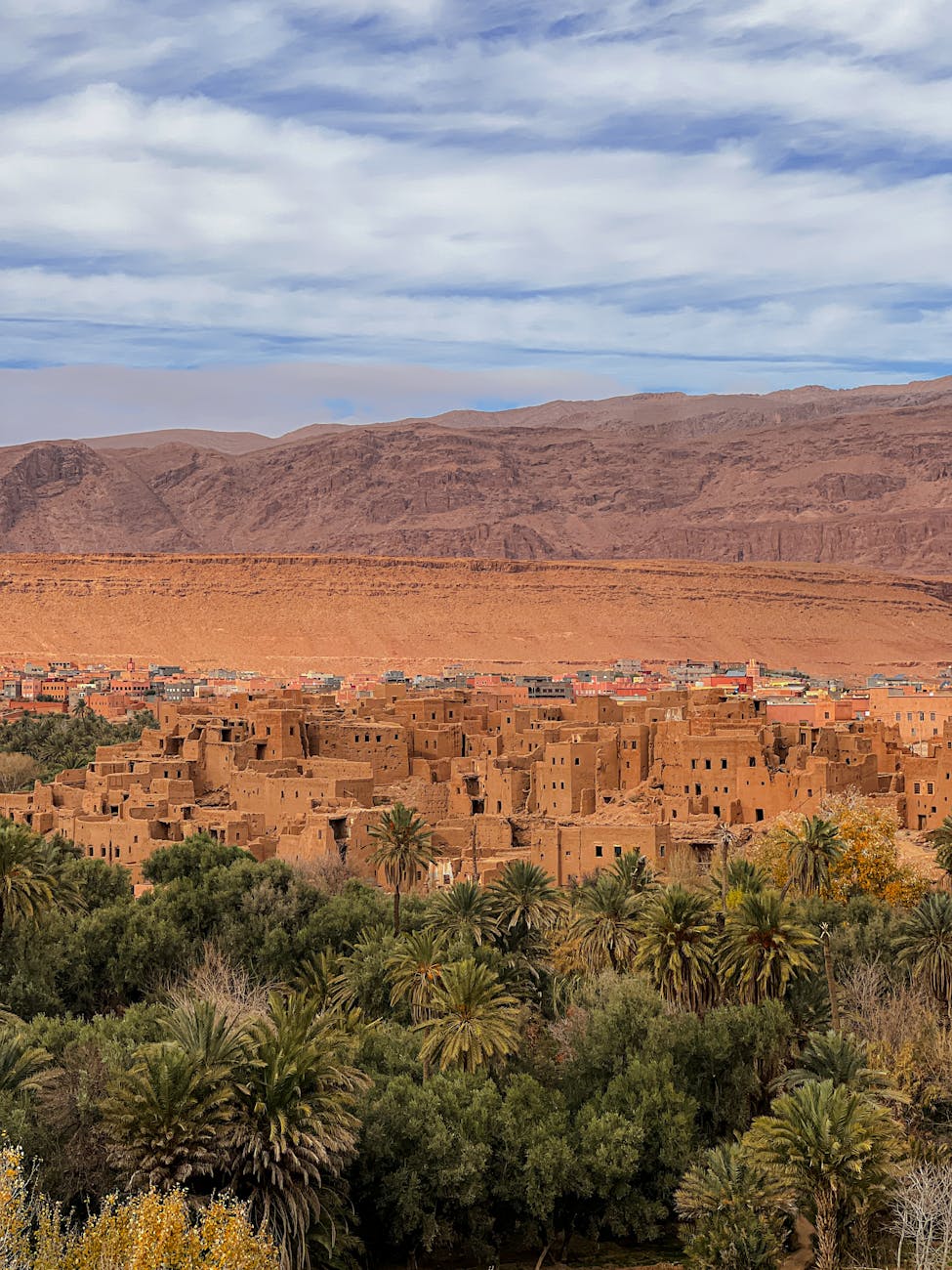
A 15-day family road trip through southern Morocco unfolds from the maze-like medinas of Marrakech to the windswept coast of Essaouira, weaving through the Atlas Mountains, ancient kasbahs, dramatic valleys, and the vast Sahara Desert. It’s a journey of rich culture, cinematic landscapes, slow riad evenings, and unforgettable adventures shared.
We chose to spend our 15-day spring break to go around the southern part of Morocco. We started our journey in Marrakech, staying within the walls of its historic medina. From here we got our very first experience of a Moroccan medina —labyrinthine, vibrant, captivating. On the way to the infamous Jemaa el-Fnaa square, we would stumble across colorful souqs with vendors and their theatrics, street performers with their exotic talents (try charming a snake for starters), and eclectic mix of hole-in-the-wall riads, hammams and restaurants. Every nook and cranny would immerse you to pleasant surprises around the medina that it’s difficult for us to cover all the must-see places in such a short time. We spent time visiting the Madrasa Ben Youssef, shopping for Marrakesh perfumes, getting henna tattoos for me & the girls, chillaxing at the riad, and for Papa, getting a fresh shave from the greatest barber in Marrakesh!
About Morocco
Morocco is a country shaped by centuries of cultural exchange, conquest, and trade, positioned at the crossroads of Africa, Europe, and the Middle East. Its history spans ancient Berber civilizations, Roman rule, Islamic dynasties, and European influence, all of which have left visible marks on its architecture, traditions, and way of life. Trace this rich past in Morocco’s imperial cities—Marrakesh, Fes, Rabat, and Meknes—where historic medinas, grand mosques, madrasas, and palaces stand as reminders of former dynasties and flourishing trade routes. From the blue-washed streets of Chefchaouen to the fortified kasbahs of the south and the Roman ruins of Volubilis, Morocco offers a living history that unfolds across dramatically diverse landscapes.
Beyond its history, Morocco captivates with an extraordinary range of places to visit and things to do. Wander through lively souks filled with spices, lanterns, and handcrafted textiles, relax in traditional hammams, or stay in riads hidden behind medina walls. Hike the Atlas Mountains, explore lush valleys and palm oases, surf or kitesurf along the Atlantic coast, or venture into the Sahara Desert for camel treks, stargazing, and overnight stays in desert camps. Add to this Morocco’s renowned cuisine such as tagines, couscous, street food, and mint tea, and its famously warm hospitality, and the country becomes a destination that blends adventure, culture, and sensory discovery into an unforgettable travel experience.

A whirlwind of colors, flavors, and moments — Morocco in motion, one minute at a time. If you blink, you’ll miss it. ✨
#TravelVlog @perpietravelslately #PerpieInMarocco #TravelwithPerpieLately
CLICK ON THE IMAGE TO WATCH ON INSTAGRAM
Marrakesh
Founded in the 11th century by the Almoravid dynasty, Marrakesh is one of Morocco’s most storied imperial cities, steeped in centuries of history, craftsmanship, and cultural exchange. At its heart lies the UNESCO-listed medina, a living legacy of stone walls, winding alleys, and hidden riads that reflect the city’s medieval roots. Landmarks such as the Koutoubia Mosque, Madrasa Ben Youssef, Bahia Palace, and Saadian Tombs showcase the city’s architectural grandeur, intricate tilework, and enduring religious and royal significance. Marrakesh has long been a crossroads of traders, scholars, and travelers, earning it the nickname “The Red City” for its rose-hued buildings and timeless atmosphere.
Today, Marrakesh offers an immersive blend of history and experience-driven travel. Lose yourselves in the lively souks, bargaining for spices, lanterns, leather goods, and textiles, before stepping into the spectacle of Jemaa el-Fnaa, where storytellers, musicians, performers, and food stalls animate the square from day into night. Beyond the medina, tranquil escapes await in the Majorelle Garden, traditional hammams, and serene courtyard riads.

We started our journey in Marrakech, staying within the walls of its historic medina. From here we got our very first experience of a Moroccan medina — labyrinthine, vibrant, captivating.
On the way to the infamous Jemaa el-Fnaa square, we would stumble across colorful souqs with vendors and their theatrics, street performers with their exotic talents (try charming a snake for starters), and eclectic mix of hole-in-the-wall riads, hammams and restaurants. Every nook and cranny would immerse you to pleasant surprises around the medina that it’s difficult for us to cover all the must-see places in such a short time. We spent time visiting the Madrasa Ben Youssef, shopping for Marrakesh perfumes, getting henna tattoos for me & the girls, chillaxing at the riad, and for Papa, getting a fresh shave from the greatest barber in Marrakesh!
We had to get accustomed to Moroccan dishes this early in Marrakech, and my girls surprised me with their liking to couscous and tagines (just keep that overflowing bread on the side); though we were able to sneak in eating our comfort food as well. My favorite place where we had a sumptuous lunch in Marrakesh was Dar Cherifa.
At the end of each day, we’d get a respite in a surprisingly beautiful, serene riad situated in the bustling old market. It’s nice to stay @riad.karmela.marrakech
So by then we got a taste of Morocco, off we headed for some more. Next destination: the Atlas Mountains.
#TravelVlog @perpietravelslately #PerpieInMarocco #TravelwithPerpieLately
CLICK ON THE IMAGE TO WATCH ON INSTAGRAM

Getting an organic henna tattoo in Marrakesh is one of those small moments that stays with you, and that’s for me & my girls 🧡🌿#minivlog #travelvlog #visitmorocco #wheninmorroco #marrakesh
#TravelVlog @perpietravelslately #PerpieInMarocco #TravelwithPerpieLately
CLICK ON THE IMAGE TO WATCH ON INSTAGRAM

Parfumeries in Marrakesh are a whole experience 🌿🧴 You walk in “just to look” and suddenly you’re smelling amber, musk, oud, orange blossom… all at once. Bottles everywhere, someone blending oils on the spot, asking you what you like, letting you try everything. Nothing feels rushed — you test, walk around, come back, test again.
It’s fun, a little chaotic, and way more personal than buying perfume anywhere else. You don’t just leave with a scent, you leave with a memory — something that instantly takes you back to the medina every time you wear it. Easily one of my favorite things to do in Marrakesh, & btw, the store we visited is @fragrantica_marrakech ✨
Parfumerie – Morocco – MarrakeshTravel
#visitmorocco #wheninmorocco #morocco #travelvlog #minivlog
#TravelVlog @perpietravelslately #PerpieInMarocco #TravelwithPerpieLately
CLICK ON THE IMAGE TO WATCH ON INSTAGRAM
Madrasa Ben Youssef
Madrasa Ben Youssef is one of Marrakesh’s most important historical and architectural landmarks, offering a glimpse into Morocco’s rich scholarly past. Originally founded in the 14th century and later rebuilt in the 16th century under the Saadian dynasty, the madrasa served as the largest Islamic college in North Africa, hosting hundreds of students who studied theology, law, and science. Its design is a masterpiece of Moroccan craftsmanship, featuring intricate zellij tilework, carved cedarwood, stucco plaster, and a tranquil central courtyard that reflects the harmony and discipline of Islamic education. Walking through its former student cells and prayer areas gives visitors a powerful sense of the institution’s role in shaping religious and intellectual life in Morocco.
Visiting Madrasa Ben Youssef is both a cultural and sensory experience. Explore the courtyard, admire the fine geometric patterns and calligraphy, and photograph the symmetrical arches and reflective marble basin at the center. The madrasa is often combined with a stroll through the surrounding medina, making it an ideal stop before or after navigating the nearby souks. Take time to pause and absorb the calm atmosphere, especially in the early morning, when the space feels most contemplative. As a place of learning turned historic monument, Madrasa Ben Youssef offers not only visual beauty but also a deeper appreciation of Marrakesh’s intellectual and artistic heritage.

Madrasa Ben Youssef isn’t just beautiful; it’s a lesson in Islamic artistry. I stood in the central courtyard surrounded by geometric perfection, carved prayers, and light filtering through archways and felt the weight of what this place was. Not just a school, but a sanctuary for knowledge. #wheninmorocco #visitmorocco #travelvlog #minivlog
#TravelVlog @perpietravelslately #PerpieInMarocco #TravelwithPerpieLately
CLICK ON THE IMAGE TO WATCH ON INSTAGRAM
Imlil in the Atlas Mountains
From Marrakech, we drove outside the city to start our road trip, starting off with a visit to Morocco’s Atlas Mountains. The Atlas Mountains stretch across Morocco, offering dramatic peaks and lush valleys that are perfect for hiking and exploration. The region is home to Berber villages, cascading waterfalls, and breathtaking views that showcase the natural beauty and cultural richness of Morocco.
The Atlas Mountains have played a vital role in Morocco’s history for centuries, serving as both a natural barrier and a cultural heartland for the Amazigh (Berber) people. Stretching across central Morocco, the range has long been home to traditional villages built into steep valleys and mountain slopes, where age-old customs, agriculture, and craftsmanship continue to thrive. Historically, the mountains protected inland cities from invasions and shaped trade routes linking the Sahara to northern Morocco. Places such as Imlil, Toubkal National Park, and remote Berber settlements offer insight into a way of life deeply connected to the land, marked by communal traditions, hospitality, and resilience.
The Atlas Mountains are one of Morocco’s most rewarding destinations for nature lovers and adventure seekers. Go hiking and trekking, including climbs near Mount Toubkal, the highest peak in North Africa, or enjoy gentler walks through valleys dotted with terraced farms and waterfalls. Cultural experiences include staying in Berber guesthouses, visiting local markets, and sharing traditional meals with mountain families. The region is also ideal for day trips from Marrakesh, offering cooler temperatures, scenic drives, and unforgettable viewpoints. We stopped by at Imlil, a small Berber village that serves as our hiking starting point. Together with our tour guide, we started trekking to steep and rough paths that lead us to Imlil Waterfalls.
Driving further through the Atlas Mountain pass the next day en route to Ourzazate, we briefly visited Ait Ben Haddou, a UNESCO World Heritage site, famed for its striking mudbrick architecture and ancient fortified village that has appeared in numerous films.

Hiking to the Imlil Waterfalls in the Atlas Mountains felt like stepping into a different rhythm 🏔️💧 Starting from the village, the trail winds through quiet Berber paths, terraced fields, and mountain views that make you stop every few minutes just to take it all in. Kids waving as you pass, mules sharing the trail, the sound of water slowly getting louder with every step — simple, real, and grounding.
P.S. We got fun drone shots from our trusty local guide from Imlil! Then only Papa and the girls went to see the waterfall. I am such a scary cat; not adventurous enough to cross the log over the gushing water!
Imlil – Morocco – AtlasMountains
#TravelVlog @perpietravelslately #PerpieInMarocco #TravelwithPerpieLately
CLICK ON THE IMAGE TO WATCH ON INSTAGRAM
Ait Ben Haddou
Ait Ben Haddou is one of Morocco’s most iconic historical sites, famed for its striking earthen architecture and timeless setting along the ancient caravan route between the Sahara and Marrakesh. This fortified ksar, which is a group of clay and mud‑brick buildings surrounded by defensive walls, dates back to at least the 11th century and once served as a key stop for traders carrying gold, salt, and spices across the Atlas Mountains. Recognized as a UNESCO World Heritage Site, Ait Ben Haddou is a remarkable example of traditional southern Moroccan architecture, with its crenelated towers, granaries, and interconnected homes rising dramatically against the desert landscape.
Visiting Ait Ben Haddou is both a cultural and experiential journey. Wander through the narrow passageways of the ksar, climb to the hilltop granary for sweeping views of the surrounding valley, and observe how a few families still maintain traditional ways of life within the village. The site is also celebrated for its cinematic legacy, having appeared in films and series such as Gladiator, Lawrence of Arabia, and Game of Thrones.
Ourzazate & Kasbah Amridil
Often called the “Gateway to the Sahara,” Ourzazate is famous for its impressive kasbahs and has served as a backdrop for many major films due to its dramatic desert landscapes. Ourzazate has long held strategic importance as a crossroads between the Atlas Mountains and the desert trade routes beyond. Historically, the region flourished through caravan trade, linking Marrakesh with sub-Saharan Africa, and its legacy is preserved in the impressive kasbahs and fortified villages that dot the surrounding landscape. These earthen structures reflect traditional Berber architecture and centuries of adaptation to the harsh desert climate. Ourzazate’s dramatic scenery and well-preserved kasbahs later attracted international filmmakers, transforming the city into one of Morocco’s most famous cinematic hubs.
Ourzazate offers a rich mix of history, culture, and experiences. Highlights include Kasbah Taourirt in the city center and nearby Kasbah Amridil, one of the best-preserved kasbahs in Morocco, both offering insight into desert life and traditional craftsmanship. Film enthusiasts can explore Atlas Studios and CLA Studios, where scenes from iconic movies such as Lawrence of Arabia and Gladiator were shot.
Not so far from Ourzazate’s center, we visited Kasbah Amridil, which stands out as one of Morocco’s most well-preserved kasbahs, showcasing traditional Berber architecture and offering fascinating glimpses into local history and daily life. Dating back to the 17th century, the kasbah was built as a fortified family residence and agricultural center, designed to withstand the harsh desert climate while supporting communal living through storage rooms, kitchens, olive presses, and living quarters. Explore its narrow passageways, climb its towers for views over the palm groves, and examine everyday objects that illustrate how families once lived and worked within its walls.
The kasbah is also known for its cinematic legacy, having served as a filming location for Lawrence of Arabia, adding to its cultural allure. A visit to Kasbah Amridil combines history, architecture, photography, and quiet exploration, making it a rewarding stop for those interested in Morocco’s desert heritage.

Visiting Kasbah Amridil was like stepping straight into Morocco’s past ✨🏜️🇲🇦
Tucked away in the Skoura Oasis, surrounded by palm trees and quiet desert air, this centuries-old kasbah feels beautifully untouched. Thick mud-brick walls, narrow staircases, wooden doors that have seen generations pass through — every corner tells a story without trying too hard.
Walking through the kasbah, you can almost picture what life was like here years ago: storage rooms for grains, old kitchens, rooftops with endless views over the oasis and Atlas foothills. It’s calm, authentic, and refreshingly not crowded. No rush, no noise — just history, desert light, and a deep sense of place. One of those stops that reminds us to slow down and really take it in. Simple, timeless, and quietly unforgettable 🤍🌴
KasbahAmiril – Morocco – Skoura
#TravelVlog @perpietravelslately #PerpieInMarocco #TravelwithPerpieLately
CLICK ON THE IMAGE TO WATCH ON INSTAGRAM
Bits of Dades Valley: Monkey Fingers & Todgha Gorge
On another day-long ride leaving Ourzazate, we eventually ended up in Dades Valley. Also known as the Valley of a Thousand Kasbahs, Dades Valley is renowned for its dramatic red rock formations, lush palm groves, and winding river that carves through the landscape.
Often called the Valley of a Thousand Kasbahs, Dades Valley is a dramatic region shaped by centuries of river erosion, trade, and Berber settlement. Historically, the valley was an important corridor along caravan routes connecting the Sahara with northern Morocco, and its landscape is dotted with fortified kasbahs built from red adobe, blending seamlessly into the surrounding cliffs. Get drawn to its striking rock formations, lush palm oases, and winding roads carved into the canyon walls.
Highlights include the famous Dades Gorge with its steep limestone cliffs, the surreal Monkey Fingers rock formations, and nearby Todgha Gorge, a natural canyon popular with hikers and climbers. Things to do range from scenic drives and photography to short hikes through villages, meeting local Berber communities, and enjoying river‑side walks, making Dades Valley a rewarding blend of natural beauty, history, and slow, scenic exploration.
We didn’t have much time left to go through the scenic drive through the valley, because a late afternoon swimming in the pool for every pit stop is a must for the girls! So, the next day, we decided to quickly visit the Monkey Fingers, which is known for its striking resemblance to clustered fingers; and we drove further to visit the Todgha Gorge.
Todgha Gorge is a breathtaking canyon renowned for its towering limestone cliffs, crystal-clear river, and dramatic scenery that attracts hikers, rock climbers, and photographers. Todgha Gorge is a breathtaking natural canyon carved over centuries by the Todgha River, located on the eastern edge of the High Atlas Mountains near Tinghir. Historically, the gorge and its surrounding palm oases supported Berber communities that relied on the river for agriculture and as a stop along regional trade routes.
Today, Todgha Gorge is renowned for its towering limestone cliffs that rise dramatically on either side of the narrow passage, creating one of Morocco’s most striking landscapes. We walk along the riverbed, admire the sheer rock walls, and enjoy the contrast between rugged cliffs and lush greenery. The area is especially popular for hiking, photography, and rock climbing, while nearby villages offer opportunities to experience local Berber culture, traditional farming life, and Moroccan hospitality.

Todgha Gorge is one of those places that hits us the moment we arrived 🌄 First we’re driving through dry, open landscapes, and suddenly we’re standing between massive rock walls that tower above us. The cliffs are huge, the air feels cooler, and there’s a small river running right through the gorge — such a contrast and honestly so refreshing.
Walking around is super easy and relaxed. We see people just wandering, climbers on the rock faces, locals passing by, and kids playing near the water. No big agenda needed — we just walked, took photos, dipped our feet in the stream, and enjoyed the views. It’s impressive without trying too hard and feels very real. One of those stops that makes road-tripping through Morocco even more special 🤍🏞️
TodghaGorge – Morocco – Tinghir
#TravelVlog @perpietravelslately #PerpieInMarocco #TravelwithPerpieLately
CLICK ON THE IMAGE TO WATCH ON INSTAGRAM
Zagora, the Gateway to Sahara Desert
After the visit to Todgha Gorge, we drove further to stay overnight in Zagora, only to be picked up the next day for a long desert ride on the way to Erg Chegaga in Sahara Desert.
Zagora is a tranquil desert town in southern Morocco that has long served as a gateway between the Draa Valley and the Sahara, historically playing a key role in trans‑Saharan trade routes. For centuries, caravans passed through Zagora carrying goods such as salt, gold, and spices, linking Morocco to sub‑Saharan Africa. One of the town’s most iconic landmarks is the famous “Tombouctou 52 jours” (Timbuktu 52 days) sign, a symbolic reminder of Zagora’s past as a departure point for long and arduous desert journeys. We briefly explored the lush palm groves of the Draa Valley (our riad is actually situated within a palm plantation!), and wander local souks.
Erg Chegaga, Morocco’s Sahara
Erg Chegaga is one of Morocco’s largest and most remote sand dune fields, offering stunning golden landscapes and a truly immersive, bucket list-like Sahara Desert experience. Historically, travelers heading south passed through towns like Zagora before continuing deeper into the desert toward regions like Chegaga, symbolizing the long and arduous journeys across the sands.
Today, Erg Chegaga is prized for its towering golden dunes, sense of solitude, and untouched desert landscapes. Erg Chegaga can be reached by 4×4 from Zagora or M’Hamid, then experience camel treks at sunset, sandboarding, stargazing under crystal clear skies, and overnight stays in traditional desert camps. Evenings are often enriched with Saharan music around the fire, making Erg Chegaga a truly unforgettable blend of history, adventure, and raw desert beauty. What a surreal experience for us to be in the Sahara indeed.

Endless dunes, endless calm 🤍🏜️
Sahara days, starry nights ✨🌌
Where silence feels powerful
Sand, sun, and nothing else matters
Desert dreams come true 🐪
Lost in the right place 🏜️
Sunset over the Sahara = unreal 🌅
Just me and the dunes
Slow days, wide horizons
Sahara magic hits different ✨
Sky full of stars, heart full 🤍
Moments written in sand
SaharaDesert – Morocco – ErgChegaga
#TravelVlog @perpietravelslately #PerpieInMarocco #TravelwithPerpieLately
CLICK ON THE IMAGE TO WATCH ON INSTAGRAM
Taroudant & Palacio Claudio Bravo
After a day-long drive from Erg Chegaga and Zagora, we ended up in Taroudant, which is dubbed as a mini-Marrakesh due to the similarity of its medina. Only then, our next overnight accommodation caught us captivated and mesmerized all over again. Palacio Claudio Bravo is an enchanting museum and cultural center located near Taroudant, set within a former residence of the renowned Chilean realist painter Claudio Bravo, who settled in Morocco later in his life, showcasing his arts and personal collections.
The palace reflects Bravo’s deep appreciation for Moroccan craftsmanship and aesthetics, blending Andalusian‑inspired architecture, intricate zellige tilework, carved wood, and tranquil courtyards surrounded by olive groves and gardens. We chose to spend some time in the palace exploring beautifully curated galleries displaying Bravo’s paintings, personal art collection, furniture, and decorative objects gathered from around the world.
Taroudant is a historic walled city in southern Morocco with origins dating back to the 16th century, when it flourished under the Saadian dynasty as an important regional capital and trading center. Often called “Little Marrakesh,” the city is encircled by impressive red clay ramparts that stretch for several kilometers and offer a striking glimpse into its fortified past. We couldn’t visit Taroudant’s old medina anymore, and we only had a lunch stopover in Agadir. Before heading back to Marrakesh, we spent our last few days in Essaouira.

Palacio Claudio Bravo is a dream-come-true moment. It’s such a pleasure to stay in the personal room of Farah Diba Pahlavi, known as the last Lady Shah, Empress of Iran.
Visiting Palacio Claudio Bravo was such a refreshing change of pace 🤍🏛️ Tucked away near Taroudant, it feels quiet, calm, and far removed from the busy cities. You walk around at your own speed, through beautiful gardens and open spaces, with views that make you pause without even trying.
The palace itself is really well done — stylish but not over the top, thoughtful details everywhere, and plenty of spots where you just want to stop and sit for a while. It’s not crowded or rushed, which makes the experience even better. If you’re looking for somewhere peaceful, a bit unexpected, and totally different from the usual Morocco stops, this place is definitely worth it ✨🌿
PalacioClaudioBravo – Morocco – Taroudant
#TravelVlog @perpietravelslately #PerpieInMarocco #TravelwithPerpieLately
CLICK ON THE IMAGE TO WATCH ON INSTAGRAM
Essaouira
Essaouira is a charming coastal city known for its wind-swept beaches, vibrant art scene, and historic medina lined with whitewashed walls and blue doors. Adding to its global cultural appeal, Essaouira’s distinctive coastal architecture and historic medina served as a filming location for Game of Thrones, representing the city of Astapor in the series. We spent our days enjoying its medina for some dining, shopping, going around its forts and wharfs, and spa; and hanging out on the beach while the girls go surfing and camel riding!
Essaouira is a historic coastal city on Morocco’s Atlantic shore with a rich past shaped by trade, fortification, and cultural exchange. Founded as a significant port in the 18th century under Sultan Mohammed ben Abdallah, the city was designed with the help of European architects, resulting in a unique blend of Moroccan and European influences. Its UNESCO‑listed medina is enclosed by well‑preserved ramparts overlooking the sea, once protecting the city from invasions while facilitating maritime trade with Europe and sub‑Saharan Africa. Essaouira has also long attracted artists, musicians, and writers, contributing to its reputation as Morocco’s bohemian capital with a relaxed, creative spirit.
Today, Essaouira offers a wide range of experiences that combine history, culture, and coastal charm. Wander through the compact medina to discover art galleries, woodcraft shops, and local boutiques, stroll along the Skala de la Ville for sweeping ocean views, and observe daily life at the bustling fishing port. The city is known for its fresh seafood, best enjoyed at small harbor restaurants, while its long, wind swept beach is ideal for walking, horseback or camel riding, surfing, and kitesurfing. With its laid back atmosphere, vibrant arts scene, and mix of history and seaside living, Essaouira provides a refreshing contrast to Morocco’s inland cities and is a perfect place to slow down and unwind.

There’s something about a city that doesn’t try too hard. Essaouira has been a port, a trading hub, a hippie haven, a film set — and somehow through all of it, it stayed itself. Walk the medina walls at golden hour and you’ll understand why people just… don’t leave.
Essaouira – Morocco
#TravelVlog @perpietravelslately #PerpieInMarocco #TravelwithPerpieLately
CLICK ON THE IMAGE TO WATCH ON INSTAGRAM

Essaouira is artsy, laid-back, and effortlessly cool. One minute you’re walking along old ramparts with waves crashing below, the next you’re barefoot on the beach watching kitesurfers dance across the water. Essaouira feels real and relaxed, a perfect reset after busy cities and long road trips. Wind in your face, time on pause, and that feeling of being exactly where you’re supposed to be ✨🐚
Essaouira – Morocco
#TravelVlog @perpietravelslately #PerpieInMarocco #TravelwithPerpieLately
CLICK ON THE IMAGE TO WATCH ON INSTAGRAM


